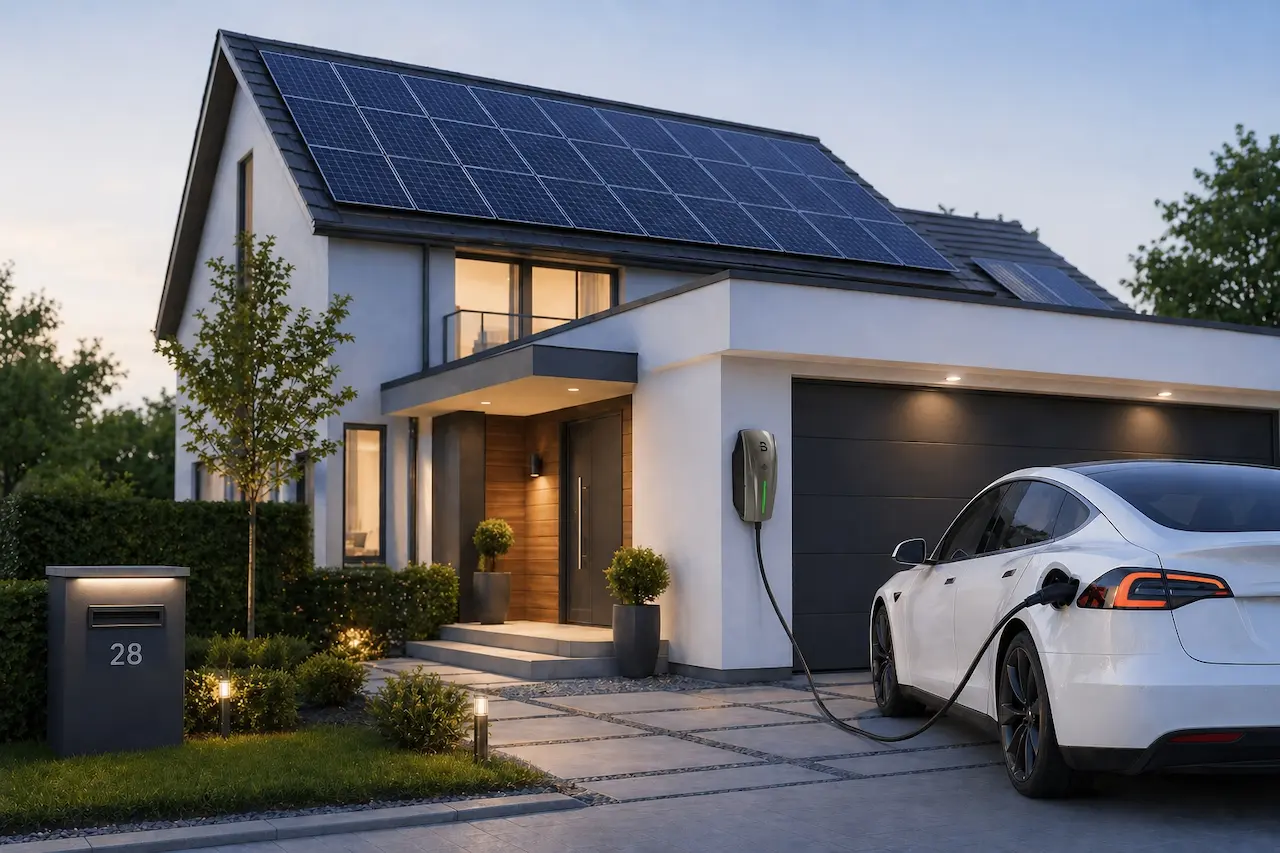












Charge your electric vehicle at home with EVB residential EV charging solutions designed for daily convenience, smart energy management, and reliable home charging. From wall-mounted AC chargers and portable EV chargers to outdoor residential EV chargers and DLB-ready charging options, EVB helps homeowners, apartments, and residential properties build a safer, smarter, and more efficient home EV charging setup.
Home EV charging gives drivers the convenience of charging where they live. Instead of relying only on public charging stations, homeowners and residential properties can use a dedicated home EV charger to support daily commuting, overnight charging, and better control over charging time and household energy use.

Charge your EV at home overnight or whenever the vehicle is parked.

Reduce dependence on public charging
availability.

Schedule charging during lower-rate periods where available.

Make homes, apartments, and residential parking areas more EV-ready.
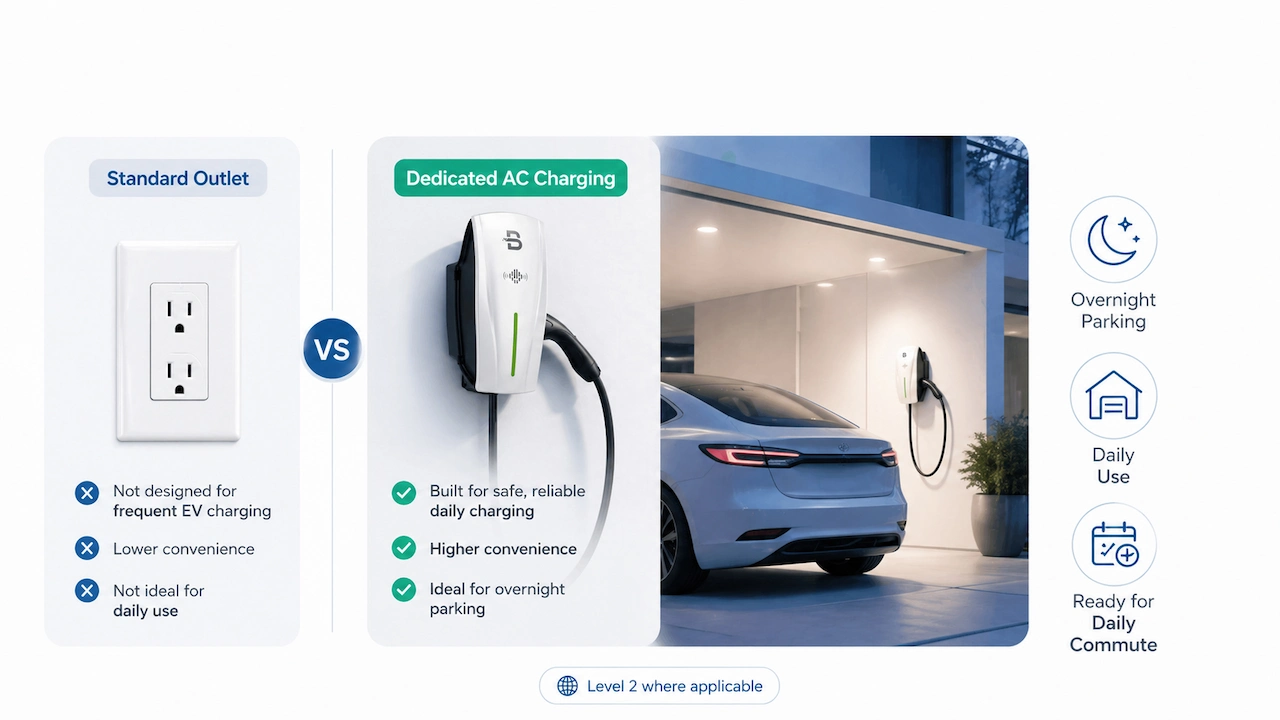
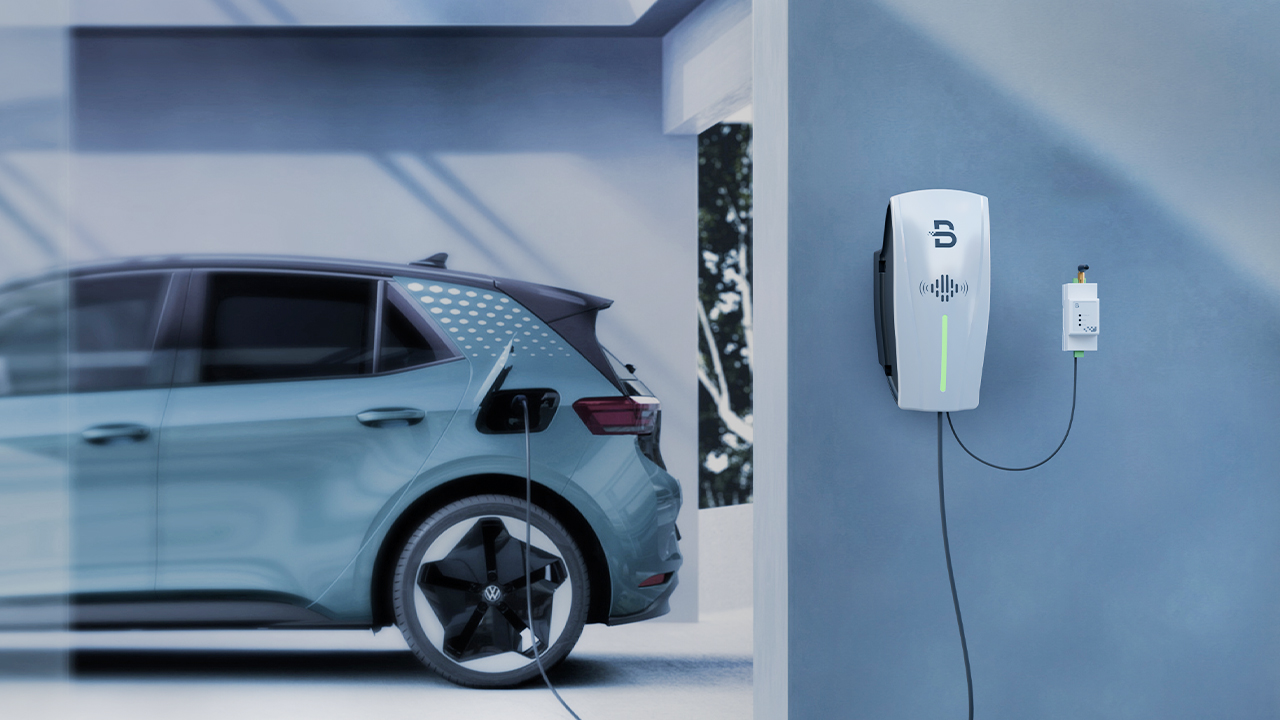
For most residential charging needs, an AC home EV charger provides a practical balance of charging speed, installation flexibility, and daily convenience. Compared with a standard household outlet, a dedicated home EV charger can support more stable and efficient charging for overnight parking, daily commuting, and fixed residential spaces. In markets such as North America, this type of AC charging is often referred to as Level 2 home EV charging.
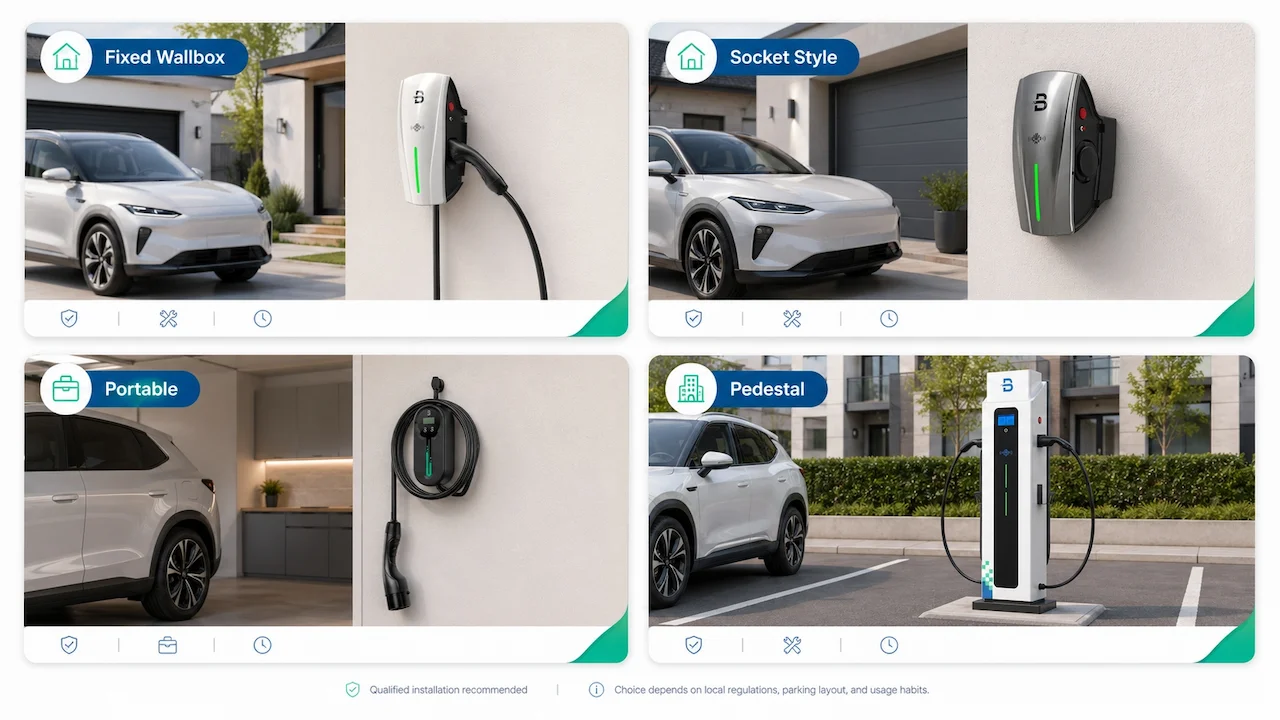
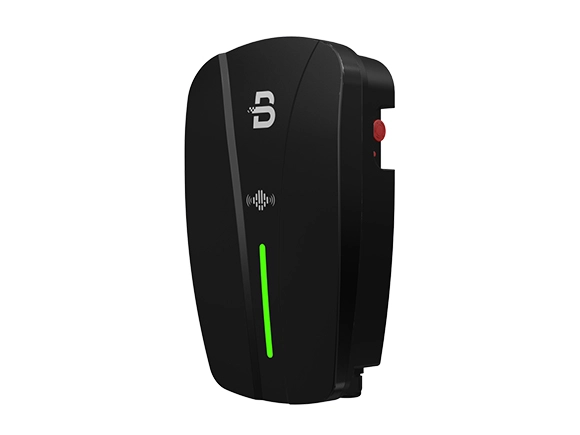
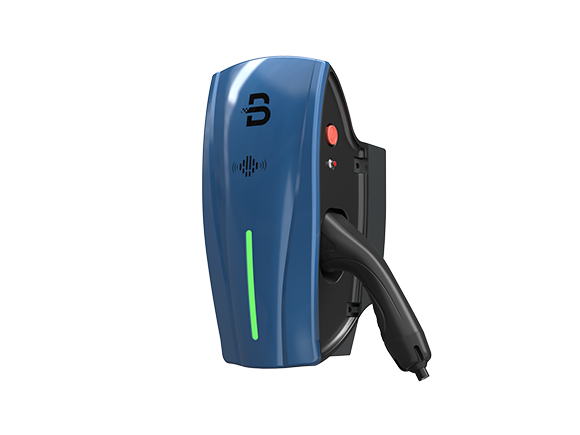
Different homes need different charging setups. A wall-mounted home EV charger is suitable for fixed parking spaces and regular daily charging, while a portable EV charger can offer greater flexibility for users who need a movable charging option. Outdoor residential EV chargers are suitable for driveways and exposed parking areas, while smart AC chargers can support app control, scheduling, and load management where configured.
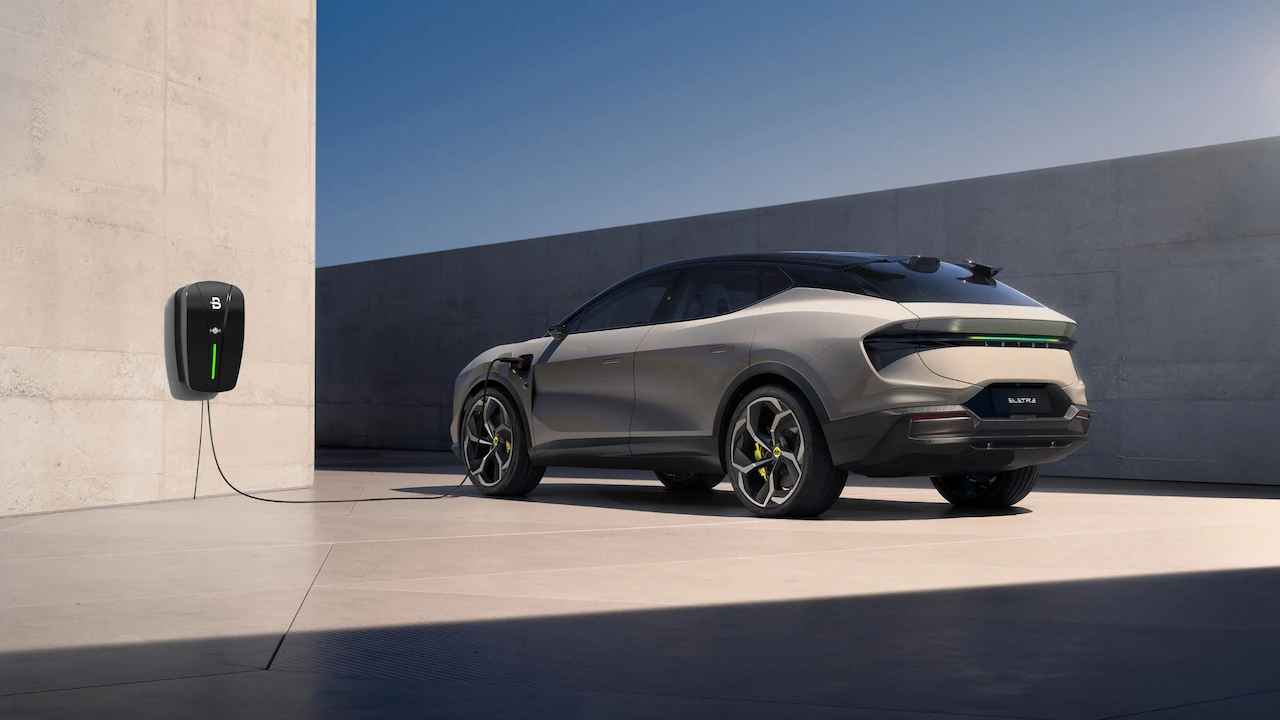
Best for fixed parking spaces, garages, and daily home charging.
Wygląda na to, że nie możemy znaleźć tego, czego szukasz.
Best for app control, charging schedules, and supported load management functions.
Wygląda na to, że nie możemy znaleźć tego, czego szukasz.
Best for flexible use, temporary charging needs, or secondary charging locations.
Wygląda na to, że nie możemy znaleźć tego, czego szukasz.
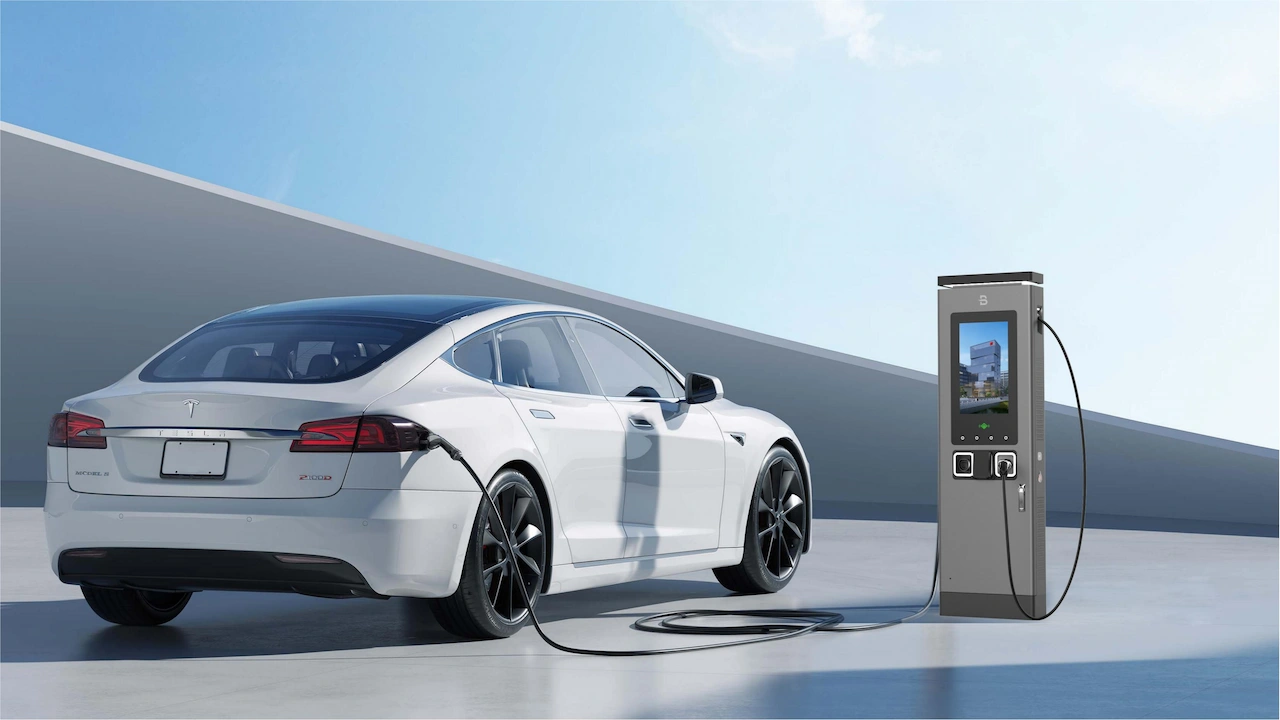
Best for driveways, outdoor parking spaces, and weather-exposed installations.
Wygląda na to, że nie możemy znaleźć tego, czego szukasz.
Residential charging setups may use different installation formats depending on local electrical rules, parking layout, and user habits. A fixed wallbox charger is suitable for regular home charging at a dedicated parking space, while socket-style or portable charging options may provide more flexibility where allowed. The final setup should always follow local electrical regulations and be assessed by qualified professionals.
Best for daily charging at a dedicated parking space.
Suitable where socket-based installation is allowed and properly protected.
Useful for flexible or temporary charging needs.
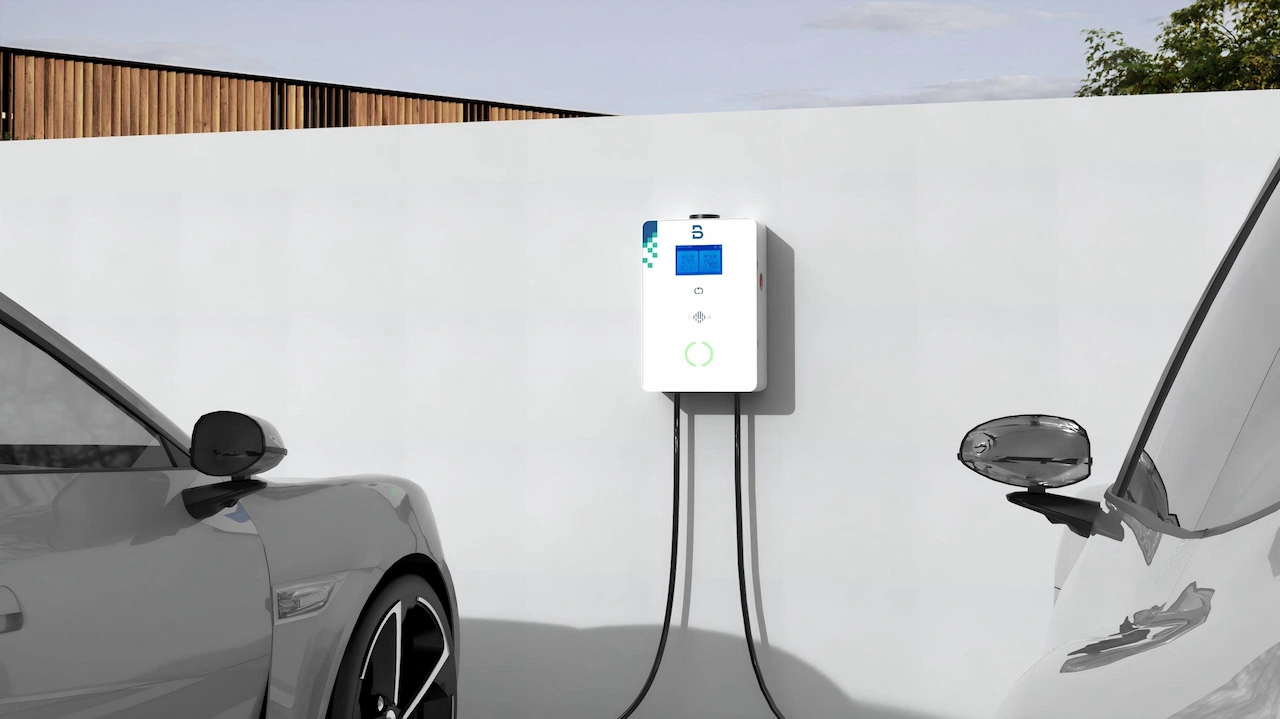
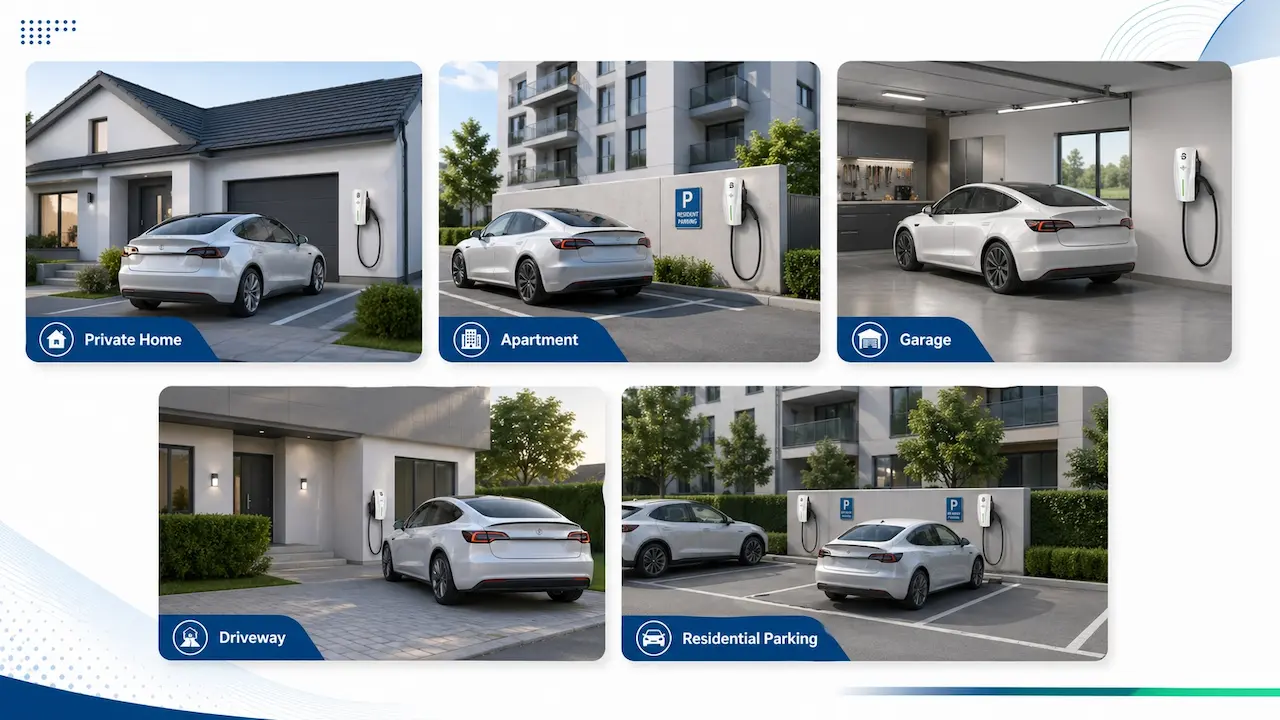
Suitable for driveways, open parking spaces, or shared residential parking areas.
| User Need | Recommended Option | Key Feature |
|---|---|---|
| Daily home charging | Ładowarka ścienna AC | Stable fixed charging |
| Flexible or temporary use | Portable EV charger | Movable charging option |
| Outdoor driveway | Outdoor-rated residential charger | Weather-resistant installation |
| Smart scheduling | Smart AC charger | App and charging schedule |
| Household load limits | DLB-ready charger | Dynamic current adjustment |
| Solar PV home | PV DLB / solar-compatible option | Solar-priority charging |
| Apartment/shared parking | Managed AC charging setup | Access control and records |
| Future multiple EVs | Scalable residential setup | Planning for expansion |
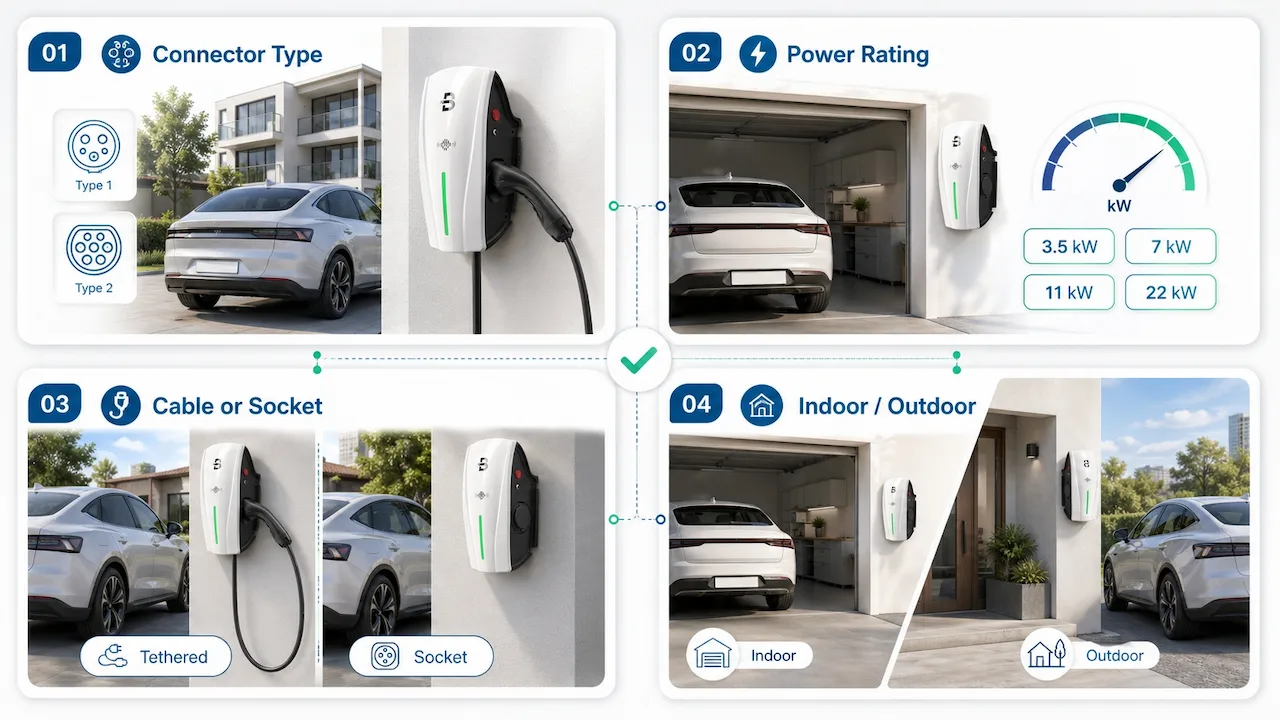
A suitable home EV charger should match the vehicle, local charging standard, parking setup, and preferred installation format. EVB residential EV chargers can be selected based on connector type, power rating, cable or socket configuration, indoor or outdoor use, and smart charging requirements. This helps homeowners and residential properties choose a charger that fits both current vehicles and future charging needs.
Typ złącza
Match local EV charging standards and vehicle requirements.
Power Rating
Choose suitable AC charging power based on electrical capacity and daily use.
Cable or Socket Design
Select tethered cable or socket-style charging where available.
Indoor or Outdoor Use
Choose a charger suitable for garage, driveway, or exposed parking areas.
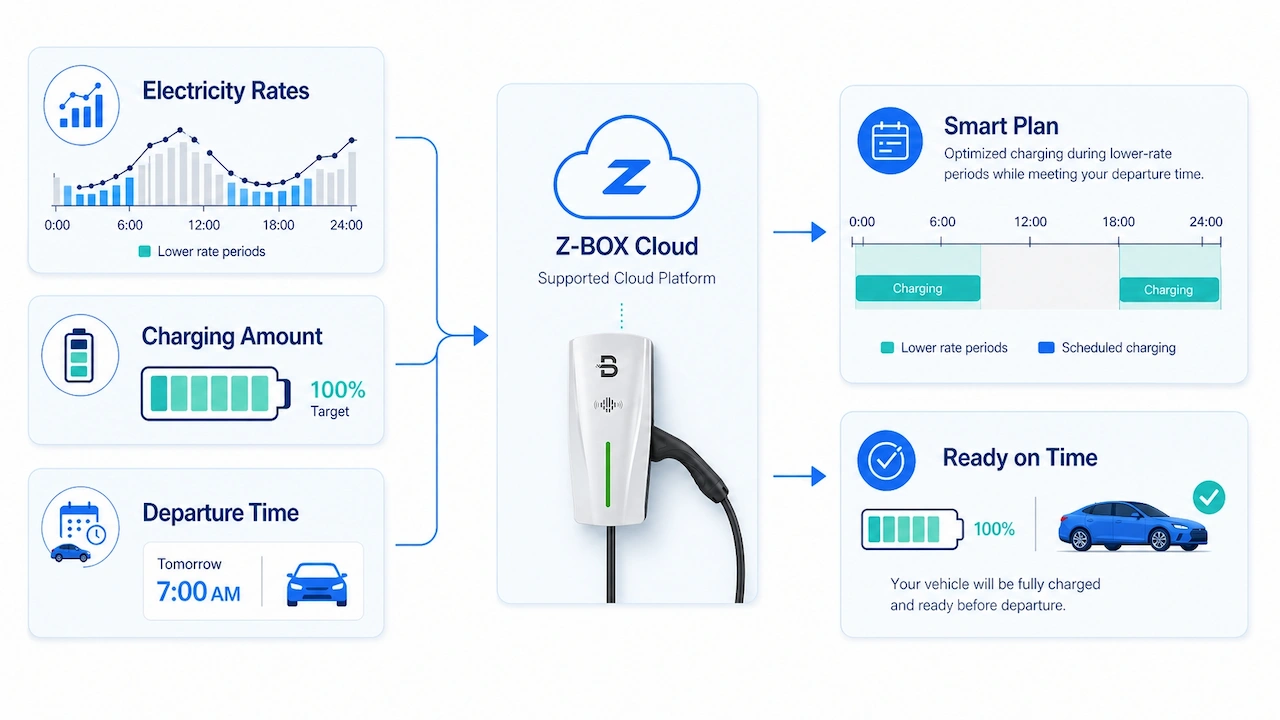
EVB residential EV chargers support smart charging features that help users monitor charging status, schedule charging time, and manage daily charging activity through a smart app and supported cloud platform where configured. Where electricity price data is available, the system can help generate a smarter charging plan based on the user’s desired charging amount and planned vehicle use time.
View charging status through the smart app where supported.
Set charging times based on daily routine or lower-rate electricity periods where available.
Use available electricity price information to support smarter charging planning.
Track charging activity and energy use.
Manage charging more easily from home or remotely.
Where time-of-use electricity pricing is available, EVB smart charging can help users plan charging sessions around lower-rate periods. By combining electricity price information, desired charging amount, and planned vehicle departure time, the system can generate a more cost-effective charging schedule through the charger and supported cloud platform. This helps homeowners charge more intelligently while maintaining daily driving readiness.
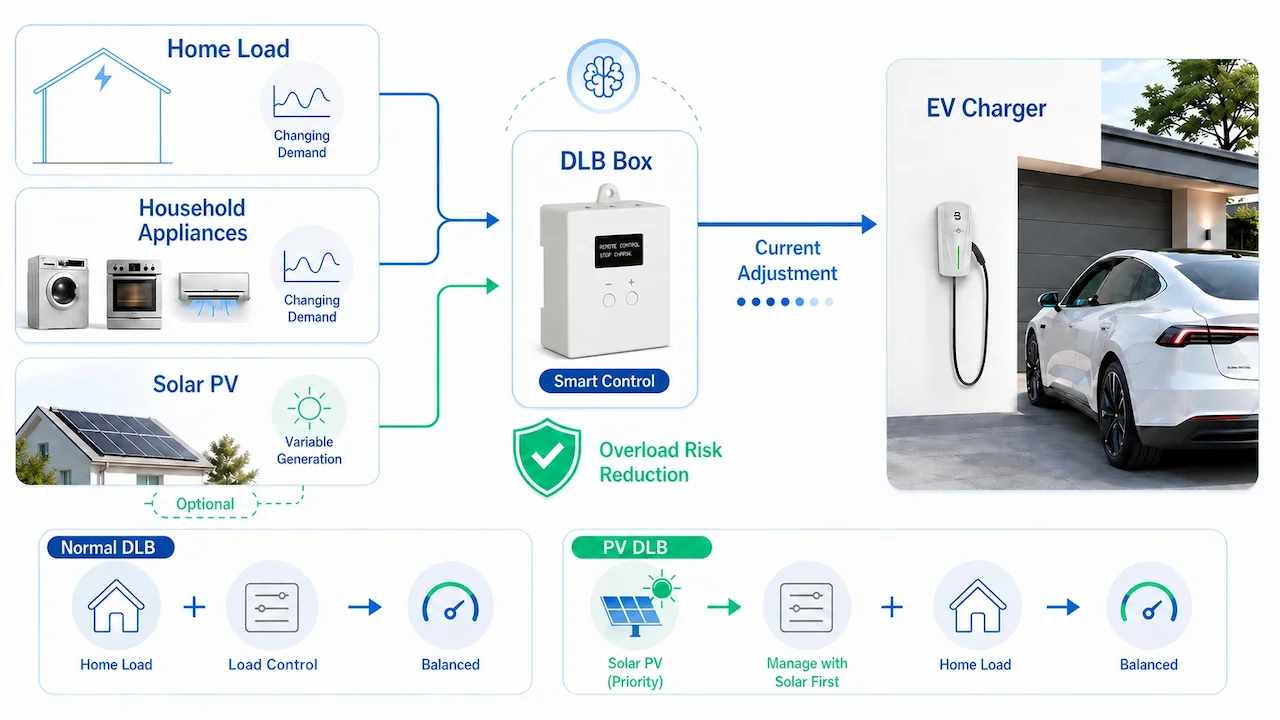
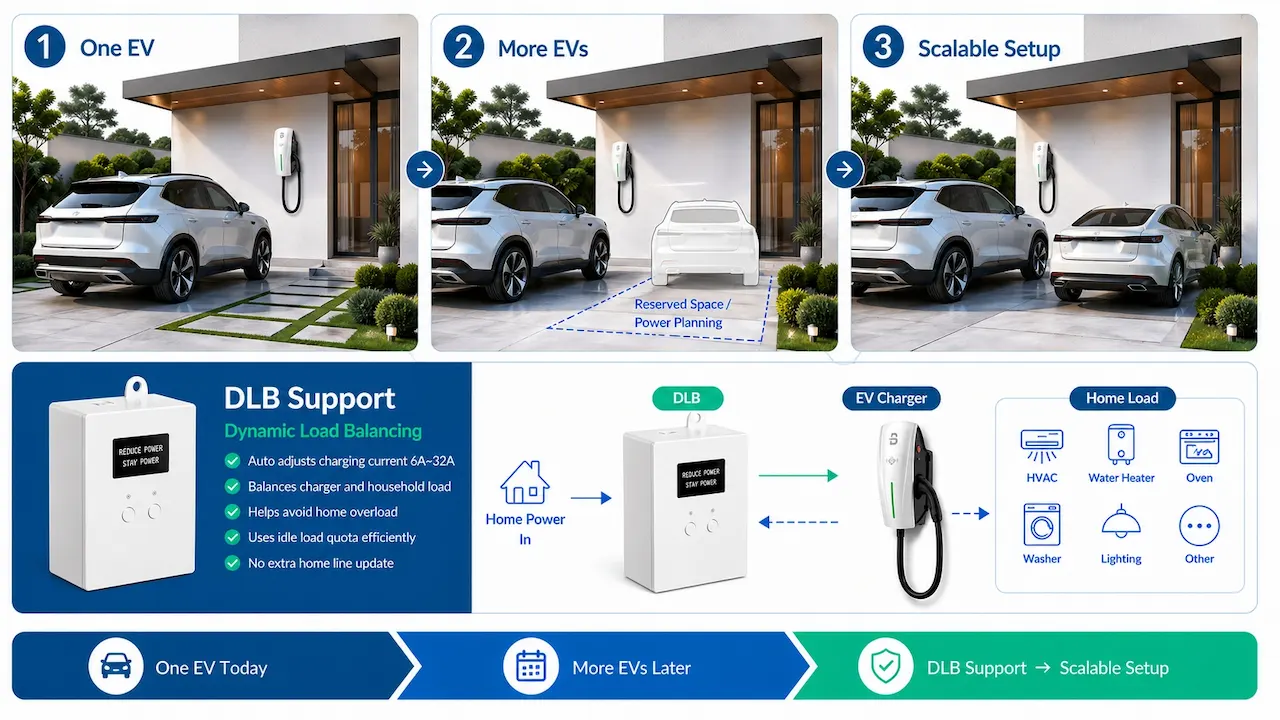
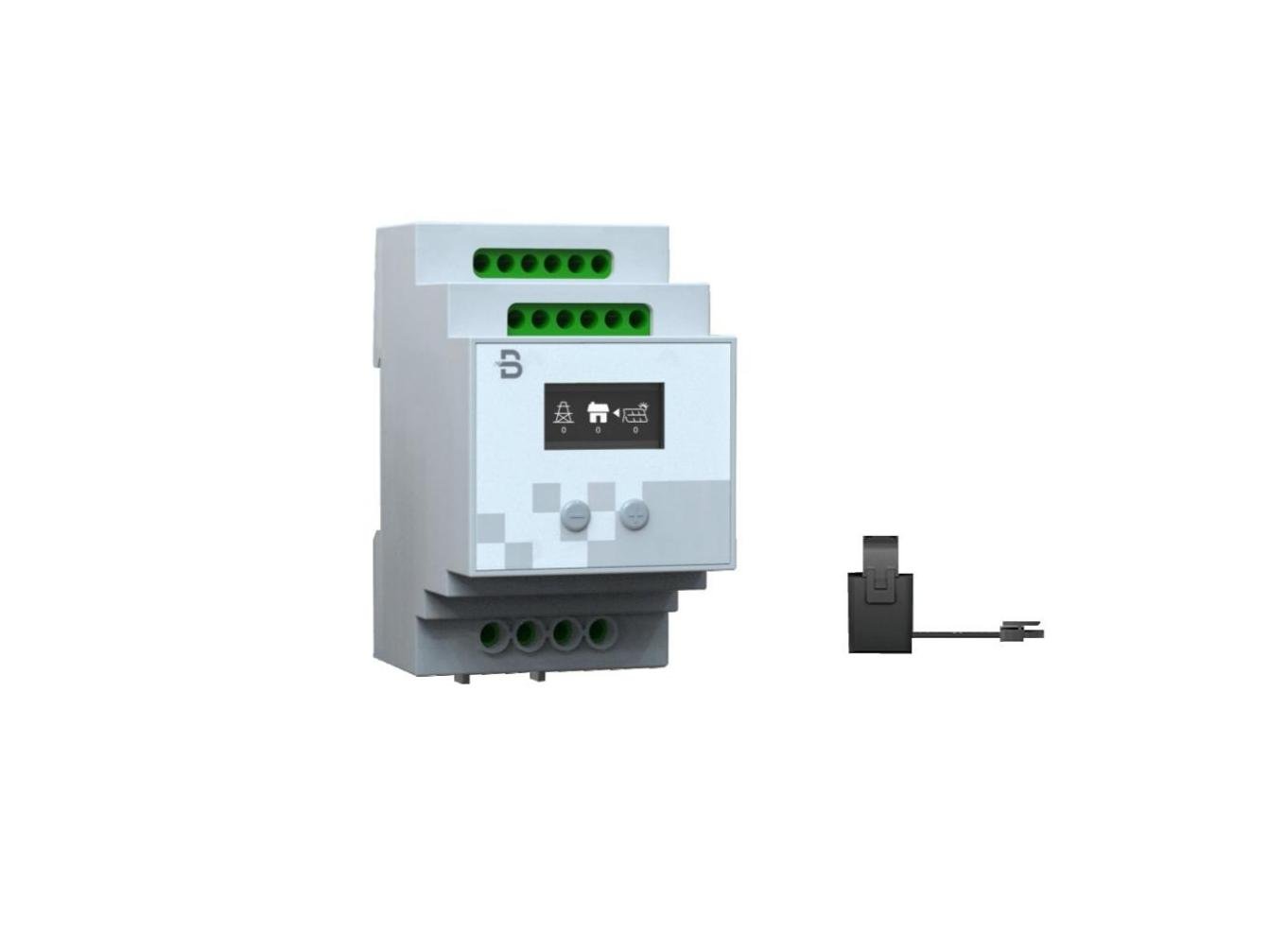
When an EV charger operates together with household appliances, the total home electrical load can increase quickly. EVB Dynamic Load Balancing helps monitor available household power and automatically adjusts the charging current based on remaining load capacity. For homes with solar PV systems, PV DLB can support solar-priority EV charging where system conditions allow.
Monitor available household power during EV charging.
Automatically adjust charging current based on remaining load capacity.
Help reduce overload risk when household appliances and EV chargers operate together.
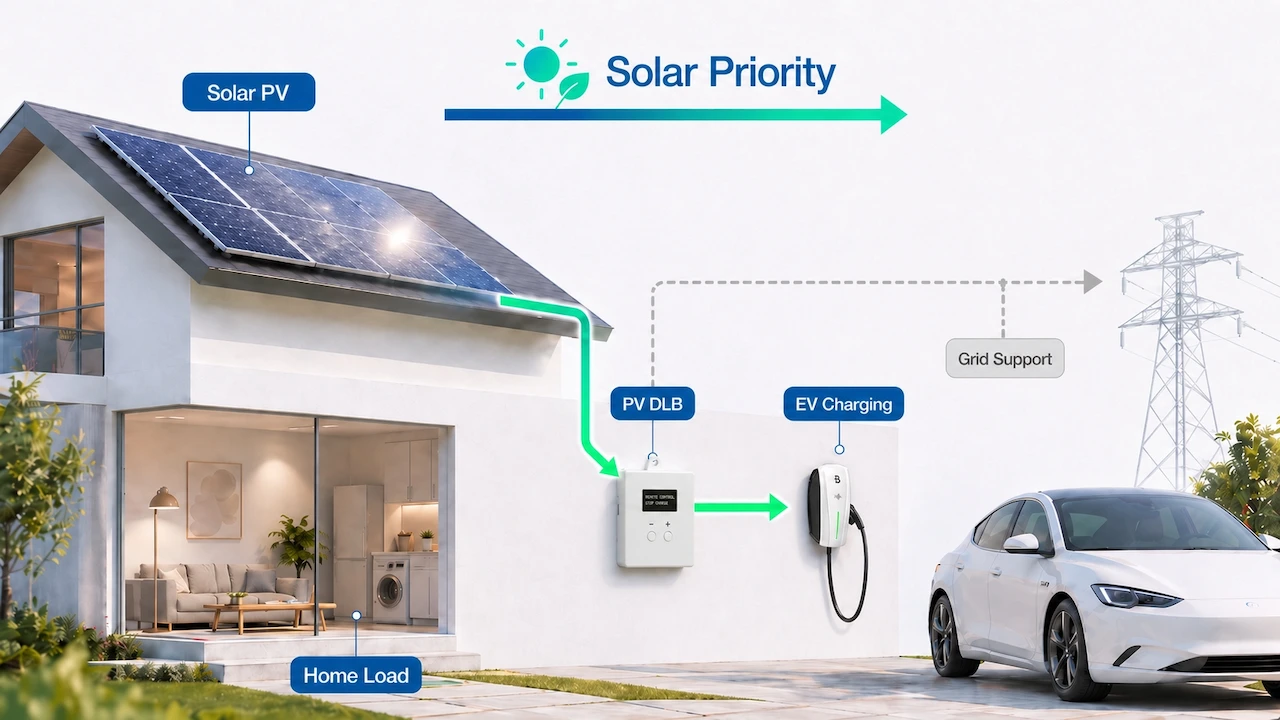
Use PV DLB to support solar-priority charging where available.
Balance household power consumption and reduce overload risk during EV charging.
Prioritize solar PV power for EV charging where system configuration supports it.
For homes with solar PV systems, smart residential EV charging can help make better use of available solar energy. With PV DLB and solar-compatible charging, the charger can support solar-priority charging where system conditions allow, helping homeowners reduce grid dependence and use more renewable energy for daily EV charging.
Solar-Priority Charging
Use PV power for EV charging where supported.
Reduce Grid Dependence
Use more on-site renewable energy.
PV DLB Coordination
Balance EV charging with solar generation and household load.
Future Energy Ready
Prepare the home for more integrated energy use.
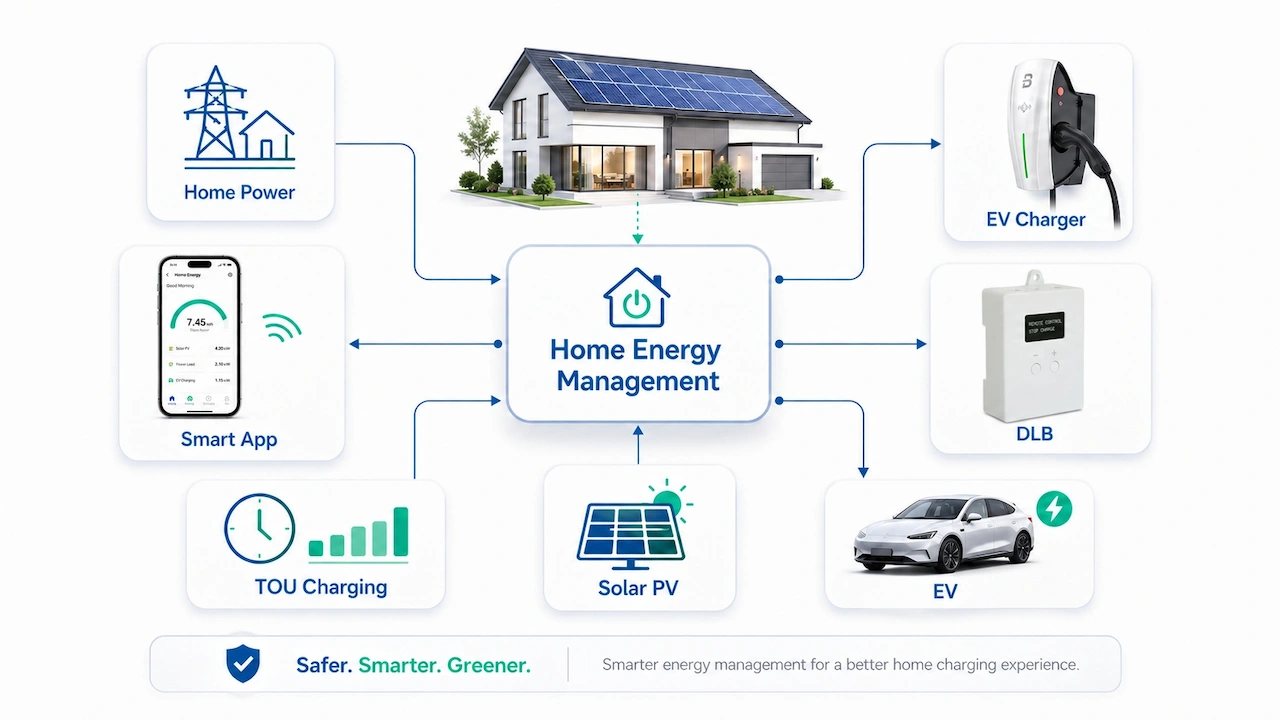
EVB helps homeowners improve smart energy consumption control by coordinating EV chargers with household energy use. With smart management, Dynamic Load Balancing, time-of-use charging, and solar-compatible charging, residential users can build a safer and more efficient home charging environment.
Main electricity source for household charging.
AC or portable charger for daily charging.
Automatically adjusts charging current based on available household load.
Monitor status, schedule charging, and manage supported DLB modes.
Plan charging around lower-rate periods where electricity pricing data is available.
Support cleaner home energy use and PV-priority charging where available.
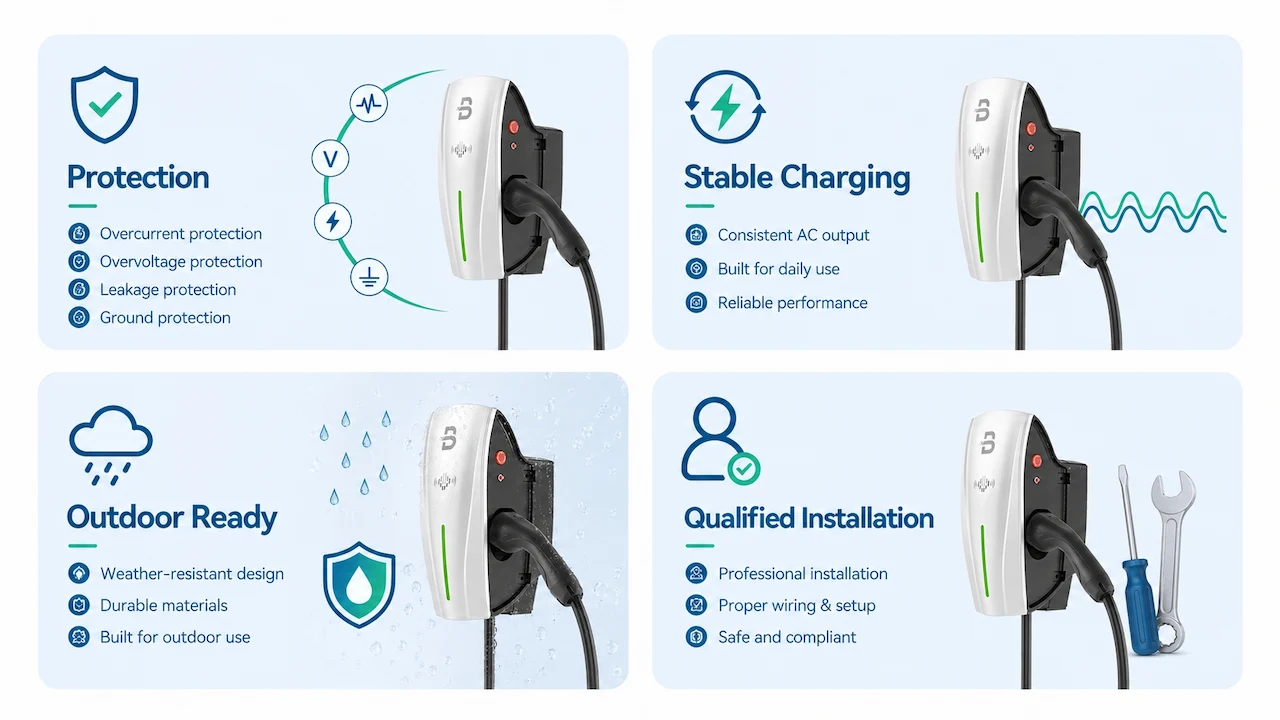
Home EV charging requires equipment designed for long-term daily use. EVB residential EV chargers are designed with safety protection, stable AC charging performance, and installation flexibility for residential environments. For outdoor or exposed parking areas, users should choose chargers with suitable environmental protection and follow local installation requirements.
Support safe charging in residential use.
Designed for regular home charging.
Choose suitable protection for exposed parking areas.
Follow local electrical requirements.
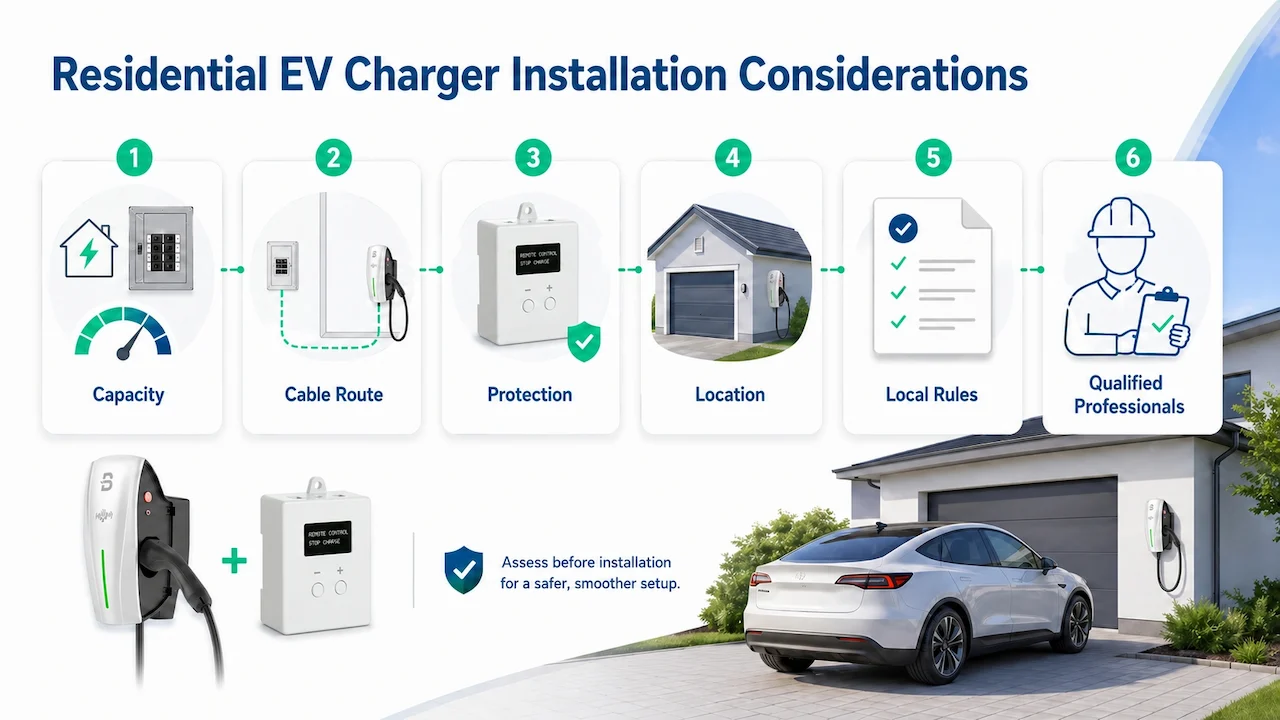
Residential EV charger installation should be planned carefully. Before installing a home EV charger, users should review power capacity, cable routing, protection requirements, indoor or outdoor placement, and local electrical regulations. EVB recommends that electrical assessment and installation be carried out by qualified professionals according to local requirements.
Check whether the home power supply can support the selected charger.
Choose a charger and location suitable for the installation environment.
Use chargers with appropriate safety protections for residential use.
Follow local regulations and work with qualified professionals where required.
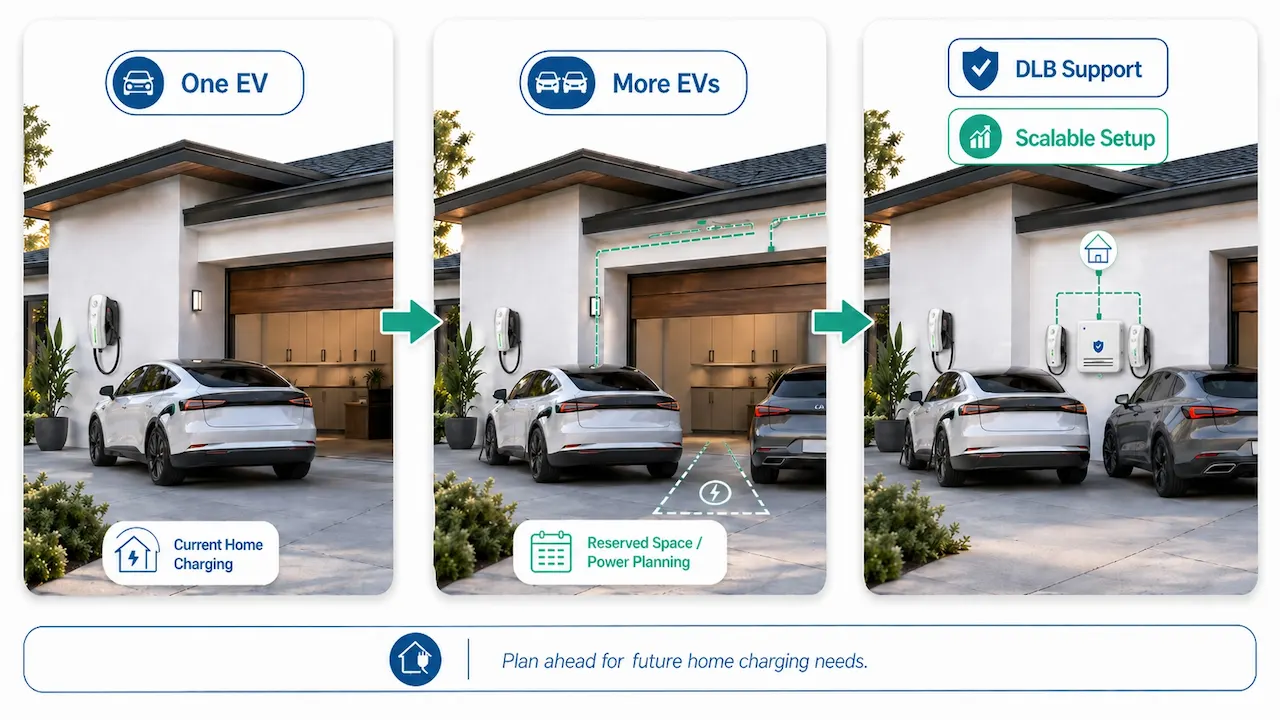
As more households add a second electric vehicle, residential charging needs may change. EVB can help users plan charging for one or more EVs by considering available household power, charger placement, Dynamic Load Balancing needs, and future expansion. This helps make the home charging setup more practical for long-term EV adoption.
Designed for daily residential charging in garages, driveways, and fixed parking spaces.
抱歉,当前分类下没有内容。
Designed for flexible charging and movable use.
抱歉,当前分类下没有内容。
Designed for app control, connectivity, and smarter operation where supported.
抱歉,当前分类下没有内容。
Designed for homes that need Dynamic Load Balancing, PV DLB, solar compatibility, time-of-use charging, or future energy coordination.
EVB offers residential EV charger options for different home charging needs, including wall-mounted AC chargers, portable EV chargers, smart AC charging stations, and DLB-ready or solar-compatible residential charging solutions. Customers can choose products based on charging speed, installation location, connectivity, safety requirements, and future energy management needs.
Designed for daily residential charging in garages, driveways, and fixed parking spaces.
Designed for flexible charging and movable use.
Designed for app control, connectivity, and smarter operation where supported.
Designed for homes that need Dynamic Load Balancing, PV DLB, solar compatibility, time-of-use charging, or future energy coordination.
EVB oferuje stacje ładowania pojazdów elektrycznych prądem stałym, które spełniają światowe standardy. Dzięki temu Twoja infrastruktura ładowania jest niezawodna i zgodna z przepisami. Dzięki naszemu fachowemu wsparciu i wysokiej jakości rozwiązaniom możesz budować trwałe zaufanie klientów.


Od Europy po Australię projekty ładowania EVB pokazują, w jaki sposób hotele i obiekty hotelarskie mogą poprawić wygodę, wspierać mobilność elektryczną i podnosić wartość obiektów dzięki praktycznemu wdrażaniu ładowarek.
Before choosing a home EV charger or residential charging station, users should review several key factors: parking location, available electrical capacity, desired charging speed, indoor or outdoor installation, smart app requirements, Dynamic Load Balancing needs, solar compatibility, time-of-use charging availability, and future EV charging needs.
Garage, driveway, apartment parking, or shared residential parking?
Can the home electrical system support the selected charger?
Is standard AC charging enough for the user’s daily routine?
Which connector type, cable, or socket format is suitable?
Will the charger be exposed to weather conditions?
Is app control, scheduling, or usage data needed?
Is load balancing needed to manage household power demand?
Is electricity price data available for smart charging planning?
Should the charger work with a solar PV system?
Will the household add more EVs later?
Zoptymalizuj ładowanie z EVB – liderem w dziedzinie stacji ładowania samochodów elektrycznych w mieszkaniach i domach. Nasz system plug-and-play gwarantuje prostotę, a inteligentna aplikacja umożliwia bezproblemowe zarządzanie i monitorowanie.
W dobie elektromobilności rośnie również zapotrzebowanie na wydajne i praktyczne domowe stacje ładowania pojazdów elektrycznych. Oferujemy pełną gamę rozwiązań dla domowych stacji ładowania, w tym dobór sprzętu, instalację i inteligentne funkcje.
Nasza domowa ładowarka EV z funkcją dynamicznego równoważenia obciążenia optymalizuje zużycie energii i bezproblemowo integruje się z systemami fotowoltaicznymi, zapewniając opłacalne usługi ładowania.
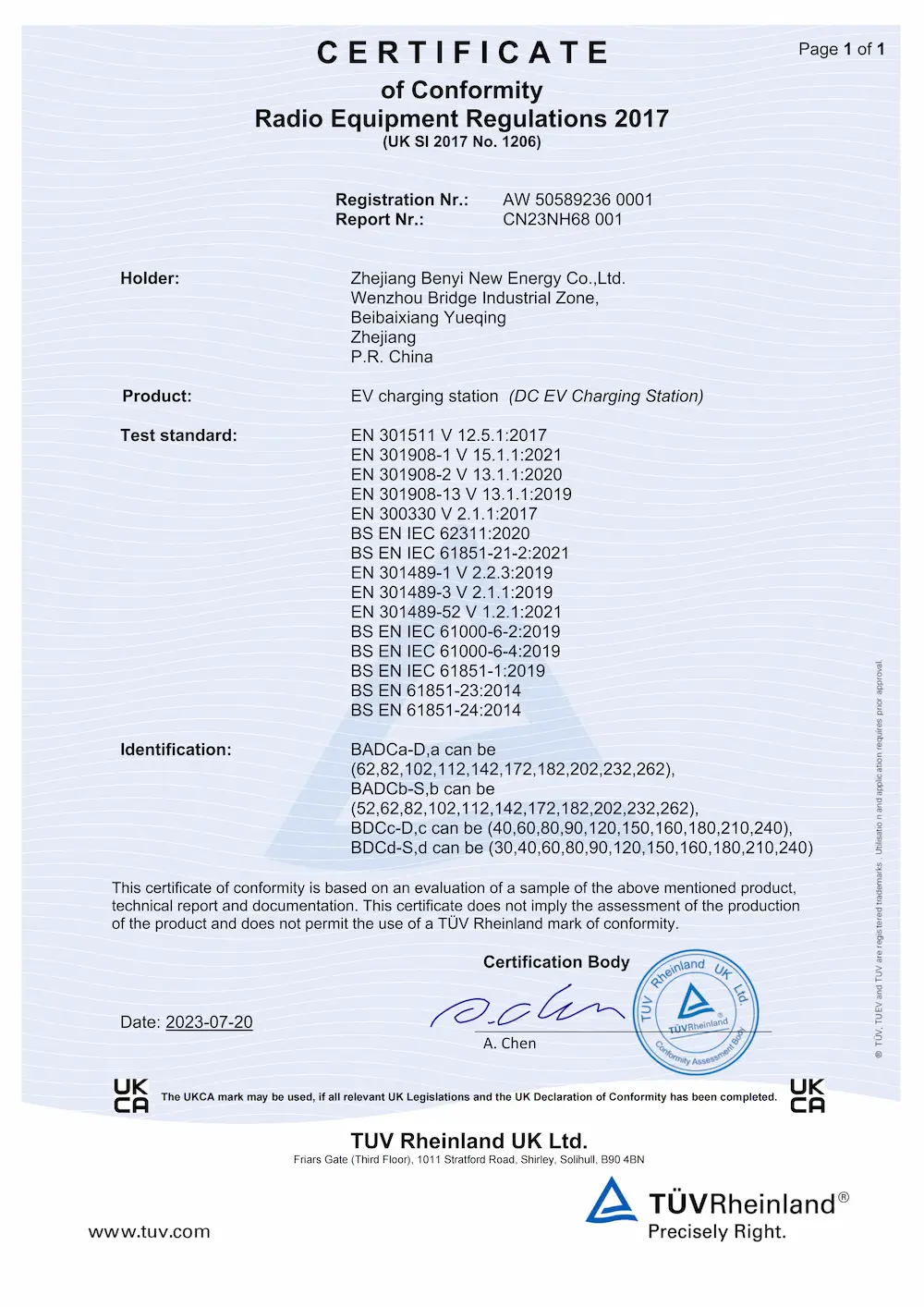
Certyfikowane ładowarki EVB do samochodów elektrycznych są regularnie testowane i spełniają zmieniające się normy. Wyposażono je także w liczne funkcje zabezpieczające, które gwarantują bezpieczeństwo.
Upraszczając procedury fakturowania i płatności, oprogramowanie zapewnia właścicielom, operatorom i użytkownikom stacji ładowania płynny proces dokonywania transakcji.
Zatrudniamy wykwalifikowanego elektryka do oceny i modernizacji mocy oraz zapewnienia bezpiecznej instalacji zgodnie z lokalnymi przepisami.
Uzyskaj dostęp do danych dotyczących ładowania za pomocą naszej inteligentnej aplikacji w telefonie i wykorzystaj jej inteligentne funkcje, takie jak zdalne monitorowanie i kontrola ładowania, planowanie czasu ładowania i dostęp do danych dotyczących użytkowania.
Nasze ładowarki do samochodów elektrycznych do użytku domowego są nie tylko praktyczne, ale również wyróżniają się stylowym wyglądem i regulowanymi poziomami mocy.
Nasza domowa ładowarka EV umożliwia ładowanie pojazdów elektrycznych w nocy, a także korzystanie ze zniżek na energię elektryczną poza godzinami szczytu, co pozwala zaoszczędzić pieniądze.
Wyjątkową niezawodność ładowania uzyskano dzięki zastosowaniu wielu mechanizmów zabezpieczających, obejmujących m.in. zabezpieczenie przed wyciekiem i przegrzaniem.
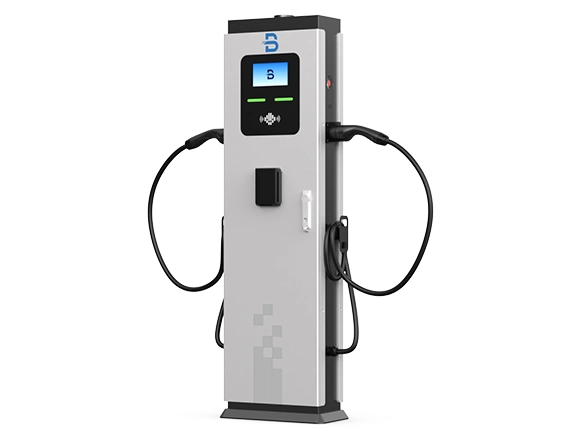
Odkryj ładowarkę EVB BCPCM-C2N-P mode 3 EV z kablem ładującym typu 2 mode 3. Ta ładowarka z podwójnym kablem, zgodna z normą IEC 61851-21-2, obsługuje protokół OCPP, co zapewnia bezproblemową integrację. Idealna do wydajnych i niezawodnych rozwiązań ładowania EV.

Inteligentna ładowarka AC EV z podwójnym gniazdem ładowania EV typu 2, do montażu na ścianie lub słupie, działa w trybie trójfazowym o mocy 22 kW. Działa w temperaturach od -25 do 55°C, posiada certyfikaty CE, CB i RCM, ekran LCD i stopień ochrony IP55.
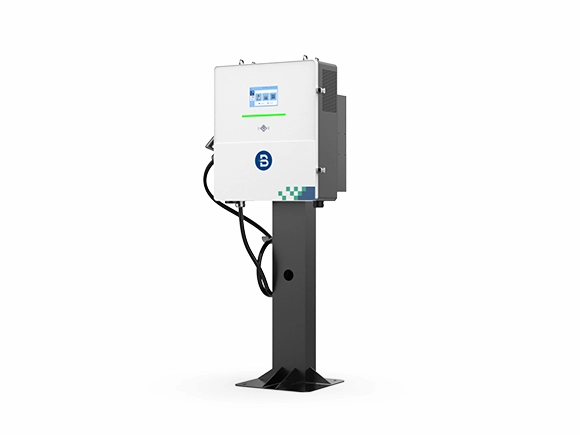
Wyposażona w pełną funkcję ochrony i stopień ochrony IP55, ścienna ładowarka prądu stałego EVB do pojazdów elektrycznych oferuje moc wyjściową 60 kW, która zaspokaja zróżnicowane potrzeby ładowania zarówno w domu, jak i w zastosowaniach komercyjnych.
Ładowarka EVB EV do pojazdów biznesowych to ładowarka prądu przemiennego EV typu 3, zaprojektowana zgodnie z normą IEC 61851-21-2. Można ją montować na ścianie lub zainstalować na cokole.
Przenośna ładowarka EVB to wygodne, przenośne i gotowe do użycia rozwiązanie do zasilania samochodu elektrycznego.
Ładowarka AC EV z gniazdem ładowania EV typu 2, do montażu na ścianie lub słupie, działa w trybie 1-fazowym lub 3-fazowym (230 V lub 400 V), 6 A lub 32 A. Działa w temperaturach od -25°C do 55°C, posiada certyfikaty CE, CB i RCM, a jej obudowy posiadają klasę odporności ogniowej IP65 i V0.
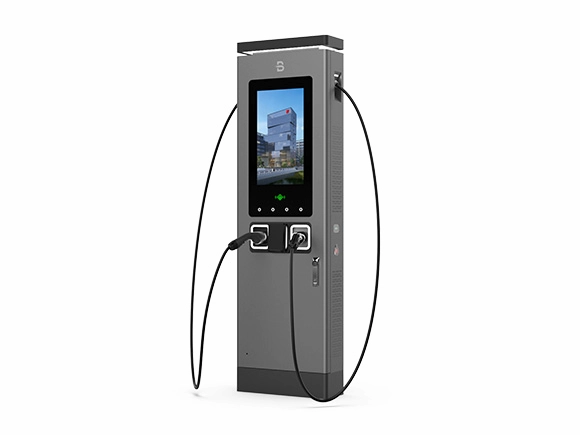
Podłogowa ładowarka AC EVB Model 3 jest wyposażona w 21-calowy ekran dotykowy, umożliwiający intuicyjną interakcję człowiek-maszyna. Dzięki obsłudze platform OCPP, oferuje wysoką kompatybilność i wszechstronność, zapewniając użytkownikom inteligentne rozwiązanie do ładowania.
EVB to ładowarka sieciowa OCPP Tethered AC EV drugiej generacji z kablem typu 2, do montażu na ścianie lub słupie, działa w trybie 1-fazowym lub 3-fazowym (230 V lub 400 V, 6 A lub 32 A). Działa w temperaturach od -25 do 55°C i posiada certyfikaty CE, CB, a także obudowy o klasie odporności ogniowej IP65 i V0.

Ulepsz swoje wrażenia z ładowania dzięki ładowarce EVB montowanej na podłodze z zasilaniem AC i funkcją POS. Ciesz się łatwą interakcją dzięki 7-calowemu ekranowi dotykowemu. Steruj ładowarką za pomocą inteligentnej aplikacji i różnych opcji łączności.
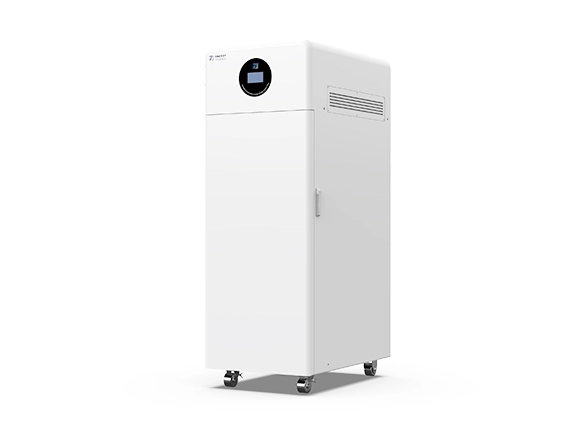
Seria EVB BYAIO wykorzystuje akumulatory litowo-żelazowo-fosforanowe (LFP), które są bezpieczne, trwałe, wydajne i charakteryzują się wysoką gęstością mocy. Zacznij zakupy już dziś!
Wysokonapięciowy system magazynowania energii EVB montowany w szafie rack, oferujący dwa tryby pracy i wyposażony w akumulatory LiFePO4. Dzięki klasie wytrzymałości IP54 idealnie nadają się do zastosowań domowych. Zacznij zakupy już dziś!
Odkryj systemy magazynowania energii EVB z akumulatorami wysokiego napięcia, wyposażone w dwa tryby układania w stosy i akumulatory LifePO4. Klasa trwałości IP54, idealna do użytku domowego. Kup już dziś!
Akumulator energii LFP do zastosowań domowych został zaprojektowany i opracowany niezależnie przez firmę BENY. Jest szeroko stosowany w dziedzinie magazynowania energii z falownikami sieciowymi, falownikami autonomicznymi i falownikami hybrydowymi.
Akumulator energii LFP do zastosowań domowych został zaprojektowany i opracowany niezależnie przez firmę BENY. Jest szeroko stosowany w dziedzinie magazynowania energii w falownikach sieciowych, autonomicznych i hybrydowych.
Akumulator energii LFP do zastosowań domowych został zaprojektowany i opracowany niezależnie przez firmę BENY. Jest szeroko stosowany w dziedzinie magazynowania energii z falownikami sieciowymi, falownikami autonomicznymi i falownikami hybrydowymi.
System Zarządzania Energią został zaprojektowany specjalnie z myślą o inteligentnym zarządzaniu energią. System ten nadaje się do integracji z sieciami domowymi wyposażonymi w systemy fotowoltaiczne, składające się z urządzeń pomiarowych BEMS i urządzeń sterujących BEMC.
Ulepsz swoje wrażenia z ładowania dzięki ładowarce EVB Floor Mounted AC EV, zatwierdzonej przez CE&UKCA i wyposażonej w gniazdo T2S. Ciesz się łatwą interakcją dzięki 5-calowemu ekranowi dotykowemu. Steruj ładowarką za pomocą inteligentnej aplikacji i różnych opcji łączności.
Ulepsz swoje wrażenia z ładowania dzięki ładowarce EVB montowanej na podłodze, zasilanej prądem zmiennym. Ciesz się łatwą obsługą dzięki 5-calowemu ekranowi dotykowemu. Steruj ładowarką za pomocą inteligentnej aplikacji i różnych opcji łączności.
Ładowarka AC EV z kablem typu 2, do montażu na ścianie lub słupie, działa w trybie 1-fazowym lub 3-fazowym (230 V lub 400 V), 6 A lub 32 A. Działa w temperaturach od -25 do 55°C. Posiada certyfikaty CE, CB i RCM, a obudowy posiadają klasę odporności ogniowej IP65 i V0.
Ładowarka AC EV z gniazdem typu 2, do montażu na ścianie lub słupie, działa w trybie 1-fazowym lub 3-fazowym (230 V lub 400 V), 6 A lub 32 A. Działa w temperaturach od -25 do 55°C. Posiada certyfikaty CE, CB i RCM, a obudowy posiadają klasę odporności ogniowej IP55 i V0.
Przenośna ładowarka do pojazdów elektrycznych IP54 o mocy 3,7 kW, poziom 2, zapewnia bezpieczeństwo Twojego pojazdu elektrycznego w podróży. Wystarczy gniazdko elektryczne, aby naładować pojazd, nawet jeśli w pobliżu nie ma stacji ładowania.
Przenośna ładowarka EV o mocy 3,7 kW, IP66, poziomu 2, zapewnia bezpieczeństwo Twojego pojazdu elektrycznego w podróży. Wystarczy gniazdko elektryczne, aby naładować pojazd, nawet jeśli w pobliżu nie ma stacji ładowania.
Wszystkie nasze ładowarki objęte są 3-letnią gwarancją, obejmującą konserwację zdalną i na miejscu.
Przydzielony zostanie Ci specjalista ds. zarządzania kontami, który będzie Cię informował na bieżąco o przebiegu procesu produkcyjnego.
Instalacją punktów ładowania w domu zajmują się certyfikowani technicy, dzięki czemu masz pewność, że będą działać zgodnie z przeznaczeniem.
Doświadczony zespół wsparcia jest zawsze dostępny, aby odpowiedzieć na pytania klientów telefonicznie, 24 godziny na dobę, 7 dni w tygodniu.
Dożywotnie aktualizacje oprogramowania punktów ładowania Over-the-Air zapewniają ich ciągłą optymalizację.
Od konsultacji po obsługę posprzedażową, jesteśmy zobowiązani do zapewnienia Państwu doskonałego poziomu usług.
We have compiled a list of frequently asked questions (and answers) about AC residential EV charging solution for your reference.
The best EV charger for home use depends on parking location, electrical capacity, charging speed requirements, indoor or outdoor installation, and smart control needs. Wall-mounted AC chargers are commonly used for regular home charging, while portable EV chargers offer more flexibility.
In markets such as North America, Level 2 home EV charging usually refers to dedicated AC charging equipment that charges faster than a standard household outlet. The actual charging speed depends on local voltage, charger power rating, and vehicle acceptance capacity.
Home EV charger installation depends on electrical capacity, local regulations, installation location, and protection requirements. EVB recommends working with qualified professionals for assessment and installation according to local requirements.
Home EV charger installation cost can vary by country, electrical capacity, cable routing, installation complexity, and local code requirements. Users should assess site conditions before choosing a charger.
Where time-of-use electricity pricing and cloud connectivity are supported, EVB smart charging can help users plan charging around lower-rate periods. The charging schedule can be generated based on electricity price information, desired charging amount, and planned vehicle use time. Availability may vary by market, charger model, and system configuration.
Dynamic Load Balancing helps adjust EV charging current according to available household electrical load. When other household appliances are using power, the charger can reduce charging current to help avoid overload. When more power is available, charging current can increase within the supported range.
Normal DLB is used to balance household power consumption during EV charging and reduce overload risk. PV DLB is designed for homes with solar PV systems and can help prioritize solar power for EV charging where the system configuration supports it.
Dynamic Load Balancing can help make better use of existing household power capacity by adjusting charging current according to available load. However, whether an electrical upgrade is needed depends on the home’s electrical system, charger power, local regulations, and installation assessment.
Yes, outdoor residential EV chargers can be used in driveways or exposed parking areas when the charger is properly rated for outdoor installation and installed according to local requirements.
EVB residential EV chargers can support solar-compatible charging strategies, PV DLB, and Dynamic Load Balancing where site conditions and system configuration allow.
Users should check parking location, electrical capacity, connector type, installation format, smart app requirements, DLB needs, solar compatibility, and future EV charging plans.
Portable EV chargers can be useful for flexible or temporary charging needs, but fixed wall-mounted chargers are often preferred for regular daily home charging.
dołącz do sukcesu
Tell us about your parking location, power conditions, charging needs, DLB requirements, time-of-use charging needs, solar compatibility needs, and preferred installation type. EVB will help you choose a suitable home EV charger or residential EV charging station for your project.
Od konsultacji po instalację – nasz zespół ekspertów zapewnia kompleksowe rozwiązanie w zakresie ładowania pojazdów elektrycznych, dostosowane do Twoich potrzeb.
Prawa autorskie © 2026, EVB. Wszelkie prawa zastrzeżone. Wsparcie: beny.