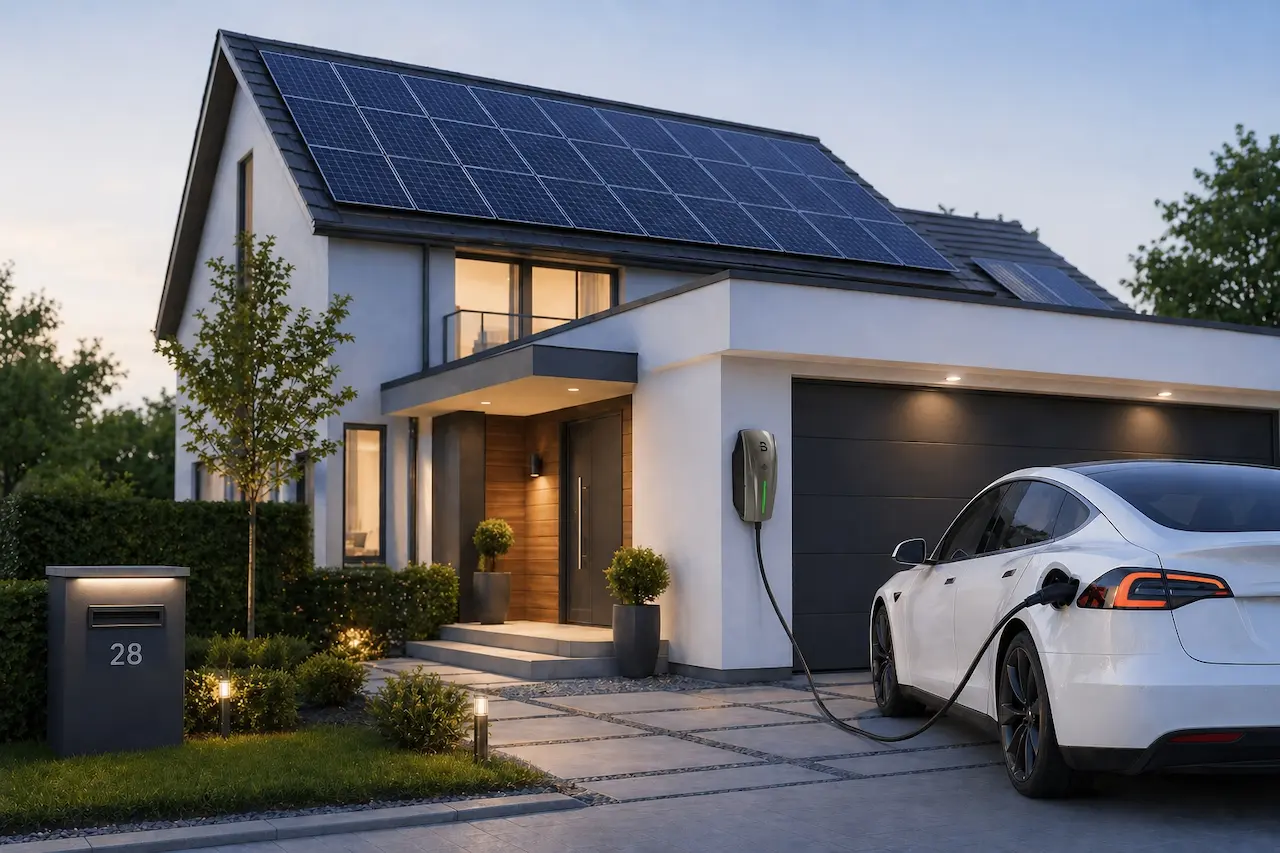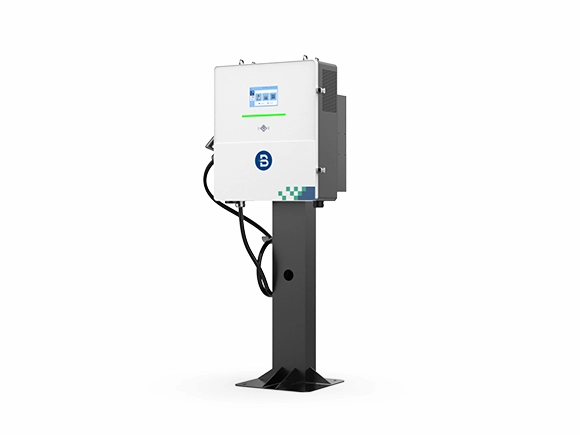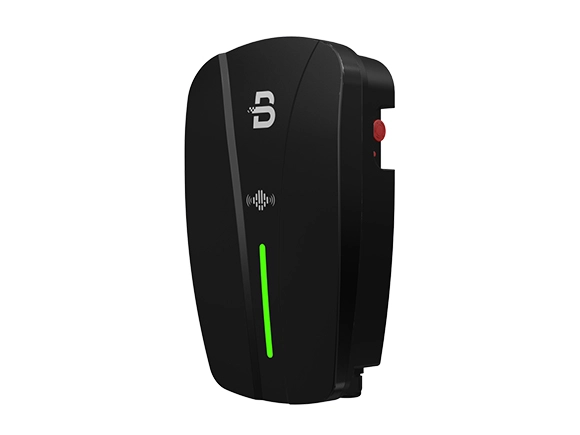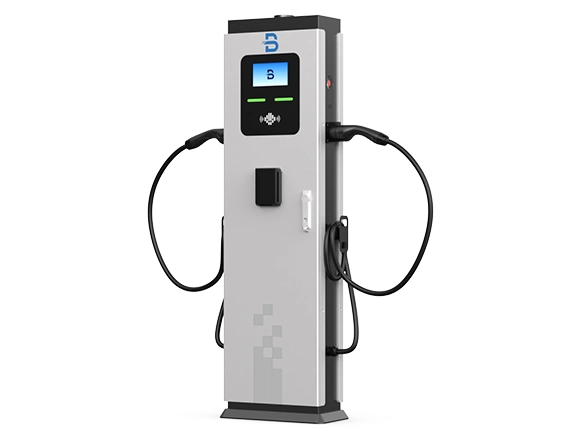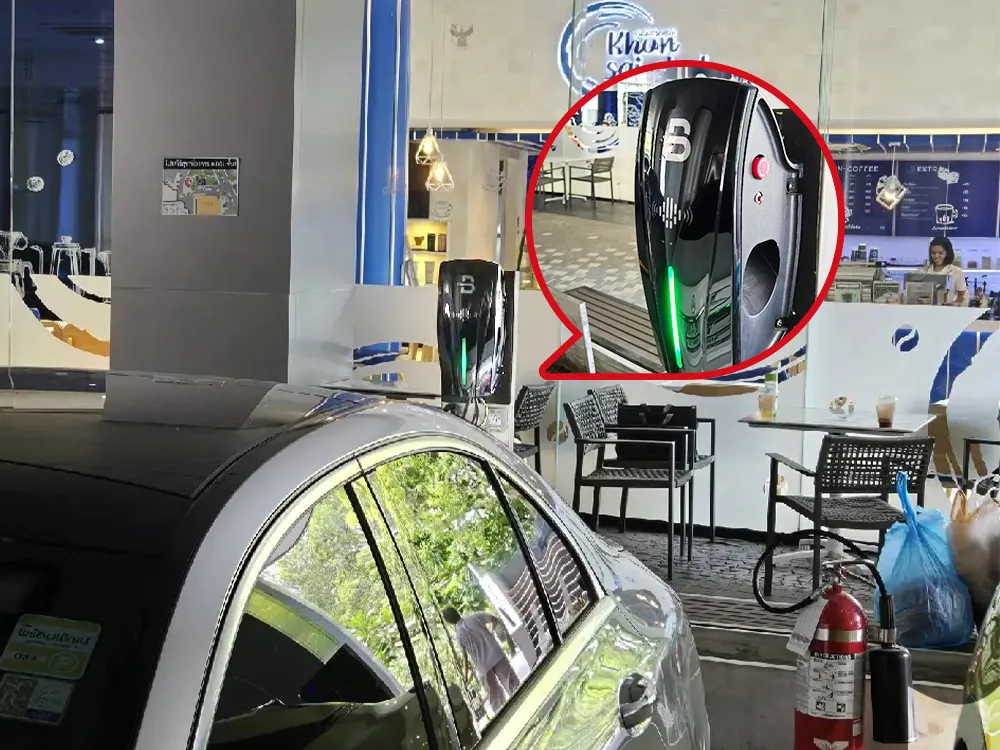












Charge your electric vehicle at home with EVB residential EV charging solutions designed for daily convenience, smart energy management, and reliable home charging. From wall-mounted AC chargers and portable EV chargers to outdoor residential EV chargers and DLB-ready charging options, EVB helps homeowners, apartments, and residential properties build a safer, smarter, and more efficient home EV charging setup.
Home EV charging gives drivers the convenience of charging where they live. Instead of relying only on public charging stations, homeowners and residential properties can use a dedicated home EV charger to support daily commuting, overnight charging, and better control over charging time and household energy use.

Charge your EV at home overnight or whenever the vehicle is parked.

Reduce dependence on public charging
availability.

Schedule charging during lower-rate periods where available.

Make homes, apartments, and residential parking areas more EV-ready.
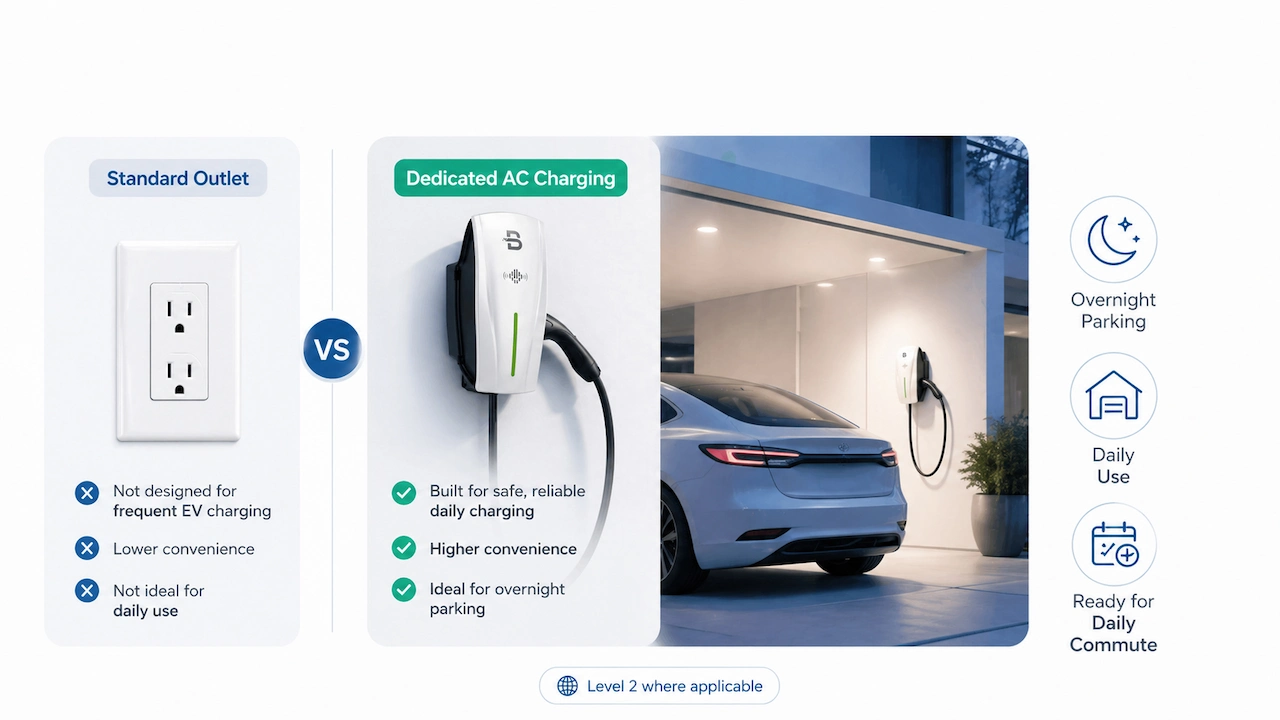
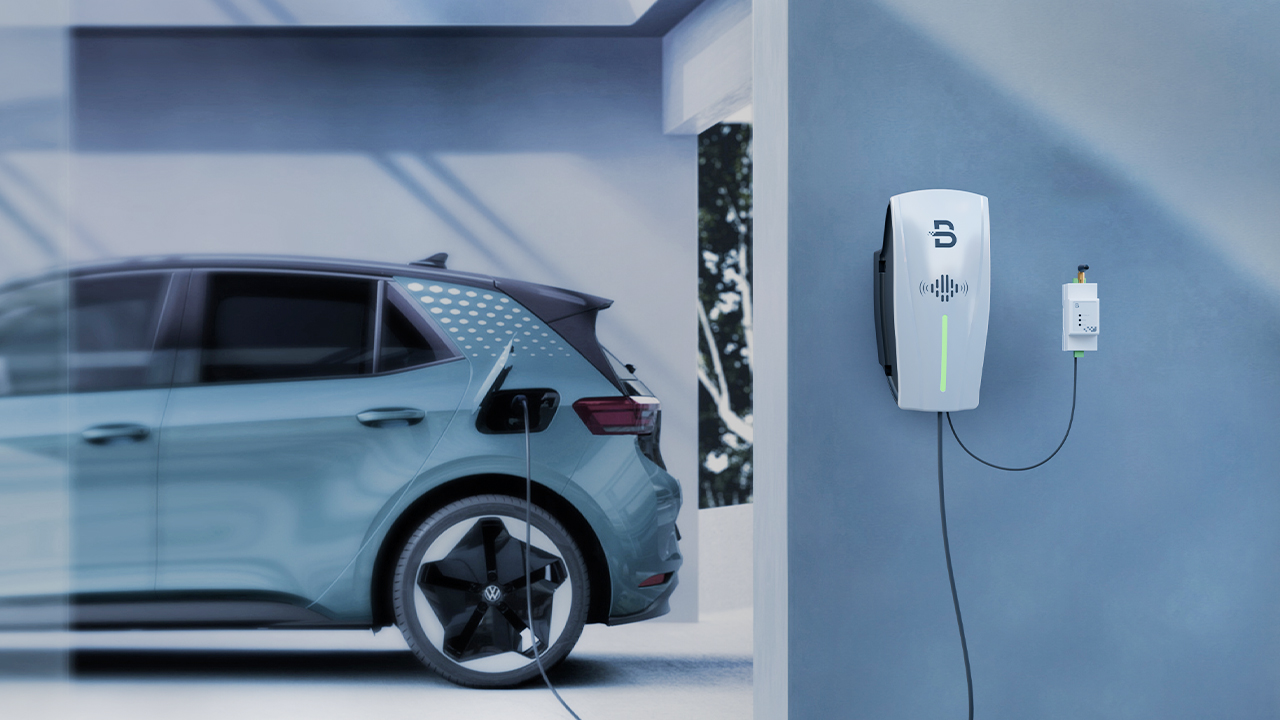
For most residential charging needs, an AC home EV charger provides a practical balance of charging speed, installation flexibility, and daily convenience. Compared with a standard household outlet, a dedicated home EV charger can support more stable and efficient charging for overnight parking, daily commuting, and fixed residential spaces. In markets such as North America, this type of AC charging is often referred to as Level 2 home EV charging.
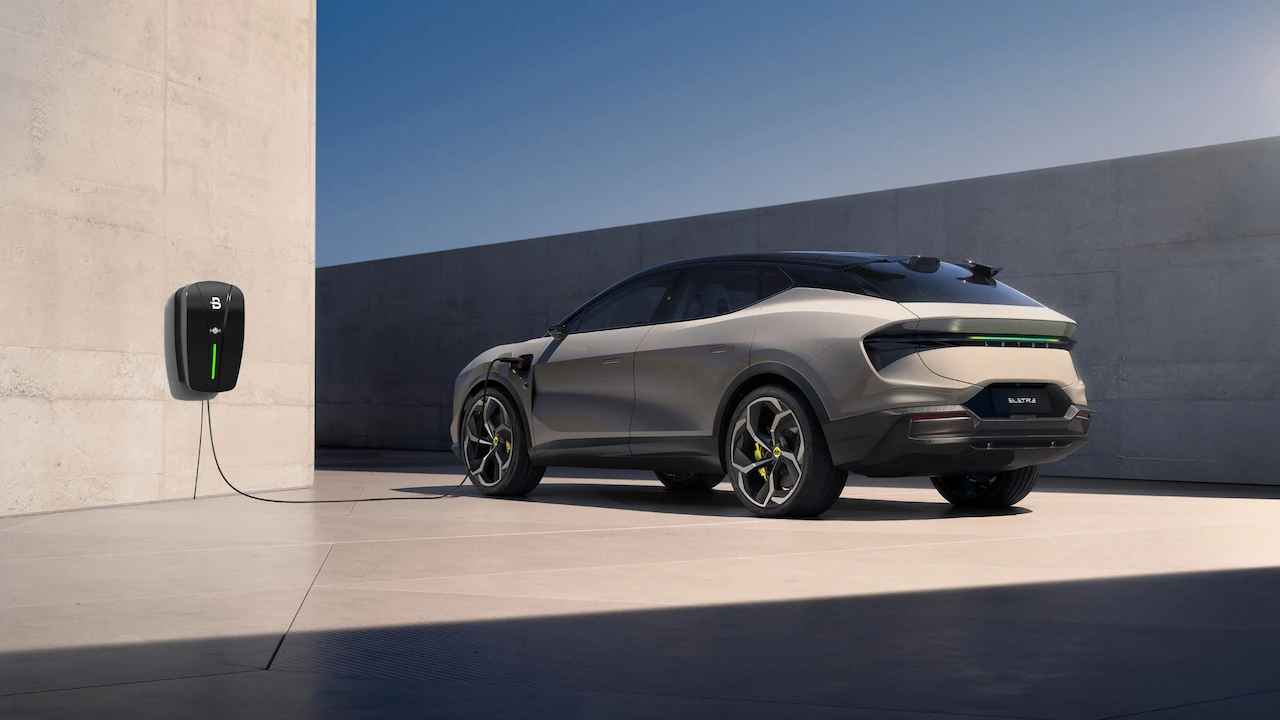
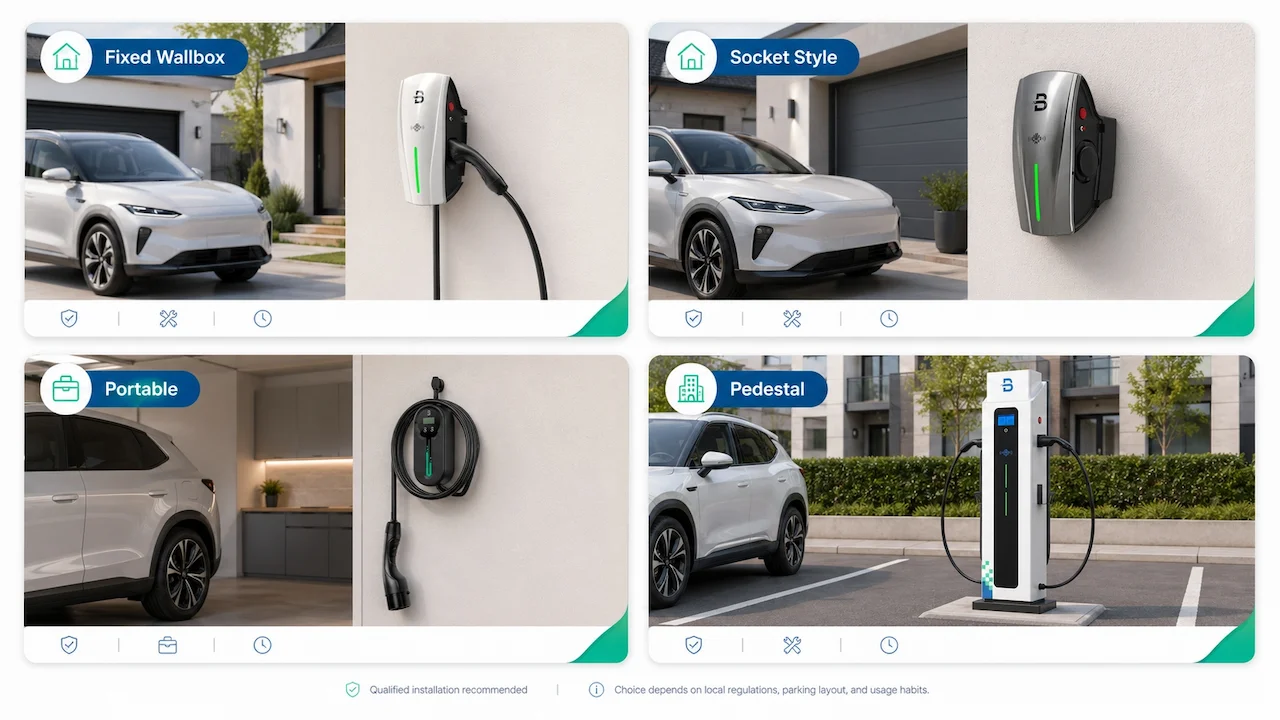
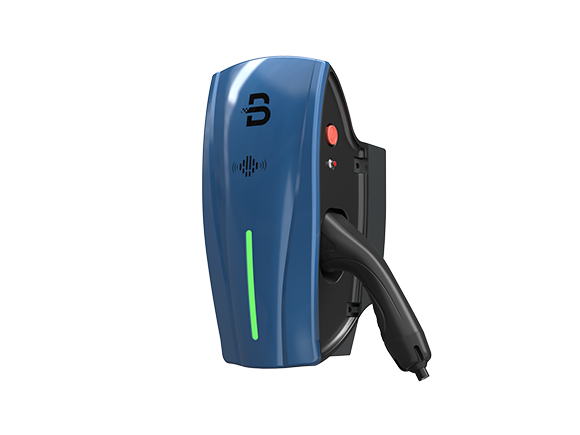
Different homes need different charging setups. A wall-mounted home EV charger is suitable for fixed parking spaces and regular daily charging, while a portable EV charger can offer greater flexibility for users who need a movable charging option. Outdoor residential EV chargers are suitable for driveways and exposed parking areas, while smart AC chargers can support app control, scheduling, and load management where configured.
Best for fixed parking spaces, garages, and daily home charging.
Sembra che non riusciamo a trovare quello che stai cercando.
Best for app control, charging schedules, and supported load management functions.
Sembra che non riusciamo a trovare quello che stai cercando.
Best for flexible use, temporary charging needs, or secondary charging locations.
Sembra che non riusciamo a trovare quello che stai cercando.
Best for driveways, outdoor parking spaces, and weather-exposed installations.
Sembra che non riusciamo a trovare quello che stai cercando.
Residential charging setups may use different installation formats depending on local electrical rules, parking layout, and user habits. A fixed wallbox charger is suitable for regular home charging at a dedicated parking space, while socket-style or portable charging options may provide more flexibility where allowed. The final setup should always follow local electrical regulations and be assessed by qualified professionals.
Best for daily charging at a dedicated parking space.
Suitable where socket-based installation is allowed and properly protected.
Useful for flexible or temporary charging needs.
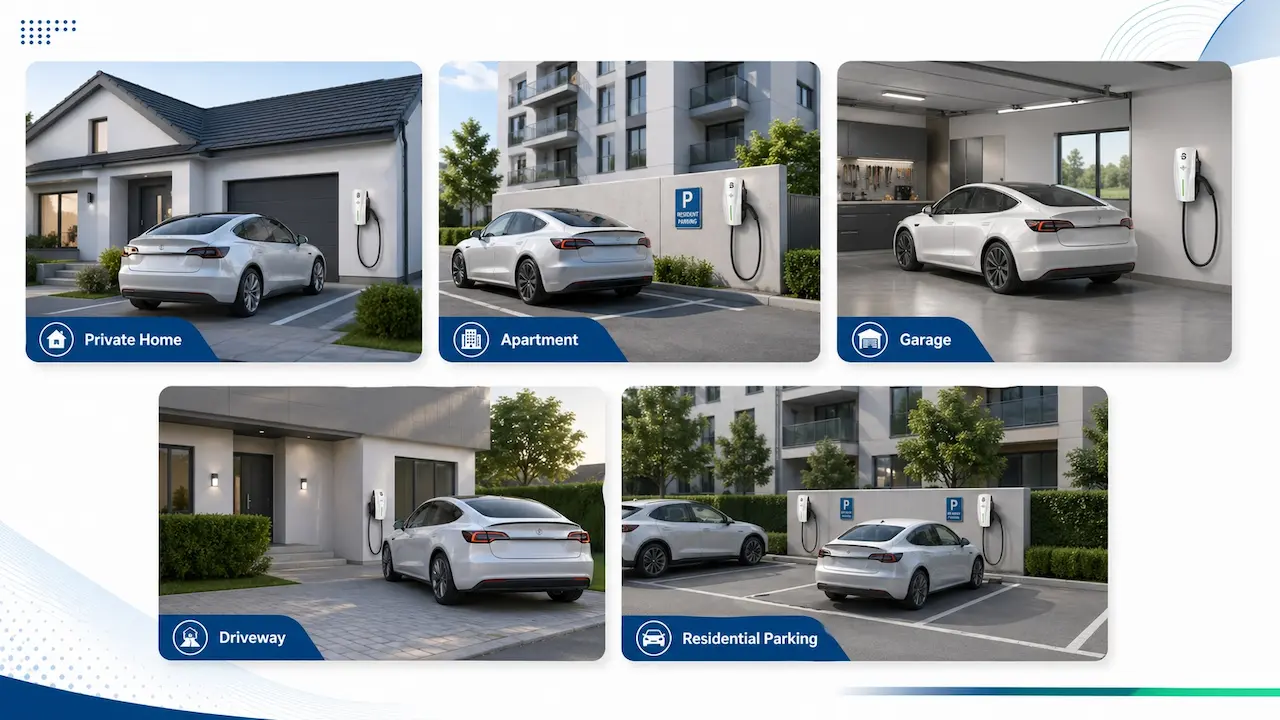
Suitable for driveways, open parking spaces, or shared residential parking areas.
| User Need | Recommended Option | Key Feature |
|---|---|---|
| Daily home charging | Caricabatterie da parete CA | Stable fixed charging |
| Flexible or temporary use | Portable EV charger | Movable charging option |
| Outdoor driveway | Outdoor-rated residential charger | Weather-resistant installation |
| Smart scheduling | Smart AC charger | App and charging schedule |
| Household load limits | DLB-ready charger | Dynamic current adjustment |
| Solar PV home | PV DLB / solar-compatible option | Solar-priority charging |
| Apartment/shared parking | Managed AC charging setup | Access control and records |
| Future multiple EVs | Scalable residential setup | Planning for expansion |
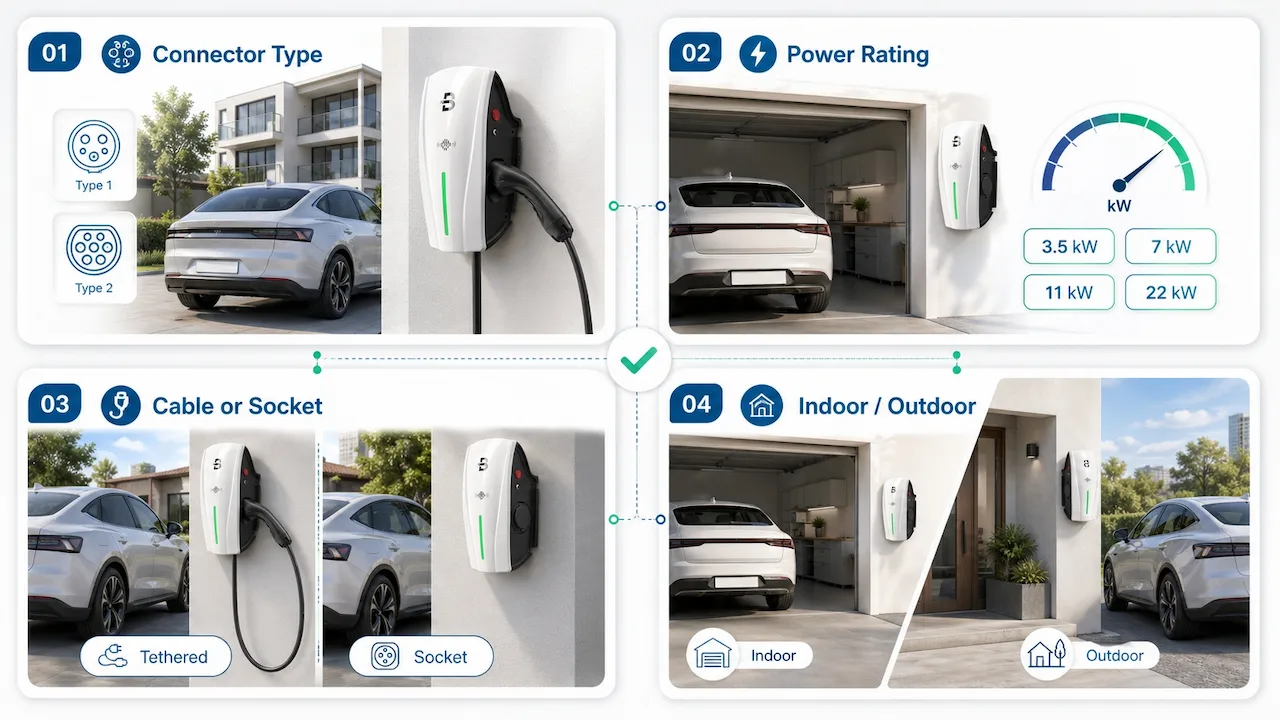
A suitable home EV charger should match the vehicle, local charging standard, parking setup, and preferred installation format. EVB residential EV chargers can be selected based on connector type, power rating, cable or socket configuration, indoor or outdoor use, and smart charging requirements. This helps homeowners and residential properties choose a charger that fits both current vehicles and future charging needs.
Tipo di connettore
Match local EV charging standards and vehicle requirements.
Power Rating
Choose suitable AC charging power based on electrical capacity and daily use.
Cable or Socket Design
Select tethered cable or socket-style charging where available.
Indoor or Outdoor Use
Choose a charger suitable for garage, driveway, or exposed parking areas.
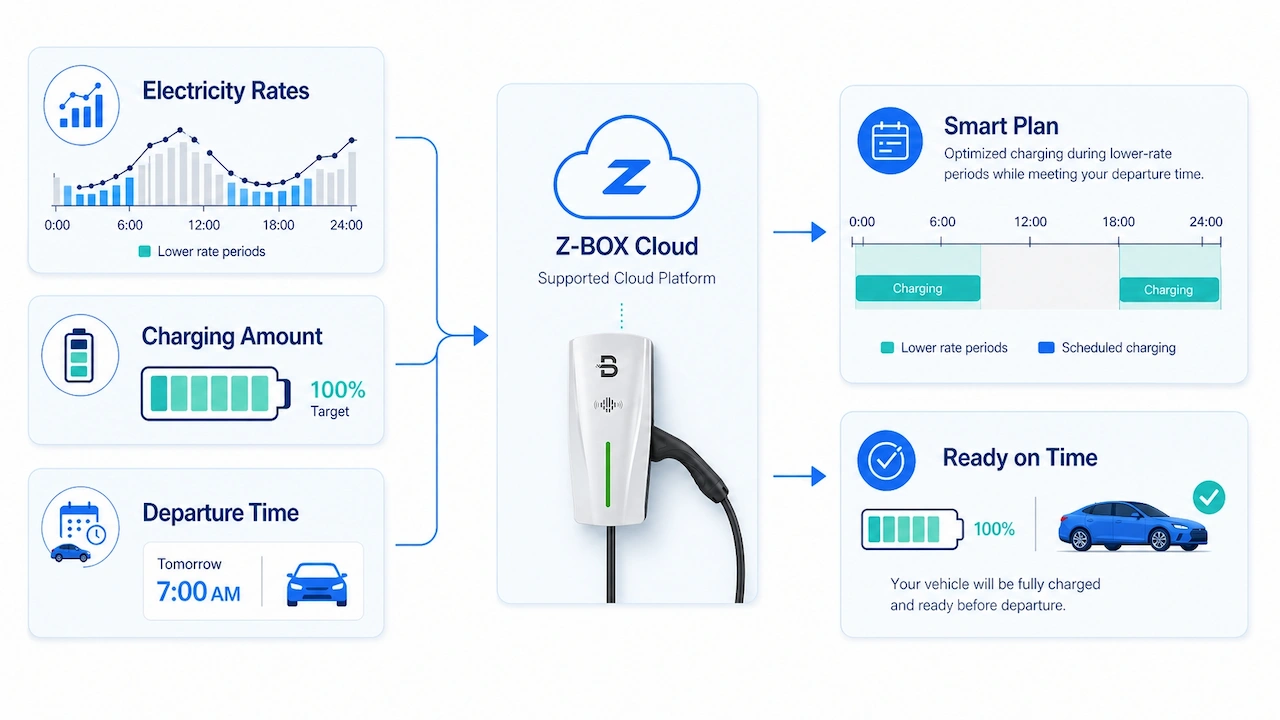
EVB residential EV chargers support smart charging features that help users monitor charging status, schedule charging time, and manage daily charging activity through a smart app and supported cloud platform where configured. Where electricity price data is available, the system can help generate a smarter charging plan based on the user’s desired charging amount and planned vehicle use time.
View charging status through the smart app where supported.
Set charging times based on daily routine or lower-rate electricity periods where available.
Use available electricity price information to support smarter charging planning.
Track charging activity and energy use.
Manage charging more easily from home or remotely.
Where time-of-use electricity pricing is available, EVB smart charging can help users plan charging sessions around lower-rate periods. By combining electricity price information, desired charging amount, and planned vehicle departure time, the system can generate a more cost-effective charging schedule through the charger and supported cloud platform. This helps homeowners charge more intelligently while maintaining daily driving readiness.
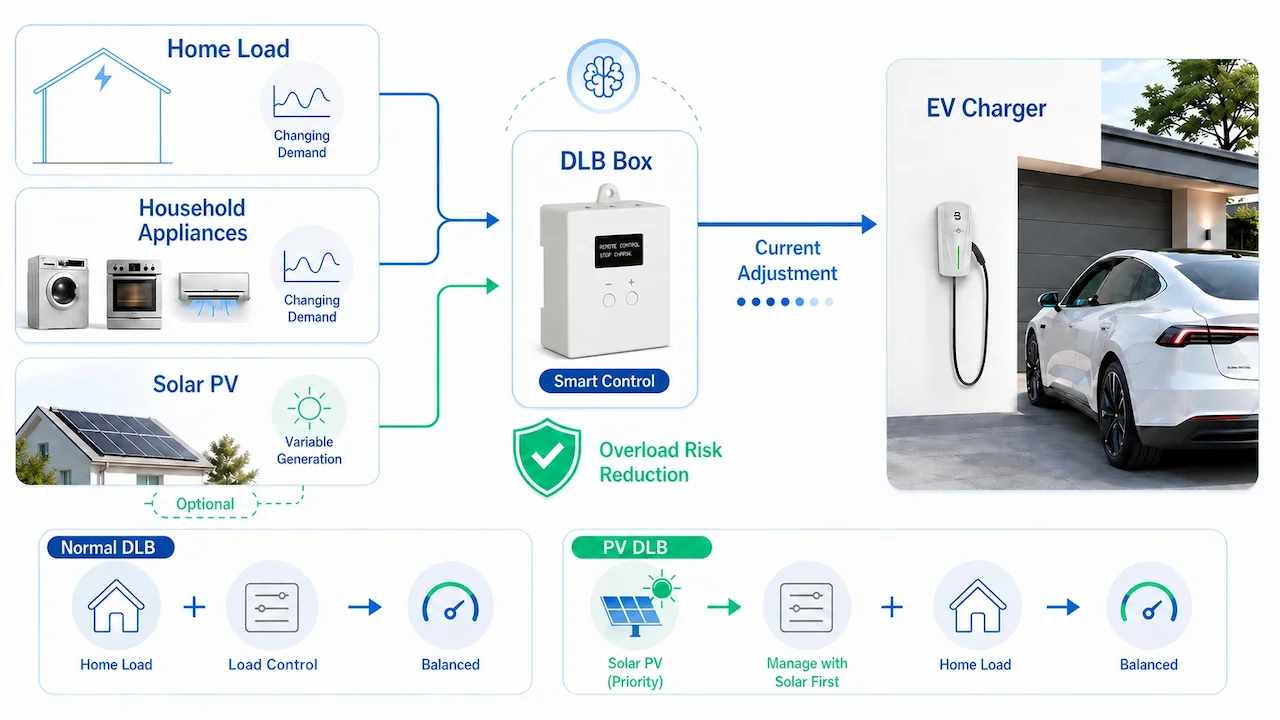
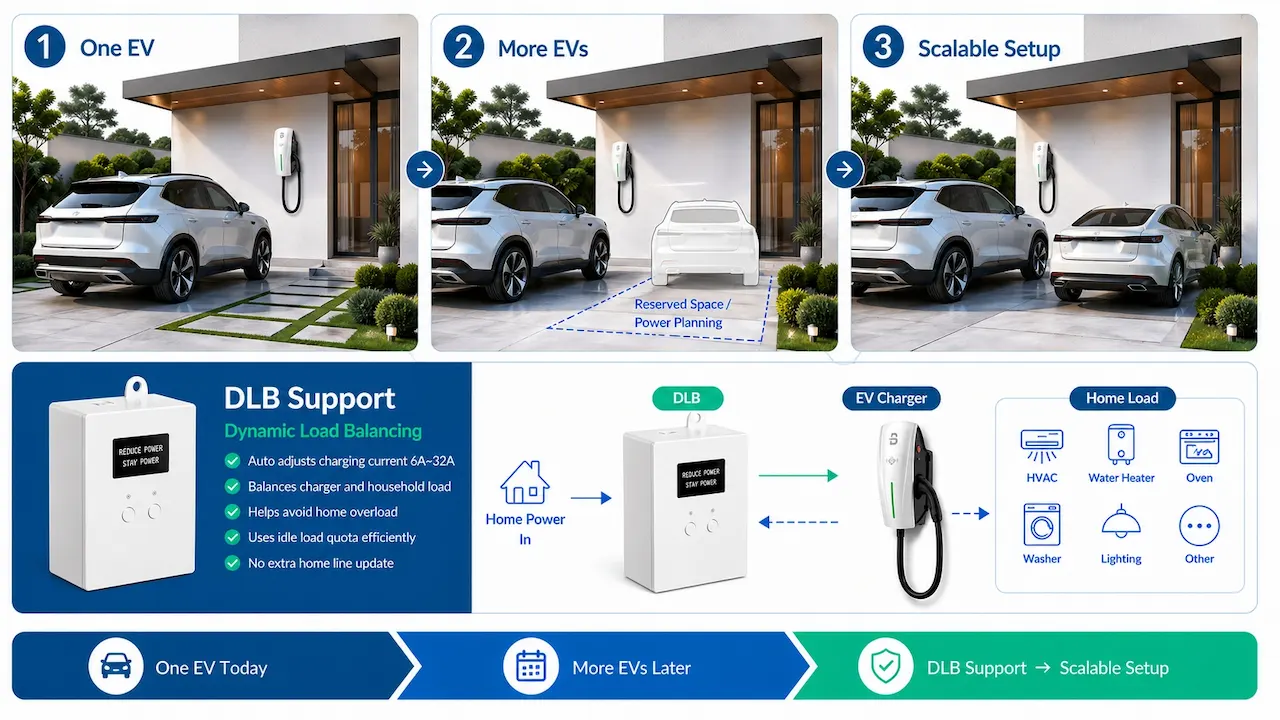
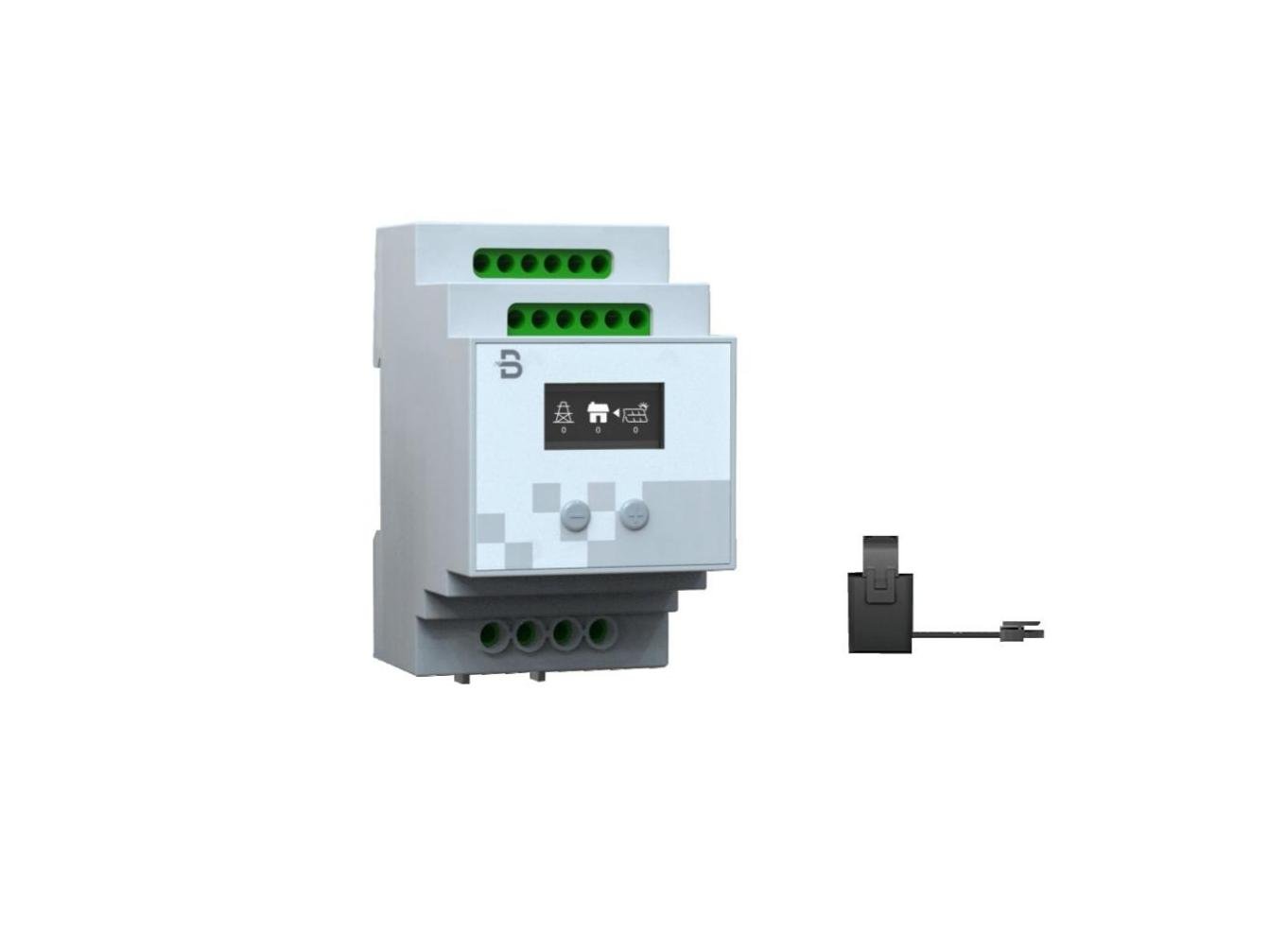
When an EV charger operates together with household appliances, the total home electrical load can increase quickly. EVB Dynamic Load Balancing helps monitor available household power and automatically adjusts the charging current based on remaining load capacity. For homes with solar PV systems, PV DLB can support solar-priority EV charging where system conditions allow.
Monitor available household power during EV charging.
Automatically adjust charging current based on remaining load capacity.
Help reduce overload risk when household appliances and EV chargers operate together.
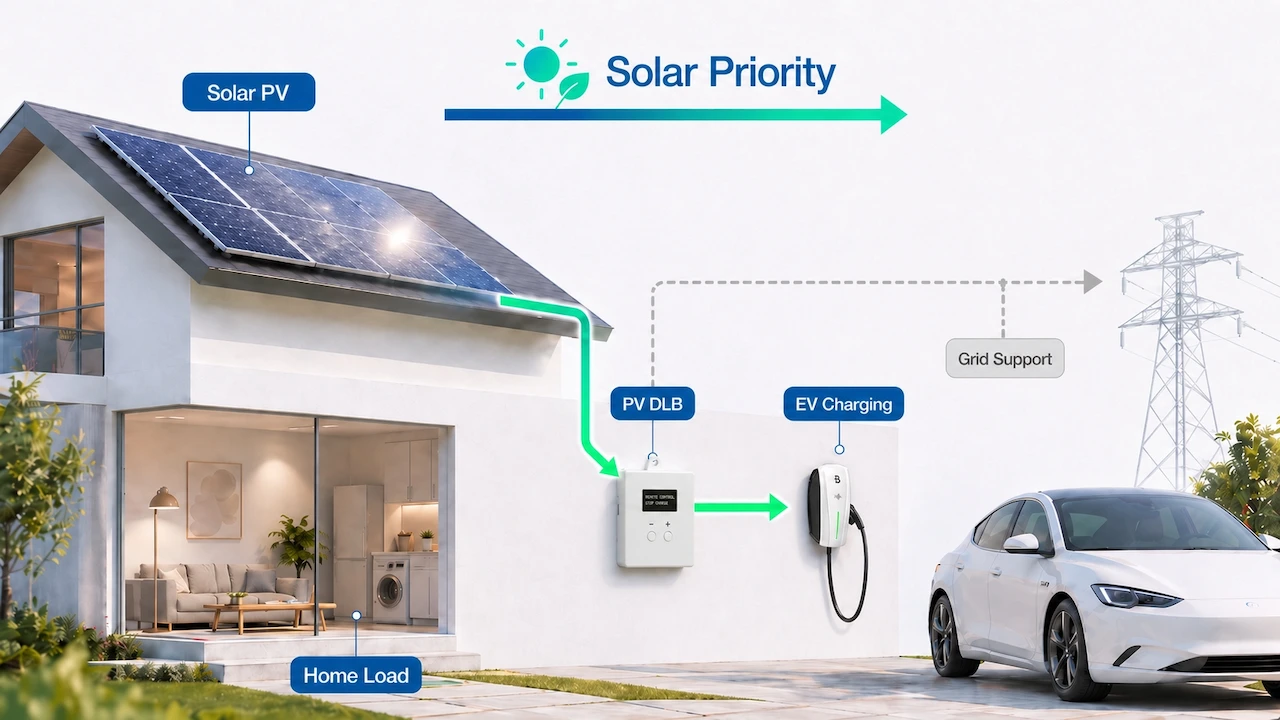
Use PV DLB to support solar-priority charging where available.
Balance household power consumption and reduce overload risk during EV charging.
Prioritize solar PV power for EV charging where system configuration supports it.
For homes with solar PV systems, smart residential EV charging can help make better use of available solar energy. With PV DLB and solar-compatible charging, the charger can support solar-priority charging where system conditions allow, helping homeowners reduce grid dependence and use more renewable energy for daily EV charging.
Solar-Priority Charging
Use PV power for EV charging where supported.
Reduce Grid Dependence
Use more on-site renewable energy.
PV DLB Coordination
Balance EV charging with solar generation and household load.
Future Energy Ready
Prepare the home for more integrated energy use.
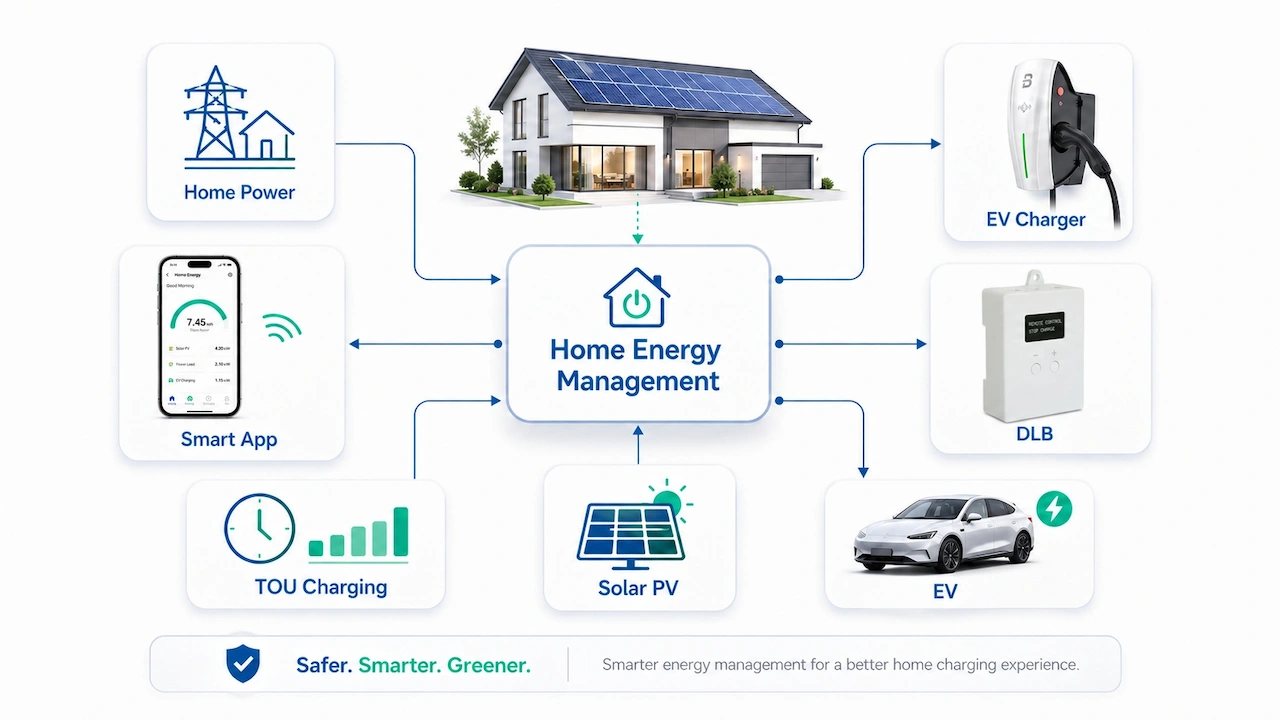
EVB helps homeowners improve smart energy consumption control by coordinating EV chargers with household energy use. With smart management, Dynamic Load Balancing, time-of-use charging, and solar-compatible charging, residential users can build a safer and more efficient home charging environment.
Main electricity source for household charging.
AC or portable charger for daily charging.
Automatically adjusts charging current based on available household load.
Monitor status, schedule charging, and manage supported DLB modes.
Plan charging around lower-rate periods where electricity pricing data is available.
Support cleaner home energy use and PV-priority charging where available.
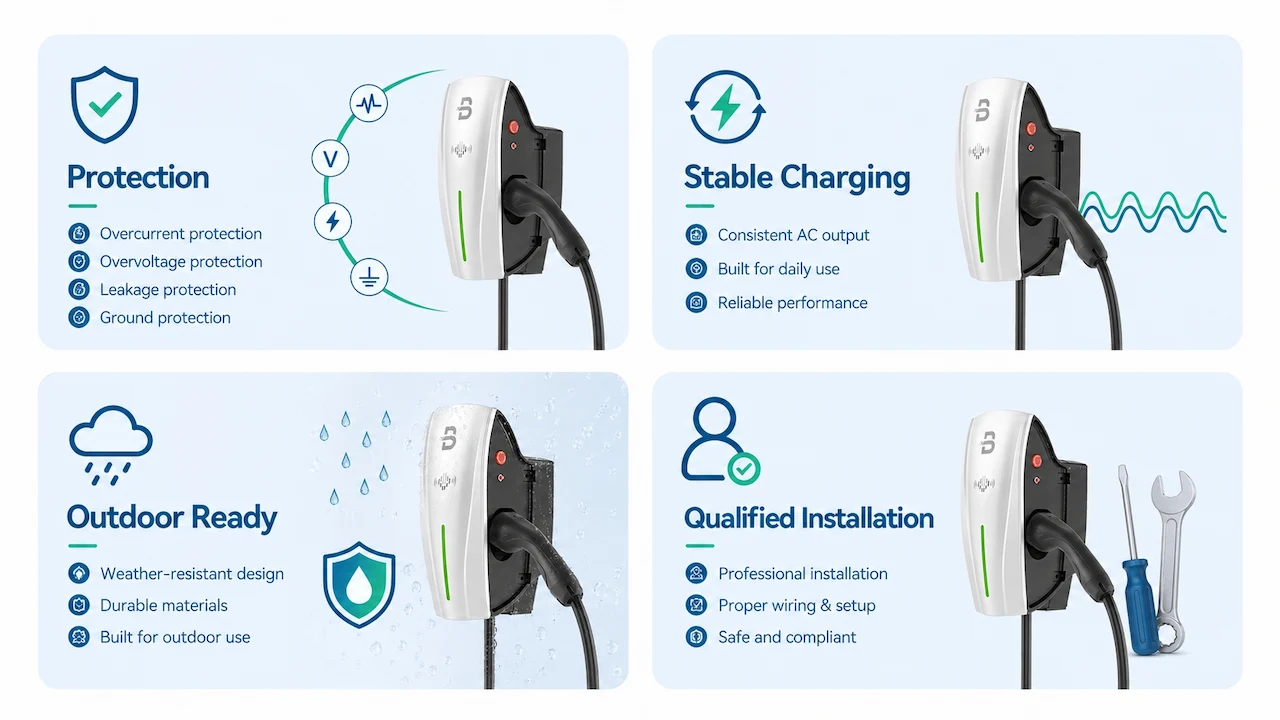
Home EV charging requires equipment designed for long-term daily use. EVB residential EV chargers are designed with safety protection, stable AC charging performance, and installation flexibility for residential environments. For outdoor or exposed parking areas, users should choose chargers with suitable environmental protection and follow local installation requirements.
Support safe charging in residential use.
Designed for regular home charging.
Choose suitable protection for exposed parking areas.
Follow local electrical requirements.
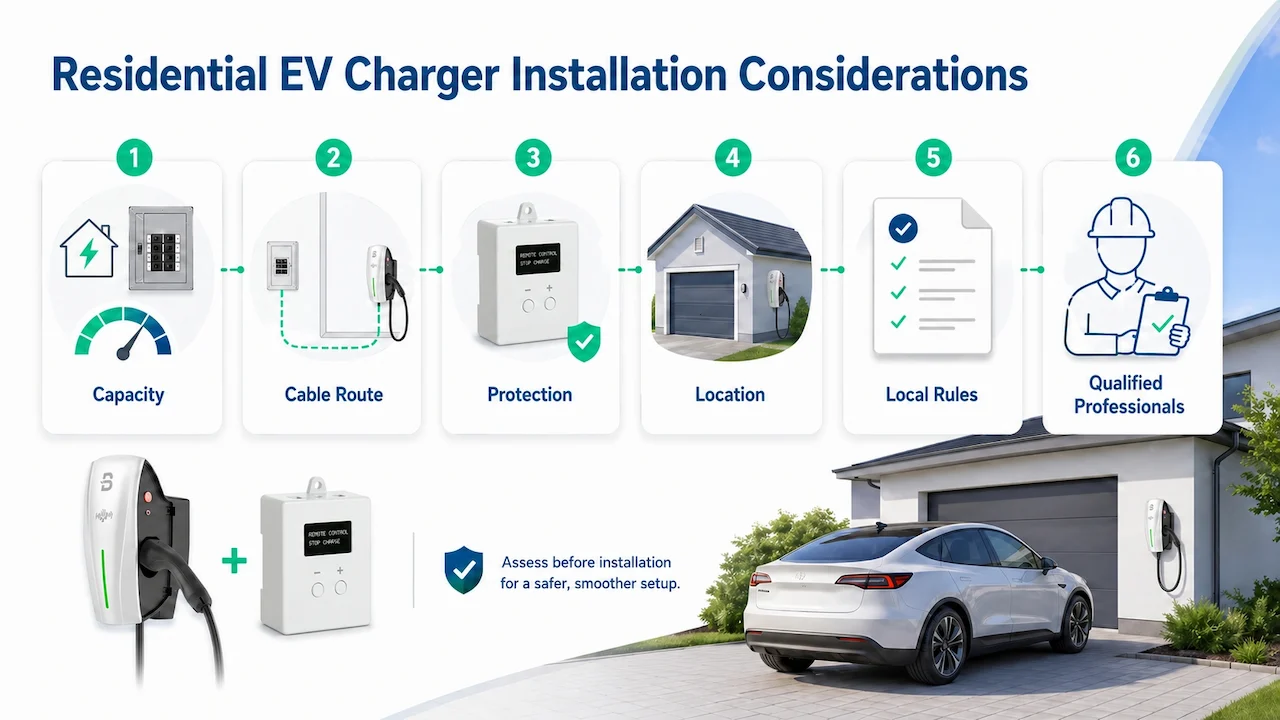
Residential EV charger installation should be planned carefully. Before installing a home EV charger, users should review power capacity, cable routing, protection requirements, indoor or outdoor placement, and local electrical regulations. EVB recommends that electrical assessment and installation be carried out by qualified professionals according to local requirements.
Check whether the home power supply can support the selected charger.
Choose a charger and location suitable for the installation environment.
Use chargers with appropriate safety protections for residential use.
Follow local regulations and work with qualified professionals where required.
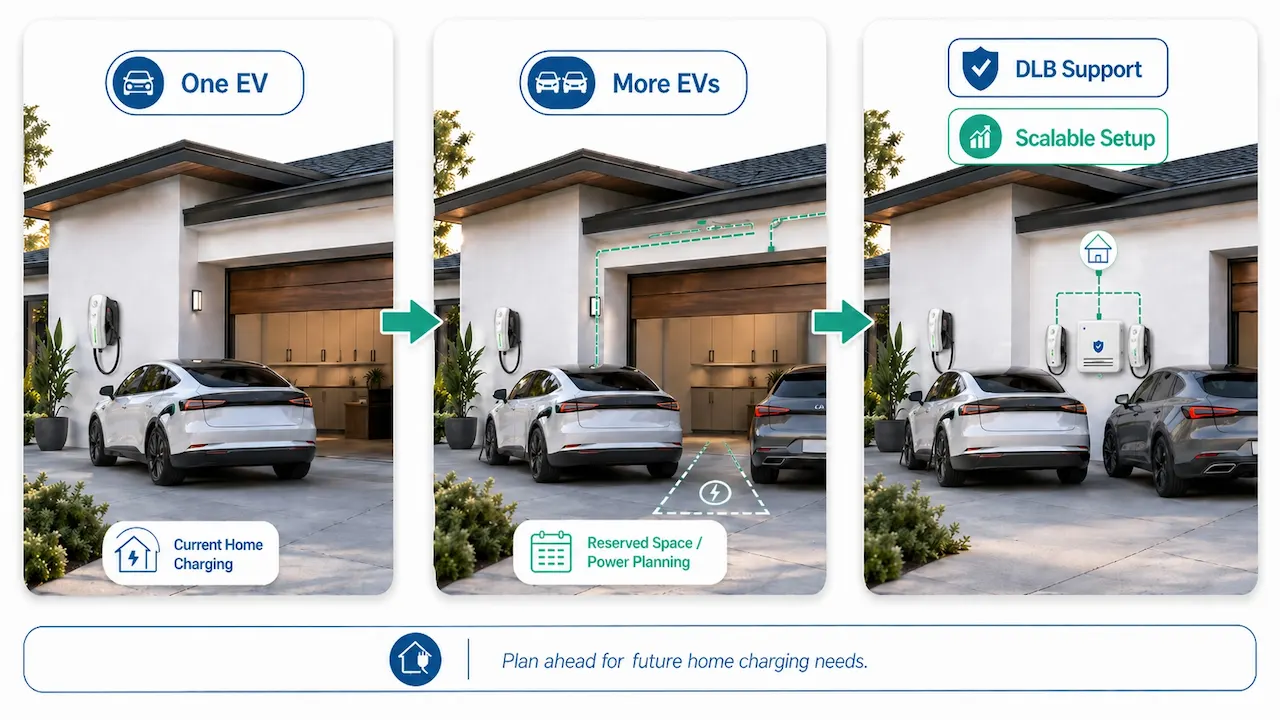
As more households add a second electric vehicle, residential charging needs may change. EVB can help users plan charging for one or more EVs by considering available household power, charger placement, Dynamic Load Balancing needs, and future expansion. This helps make the home charging setup more practical for long-term EV adoption.
Designed for daily residential charging in garages, driveways, and fixed parking spaces.
抱歉,当前分类下没有内容.
Designed for flexible charging and movable use.
抱歉,当前分类下没有内容.
Designed for app control, connectivity, and smarter operation where supported.
抱歉,当前分类下没有内容.
Designed for homes that need Dynamic Load Balancing, PV DLB, solar compatibility, time-of-use charging, or future energy coordination.
EVB offers residential EV charger options for different home charging needs, including wall-mounted AC chargers, portable EV chargers, smart AC charging stations, and DLB-ready or solar-compatible residential charging solutions. Customers can choose products based on charging speed, installation location, connectivity, safety requirements, and future energy management needs.
Designed for daily residential charging in garages, driveways, and fixed parking spaces.
Designed for flexible charging and movable use.
Designed for app control, connectivity, and smarter operation where supported.
Designed for homes that need Dynamic Load Balancing, PV DLB, solar compatibility, time-of-use charging, or future energy coordination.
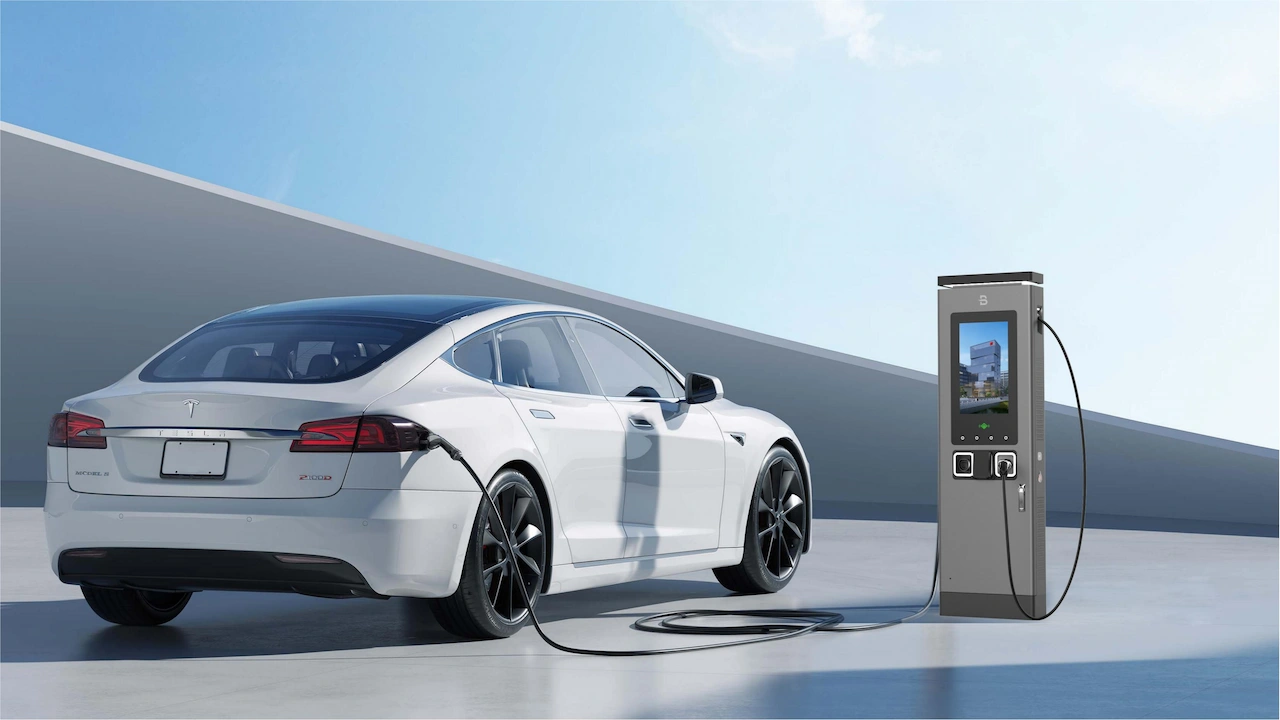
EVB offre stazioni di ricarica CC per veicoli elettrici che soddisfano gli standard globali, garantendo che la tua infrastruttura di ricarica sia affidabile e conforme, aiutandoti così a costruire una fiducia duratura nei tuoi clienti con il nostro supporto esperto e soluzioni di alta qualità.


Dall'Europa all'Australia, i progetti di ricarica di EVB dimostrano come hotel e strutture ricettive possano migliorare la comodità, supportare la mobilità elettrica e aumentare il valore della struttura grazie all'installazione pratica di colonnine di ricarica.
Before choosing a home EV charger or residential charging station, users should review several key factors: parking location, available electrical capacity, desired charging speed, indoor or outdoor installation, smart app requirements, Dynamic Load Balancing needs, solar compatibility, time-of-use charging availability, and future EV charging needs.
Garage, driveway, apartment parking, or shared residential parking?
Can the home electrical system support the selected charger?
Is standard AC charging enough for the user’s daily routine?
Which connector type, cable, or socket format is suitable?
Will the charger be exposed to weather conditions?
Is app control, scheduling, or usage data needed?
Is load balancing needed to manage household power demand?
Is electricity price data available for smart charging planning?
Should the charger work with a solar PV system?
Will the household add more EVs later?
Ottimizza la tua ricarica con EVB, leader nelle stazioni di ricarica per auto elettriche residenziali e per appartamenti. Il nostro sistema plug-and-play assicura semplicità, mentre la nostra app intelligente fornisce gestione e monitoraggio senza interruzioni.
Nell'era della mobilità elettrica, la domanda delle persone di stazioni di ricarica per veicoli elettrici residenziali efficienti e pratiche è in aumento. Offriamo una gamma completa di soluzioni per stazioni di ricarica residenziali, tra cui selezione hardware, installazione e funzionalità intelligenti.
Il nostro caricabatterie residenziale per veicoli elettrici, dotato di bilanciamento dinamico del carico, ottimizza l'uso dell'energia e si integra perfettamente con i sistemi solari fotovoltaici per servizi di ricarica convenienti.
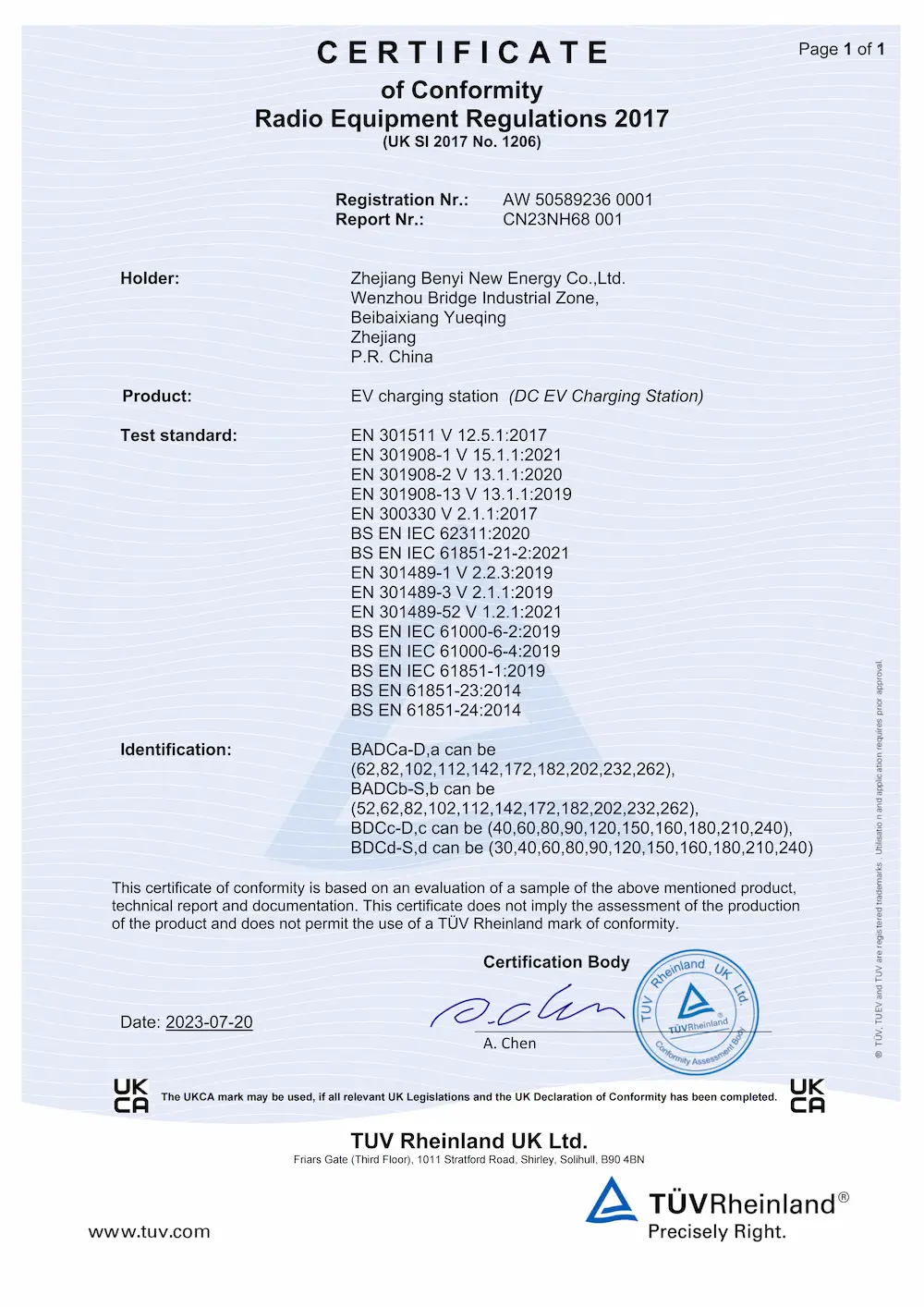
I caricabatterie per veicoli elettrici residenziali certificati EVB vengono regolarmente testati e soddisfano standard mutevoli, oltre a essere dotati di molteplici funzioni di protezione per garantirne la sicurezza.
Semplificando le procedure di fatturazione e pagamento, il software garantisce un'esperienza di transazione fluida per i proprietari, i gestori e gli utenti delle stazioni di ricarica.
Incarichiamo un elettricista certificato di valutare, aumentare la capacità di potenza e garantire un'installazione sicura nel rispetto delle normative locali.
Accedi ai dati di ricarica tramite la nostra app intelligente sul tuo telefono e sfrutta le sue funzionalità intelligenti, come il monitoraggio e il controllo da remoto della ricarica per programmare i tempi di ricarica e accedere ai dati di utilizzo.
I nostri caricabatterie per auto elettriche per la casa non sono solo pratici, ma sono anche caratterizzati da un design elegante e da livelli di potenza regolabili.
Il nostro caricabatterie residenziale per veicoli elettrici ti aiuta a ricaricare durante la notte e a sfruttare le tariffe scontate dell'energia elettrica nelle ore non di punta per risparmiare denaro.
L'eccezionale affidabilità della carica è garantita dall'implementazione di molteplici meccanismi di protezione, tra cui la protezione contro le perdite e la sovratemperatura.
Scopri il caricabatterie EVB BCPCM-C2N-P modalità 3 per veicoli elettrici con cavo di ricarica tipo 2 modalità 3. Conforme alla norma IEC 61851-21-2, questo caricabatterie a doppio cavo supporta OCPP per un'integrazione senza soluzione di continuità. Ideale per soluzioni di ricarica per veicoli elettrici efficienti e affidabili.
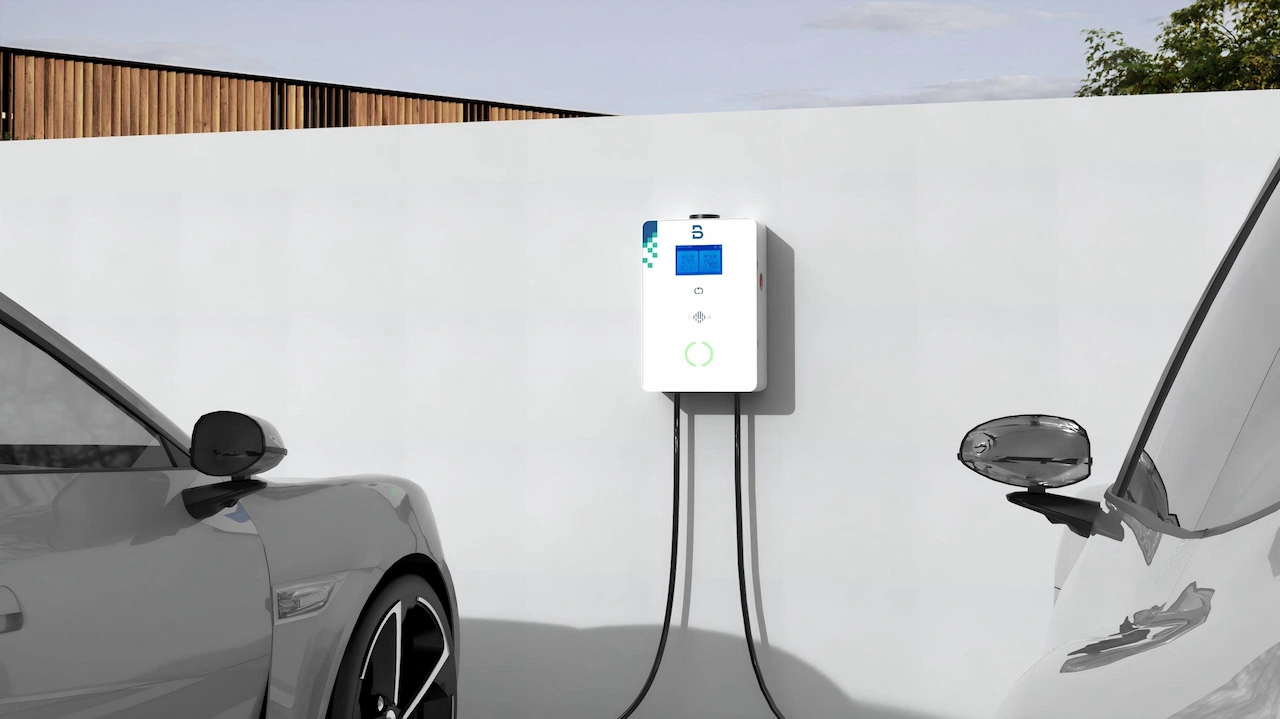
Caricabatterie Smart AC per veicoli elettrici con doppia presa di ricarica di tipo 2, montato a parete o su palo, funziona in trifase come in 22 kW. Funziona a -25 ~ 55 ℃ ed è certificato CE, CB e RCM, con schermo LCD e IP55.
Dotato di funzione di protezione completa e livello di protezione IP55, il caricabatterie per veicoli elettrici CC da parete EVB offre una potenza di uscita di 60 kW per supportare diverse esigenze di ricarica sia domestiche che commerciali.
Il caricabatterie per veicoli elettrici EVB per le aziende è un caricabatterie per veicoli elettrici AC di tipo modalità 3 progettato secondo lo standard IEC 61851-21-2; può essere montato a parete oppure installato su un piedistallo.
Il caricabatterie portatile EVB per veicoli elettrici è un modo comodo, portatile e plug-and-play per alimentare la tua auto elettrica.
Caricabatterie AC per veicoli elettrici con presa di ricarica di tipo 2, montato a parete o su palo, funziona in monofase o trifase a 230 V o 400 V, 6 A o 32 A. Funziona a temperature comprese tra -25 ℃ e 55 ℃ ed è certificato CE, CB e RCM, con involucri ignifughi IP65 e V0.
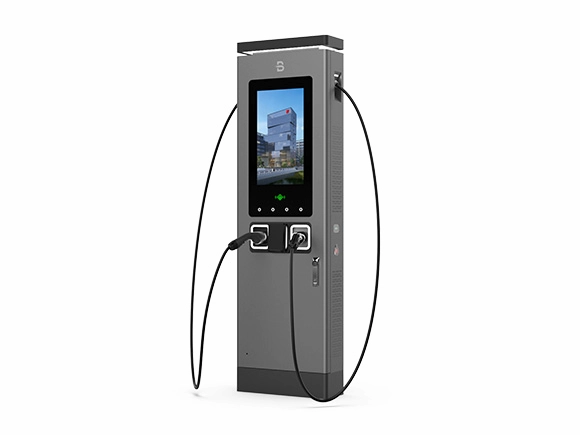
Il caricabatterie per veicoli elettrici CA da pavimento EVB modello 3 è dotato di un touchscreen da 21 pollici per un'interazione uomo-macchina intuitiva. Supportando le piattaforme OCPP, offre elevata compatibilità e adattabilità, offrendo agli utenti una soluzione di ricarica intelligente.
EVB, il caricabatterie per veicoli elettrici OCPP Tethered AC di seconda generazione con cavo di tipo 2, montato a parete o su palo, funziona in monofase o trifase a 230 V o 400 V, 6 A o 32 A. Funziona a temperature comprese tra -25 e 55 °C ed è certificato CE e CB, con involucri ignifughi IP65 e V0.

Migliora la tua esperienza di ricarica con il caricabatterie EVB per veicoli elettrici a corrente alternata montato a pavimento con funzione POS. Sperimenta un'interazione semplice con l'interfaccia touchscreen da 7 pollici. Prendi il controllo del tuo caricabatterie tramite un'app intelligente e diverse opzioni di connettività.
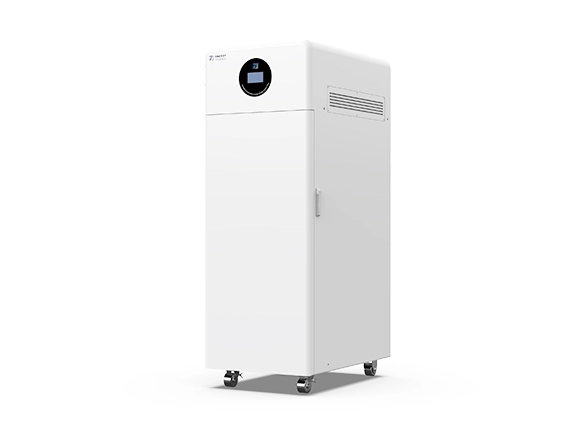
La serie EVB BYAIO utilizza batterie al litio ferro fosfato (LFP), sicure, durevoli, efficienti e ad alta densità di potenza. Inizia subito a fare acquisti!
Sistema di storage EVB ad alta tensione montato su rack, che offre due modalità ed è dotato di batterie LiFePO4. Con una classificazione IP54 per la durata, sono perfetti per applicazioni residenziali. Inizia a fare acquisti oggi stesso!
Scopri i sistemi di accumulo di batterie ad alta tensione EVB, dotati di due modalità di impilamento e batterie LifePO4. Classificazione IP54 per la durata, ideale per uso residenziale. Acquista oggi stesso!
Il pacco di accumulo di energia residenziale LFP è stato progettato e sviluppato in modo indipendente da BENY. Ampiamente utilizzato nel campo dell'accumulo di energia con inverter on-grid, inverter off-grid e inverter ibridi.
Il pacco di accumulo di energia residenziale LFP è stato progettato e sviluppato in modo indipendente da BENY. È ampiamente utilizzato nel campo dell'accumulo di energia con inverter on-grid, inverter off-grid e inverter ibridi.
Il pacco di accumulo di energia residenziale LFP è stato progettato e sviluppato in modo indipendente da BENY. Ampiamente utilizzato nel campo dell'accumulo di energia con inverter on-grid, inverter off-grid e inverter ibridi.
L'Energy Management System è specificamente progettato per la gestione intelligente dell'energia. Questo sistema è adatto per l'integrazione con reti domestiche dotate di sistemi di alimentazione fotovoltaica, costituiti da dispositivi di misurazione BEMS e dispositivi di controllo BEMC.
Migliora la tua esperienza di ricarica con il caricabatterie EVB Floor Mounted AC EV, approvato da CE&UKCA e dotato dell'opzione presa T2S. Sperimenta un'interazione senza sforzo con la sua interfaccia touch screen da 5,0 pollici. Prendi il controllo del tuo caricabatterie tramite un'app intelligente e varie opzioni di connettività.
Migliora la tua esperienza di ricarica con il caricabatterie EVB Floor Mounted AC EV. Sperimenta un'interazione senza sforzo con la sua interfaccia touch screen da 5,0 pollici. Prendi il controllo del tuo caricabatterie tramite un'app intelligente e varie opzioni di connettività.
Caricabatterie per veicoli elettrici AC con cavo di tipo 2, montato a parete o su palo, funziona in monofase o trifase a 230 V o 400 V, 6 A o 32 A. Funziona a -25 ~ 55 ℃ ed è certificato CE, CB e RCM, con involucri ignifughi IP65 e V0.
Caricabatterie per veicoli elettrici AC con presa di tipo 2, montato a parete o su palo, funziona in monofase o trifase a 230 V o 400 V, 6 A o 32 A. Funziona a -25 ~ 55 ℃ ed è certificato CE, CB e RCM, con involucri ignifughi IP55 e V0.
Il caricabatterie portatile per veicoli elettrici IP54 da 3,7 kW di livello 2 offre sicurezza per il tuo veicolo elettrico in movimento. Con la sola alimentazione domestica, puoi ricaricare il tuo veicolo elettrico anche in assenza di una stazione di ricarica nelle vicinanze.
Il caricabatterie portatile EV IP66 da 3,7 kW di livello 2 offre sicurezza al tuo EV in movimento. Con solo una presa domestica, puoi ricaricare il tuo EV anche senza una stazione di ricarica nelle vicinanze.
Tutti i nostri caricabatterie sono dotati di garanzia di 3 anni, che comprende la manutenzione da remoto e in loco.
Ti verrà assegnato un account manager specializzato che ti terrà aggiornato durante tutto il processo di produzione.
I punti di ricarica residenziali vengono installati da tecnici certificati, dandoti la certezza che funzioneranno come previsto.
Un team di supporto esperto è sempre disponibile per rispondere alle preoccupazioni dei clienti telefonicamente, 24 ore su 24, 7 giorni su 7.
Gli aggiornamenti software Over-the-Air a vita per i tuoi punti di ricarica li mantengono costantemente ottimizzati.
Dalla consulenza al post-vendita, ci impegniamo a fornirti un servizio di livello eccellente.
We have compiled a list of frequently asked questions (and answers) about AC residential EV charging solution for your reference.
The best EV charger for home use depends on parking location, electrical capacity, charging speed requirements, indoor or outdoor installation, and smart control needs. Wall-mounted AC chargers are commonly used for regular home charging, while portable EV chargers offer more flexibility.
In markets such as North America, Level 2 home EV charging usually refers to dedicated AC charging equipment that charges faster than a standard household outlet. The actual charging speed depends on local voltage, charger power rating, and vehicle acceptance capacity.
Home EV charger installation depends on electrical capacity, local regulations, installation location, and protection requirements. EVB recommends working with qualified professionals for assessment and installation according to local requirements.
Home EV charger installation cost can vary by country, electrical capacity, cable routing, installation complexity, and local code requirements. Users should assess site conditions before choosing a charger.
Where time-of-use electricity pricing and cloud connectivity are supported, EVB smart charging can help users plan charging around lower-rate periods. The charging schedule can be generated based on electricity price information, desired charging amount, and planned vehicle use time. Availability may vary by market, charger model, and system configuration.
Dynamic Load Balancing helps adjust EV charging current according to available household electrical load. When other household appliances are using power, the charger can reduce charging current to help avoid overload. When more power is available, charging current can increase within the supported range.
Normal DLB is used to balance household power consumption during EV charging and reduce overload risk. PV DLB is designed for homes with solar PV systems and can help prioritize solar power for EV charging where the system configuration supports it.
Dynamic Load Balancing can help make better use of existing household power capacity by adjusting charging current according to available load. However, whether an electrical upgrade is needed depends on the home’s electrical system, charger power, local regulations, and installation assessment.
Yes, outdoor residential EV chargers can be used in driveways or exposed parking areas when the charger is properly rated for outdoor installation and installed according to local requirements.
EVB residential EV chargers can support solar-compatible charging strategies, PV DLB, and Dynamic Load Balancing where site conditions and system configuration allow.
Users should check parking location, electrical capacity, connector type, installation format, smart app requirements, DLB needs, solar compatibility, and future EV charging plans.
Portable EV chargers can be useful for flexible or temporary charging needs, but fixed wall-mounted chargers are often preferred for regular daily home charging.
unisciti al successo
Tell us about your parking location, power conditions, charging needs, DLB requirements, time-of-use charging needs, solar compatibility needs, and preferred installation type. EVB will help you choose a suitable home EV charger or residential EV charging station for your project.
Dalla consulenza all'installazione, il nostro team di esperti garantisce una soluzione completa di ricarica per veicoli elettrici, su misura per le tue esigenze.
Copyright © 2026, EVB. Tutti i diritti riservati. Powered by beny.