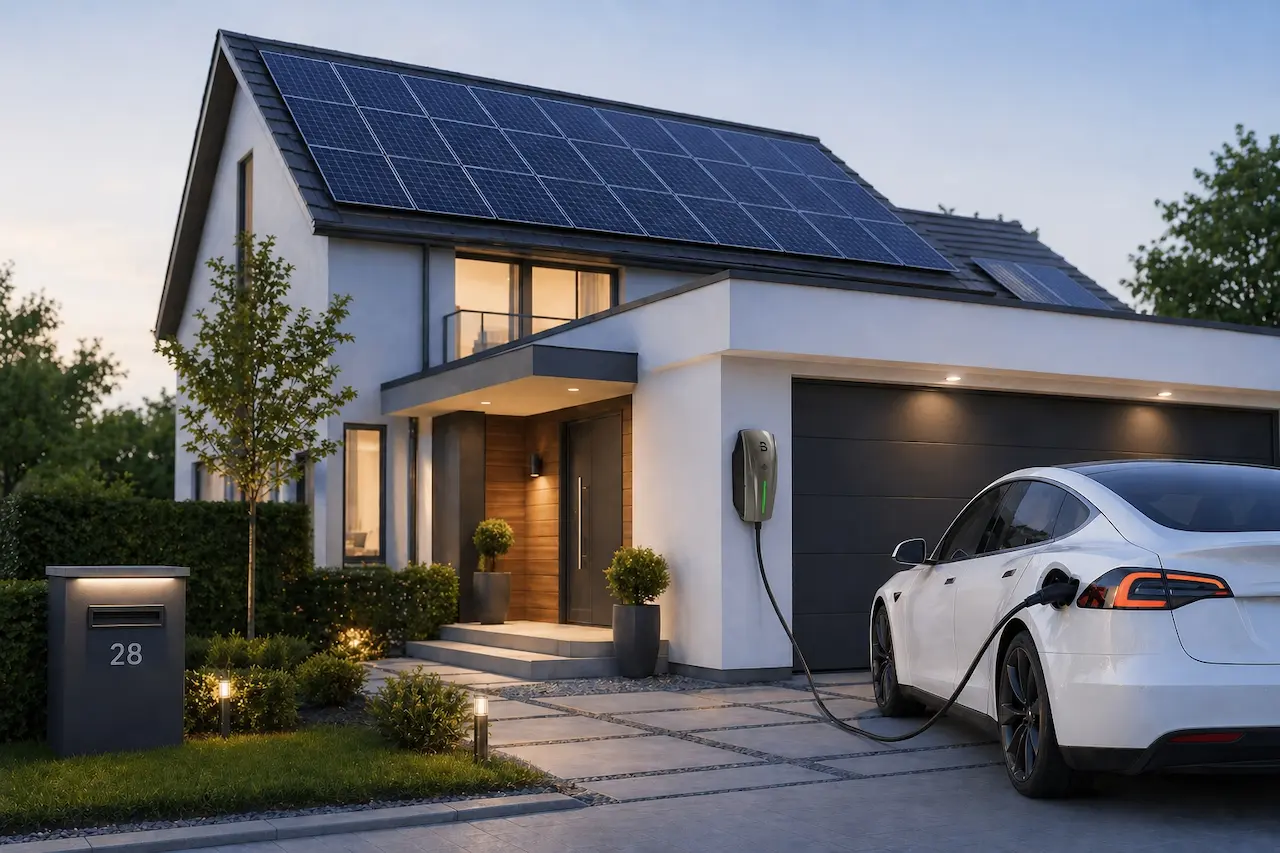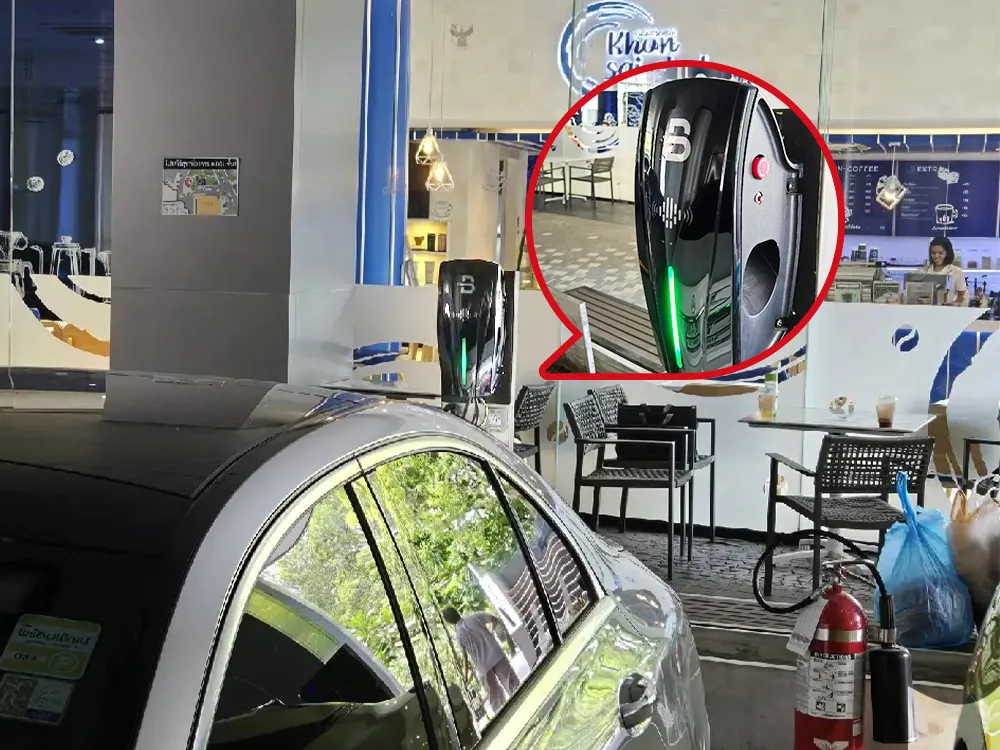













Charge your electric vehicle at home with EVB residential EV charging solutions designed for daily convenience, smart energy management, and reliable home charging. From wall-mounted AC chargers and portable EV chargers to outdoor residential EV chargers and DLB-ready charging options, EVB helps homeowners, apartments, and residential properties build a safer, smarter, and more efficient home EV charging setup.
Home EV charging gives drivers the convenience of charging where they live. Instead of relying only on public charging stations, homeowners and residential properties can use a dedicated home EV charger to support daily commuting, overnight charging, and better control over charging time and household energy use.

Charge your EV at home overnight or whenever the vehicle is parked.

Reduce dependence on public charging
availability.

Schedule charging during lower-rate periods where available.

Make homes, apartments, and residential parking areas more EV-ready.
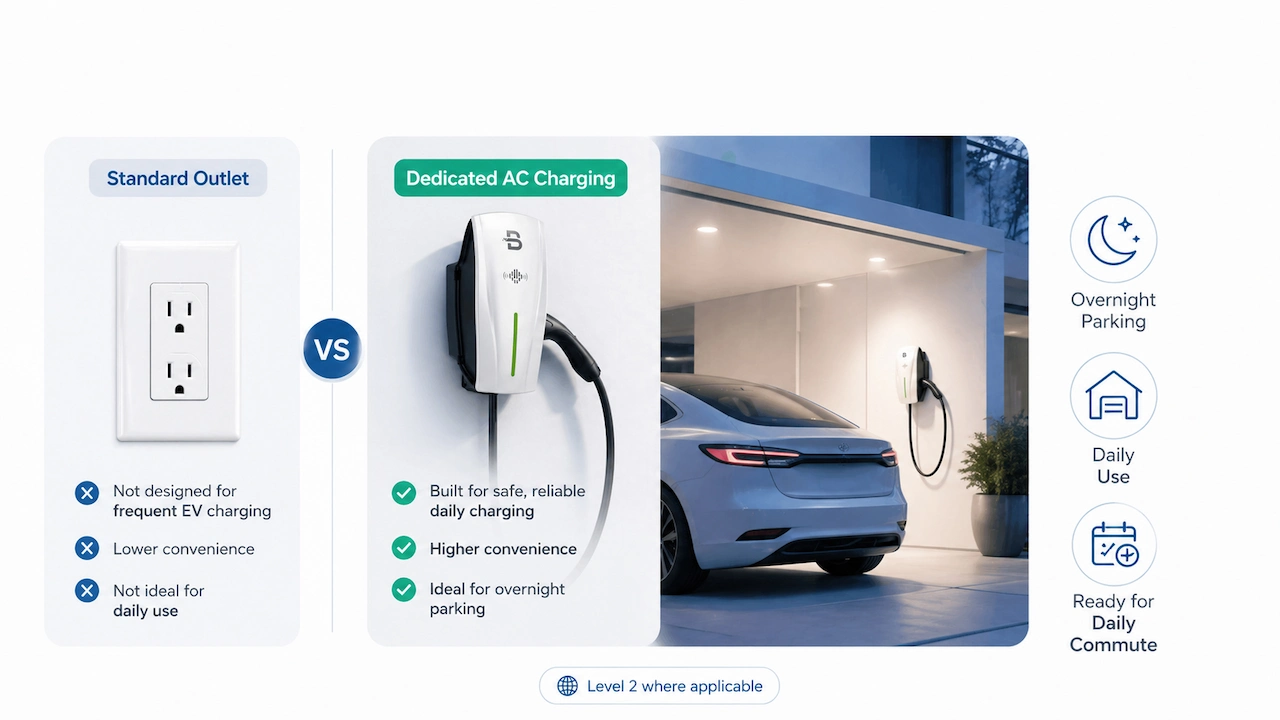
For most residential charging needs, an AC home EV charger provides a practical balance of charging speed, installation flexibility, and daily convenience. Compared with a standard household outlet, a dedicated home EV charger can support more stable and efficient charging for overnight parking, daily commuting, and fixed residential spaces. In markets such as North America, this type of AC charging is often referred to as Level 2 home EV charging.
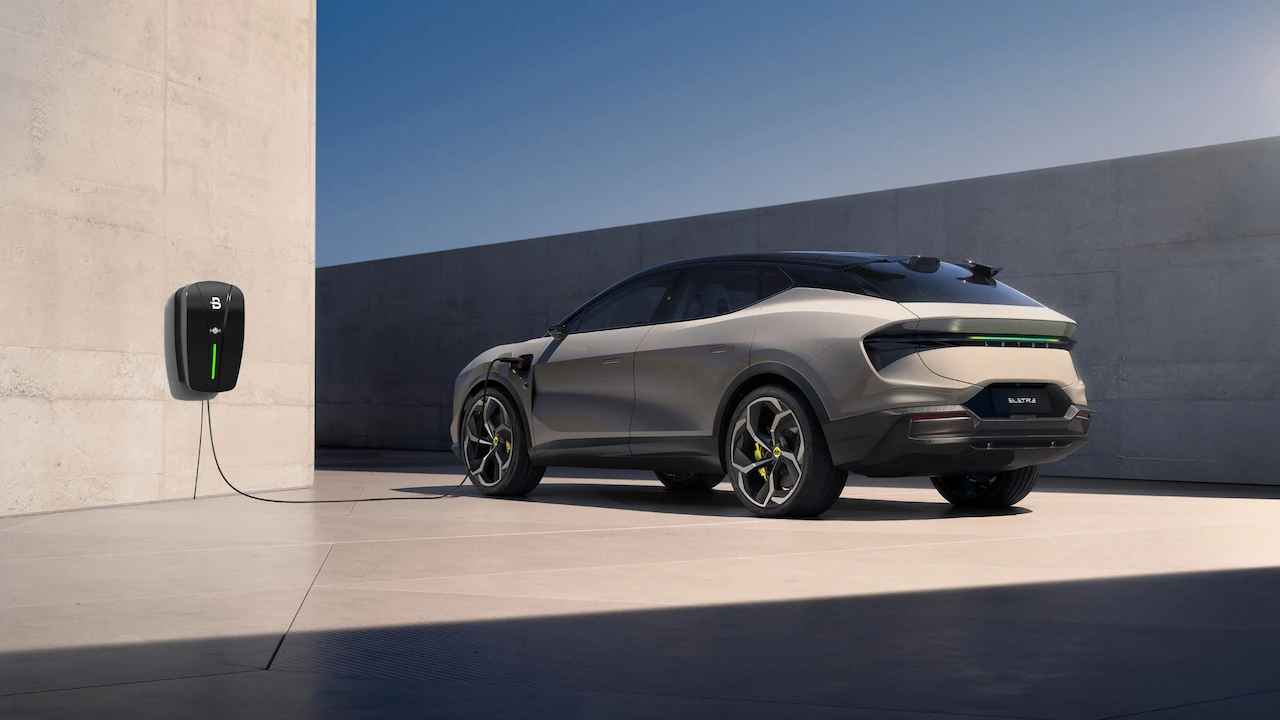
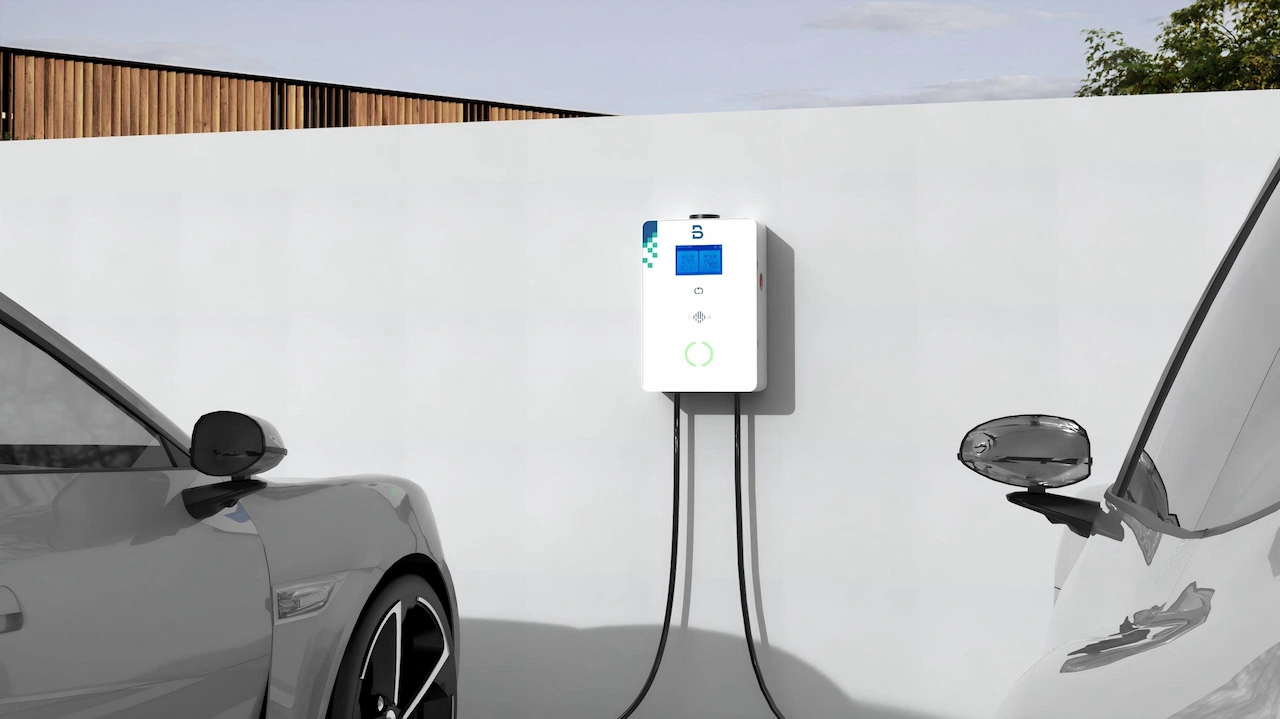
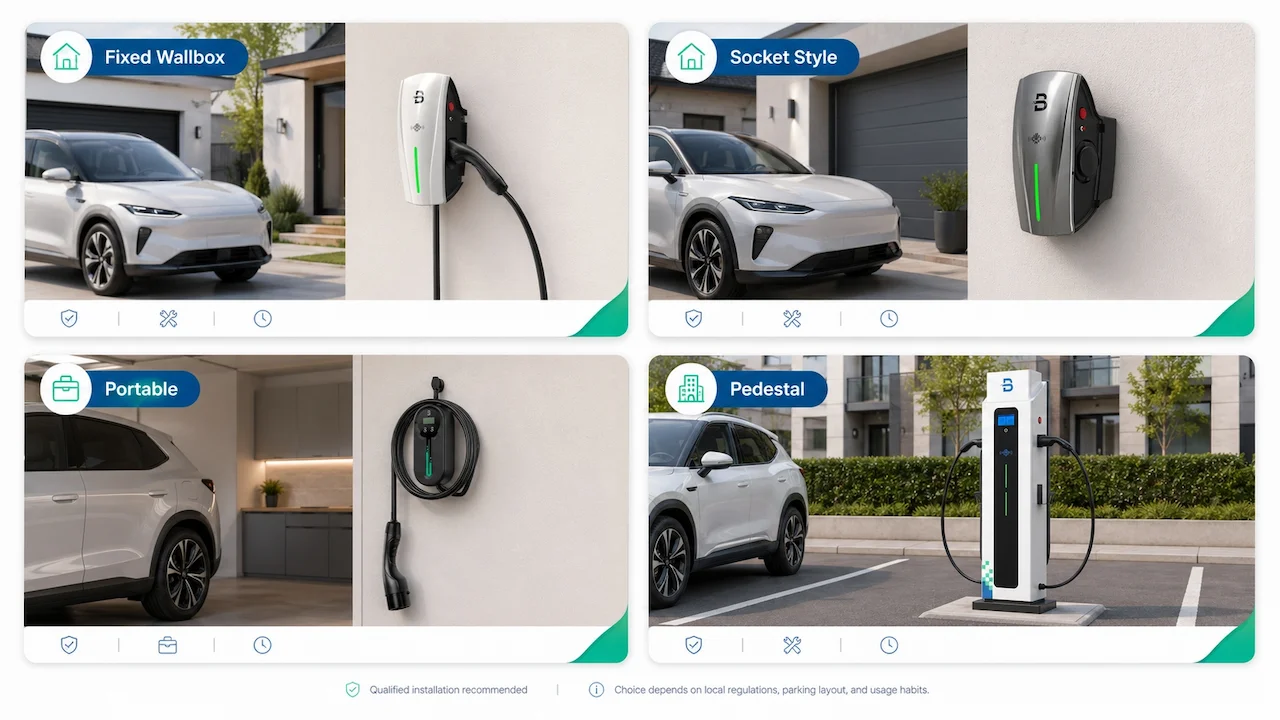
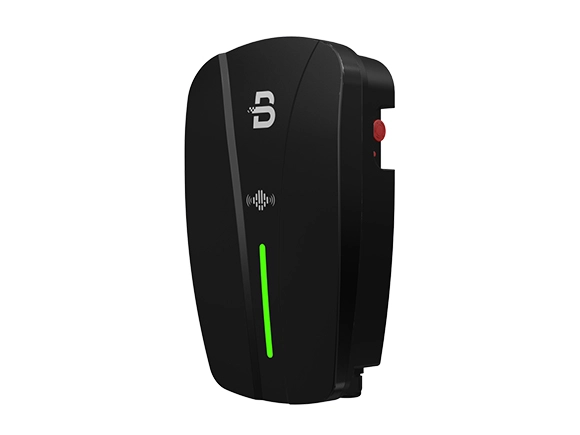
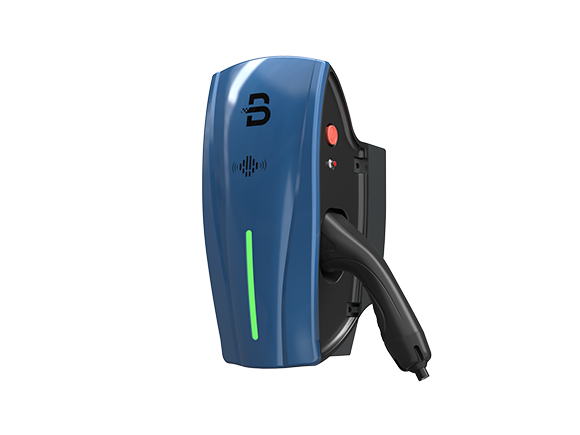
Different homes need different charging setups. A wall-mounted home EV charger is suitable for fixed parking spaces and regular daily charging, while a portable EV charger can offer greater flexibility for users who need a movable charging option. Outdoor residential EV chargers are suitable for driveways and exposed parking areas, while smart AC chargers can support app control, scheduling, and load management where configured.
Best for fixed parking spaces, garages, and daily home charging.
Es scheint, wir können nicht finden, wonach Sie suchen.
Best for app control, charging schedules, and supported load management functions.
Es scheint, wir können nicht finden, wonach Sie suchen.
Best for flexible use, temporary charging needs, or secondary charging locations.
Es scheint, wir können nicht finden, wonach Sie suchen.
Best for driveways, outdoor parking spaces, and weather-exposed installations.
Es scheint, wir können nicht finden, wonach Sie suchen.
Residential charging setups may use different installation formats depending on local electrical rules, parking layout, and user habits. A fixed wallbox charger is suitable for regular home charging at a dedicated parking space, while socket-style or portable charging options may provide more flexibility where allowed. The final setup should always follow local electrical regulations and be assessed by qualified professionals.
Best for daily charging at a dedicated parking space.
Suitable where socket-based installation is allowed and properly protected.
Useful for flexible or temporary charging needs.
Suitable for driveways, open parking spaces, or shared residential parking areas.
| User Need | Recommended Option | Key Feature |
|---|---|---|
| Daily home charging | AC-Wallbox-Ladegerät | Stable fixed charging |
| Flexible or temporary use | Portable EV charger | Movable charging option |
| Outdoor driveway | Outdoor-rated residential charger | Weather-resistant installation |
| Smart scheduling | Smart AC charger | App and charging schedule |
| Household load limits | DLB-ready charger | Dynamic current adjustment |
| Solar PV home | PV DLB / solar-compatible option | Solar-priority charging |
| Apartment/shared parking | Managed AC charging setup | Access control and records |
| Future multiple EVs | Scalable residential setup | Planning for expansion |
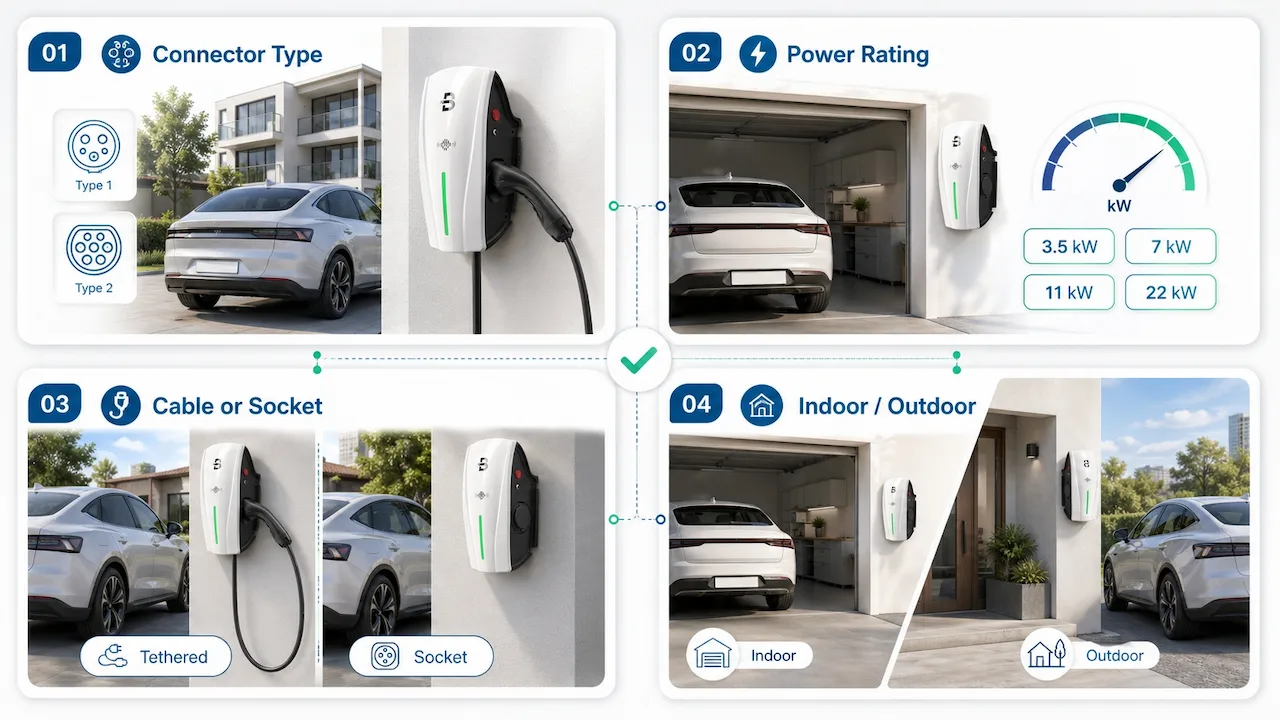
A suitable home EV charger should match the vehicle, local charging standard, parking setup, and preferred installation format. EVB residential EV chargers can be selected based on connector type, power rating, cable or socket configuration, indoor or outdoor use, and smart charging requirements. This helps homeowners and residential properties choose a charger that fits both current vehicles and future charging needs.
Steckertyp
Match local EV charging standards and vehicle requirements.
Power Rating
Choose suitable AC charging power based on electrical capacity and daily use.
Cable or Socket Design
Select tethered cable or socket-style charging where available.
Indoor or Outdoor Use
Choose a charger suitable for garage, driveway, or exposed parking areas.
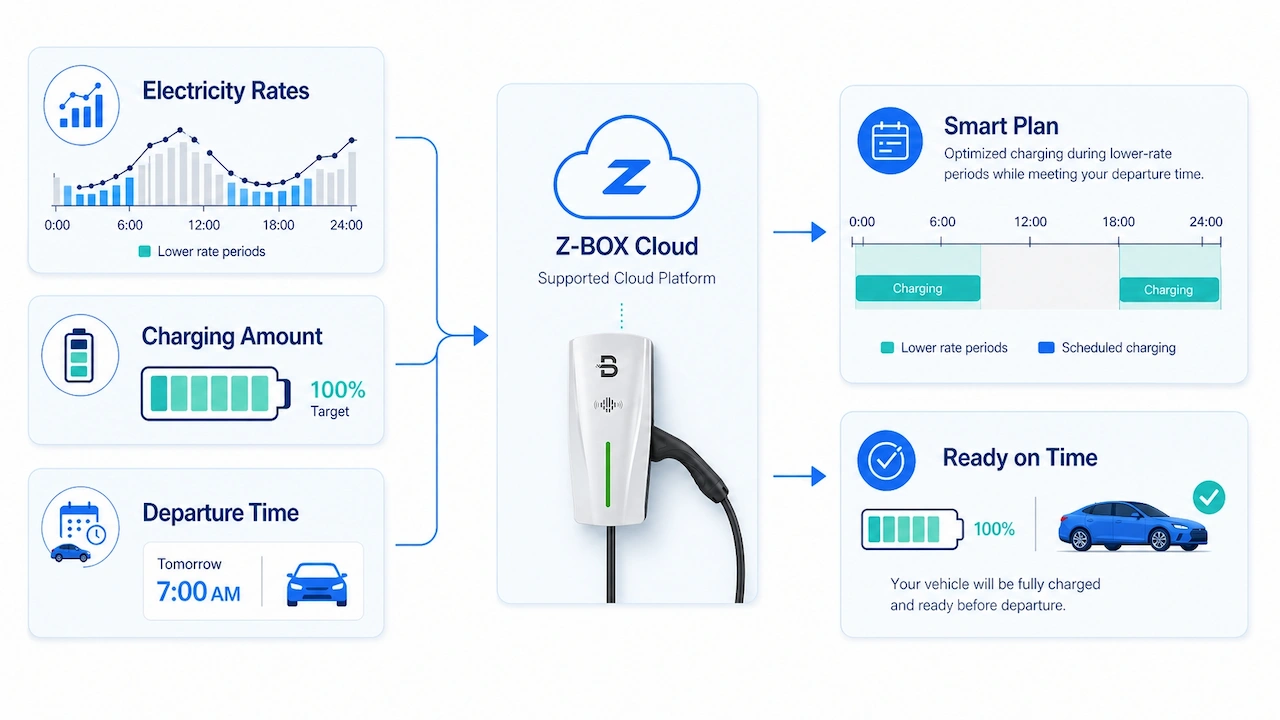
EVB residential EV chargers support smart charging features that help users monitor charging status, schedule charging time, and manage daily charging activity through a smart app and supported cloud platform where configured. Where electricity price data is available, the system can help generate a smarter charging plan based on the user’s desired charging amount and planned vehicle use time.
View charging status through the smart app where supported.
Set charging times based on daily routine or lower-rate electricity periods where available.
Use available electricity price information to support smarter charging planning.
Track charging activity and energy use.
Manage charging more easily from home or remotely.
Where time-of-use electricity pricing is available, EVB smart charging can help users plan charging sessions around lower-rate periods. By combining electricity price information, desired charging amount, and planned vehicle departure time, the system can generate a more cost-effective charging schedule through the charger and supported cloud platform. This helps homeowners charge more intelligently while maintaining daily driving readiness.
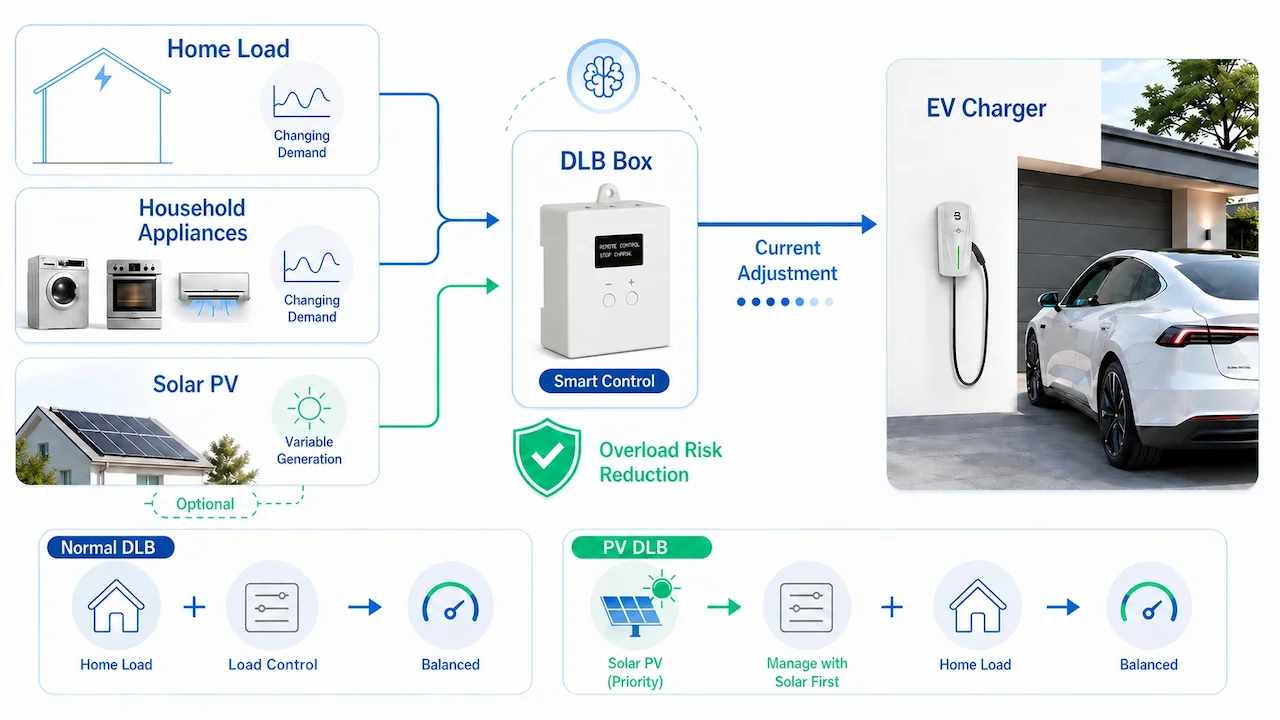
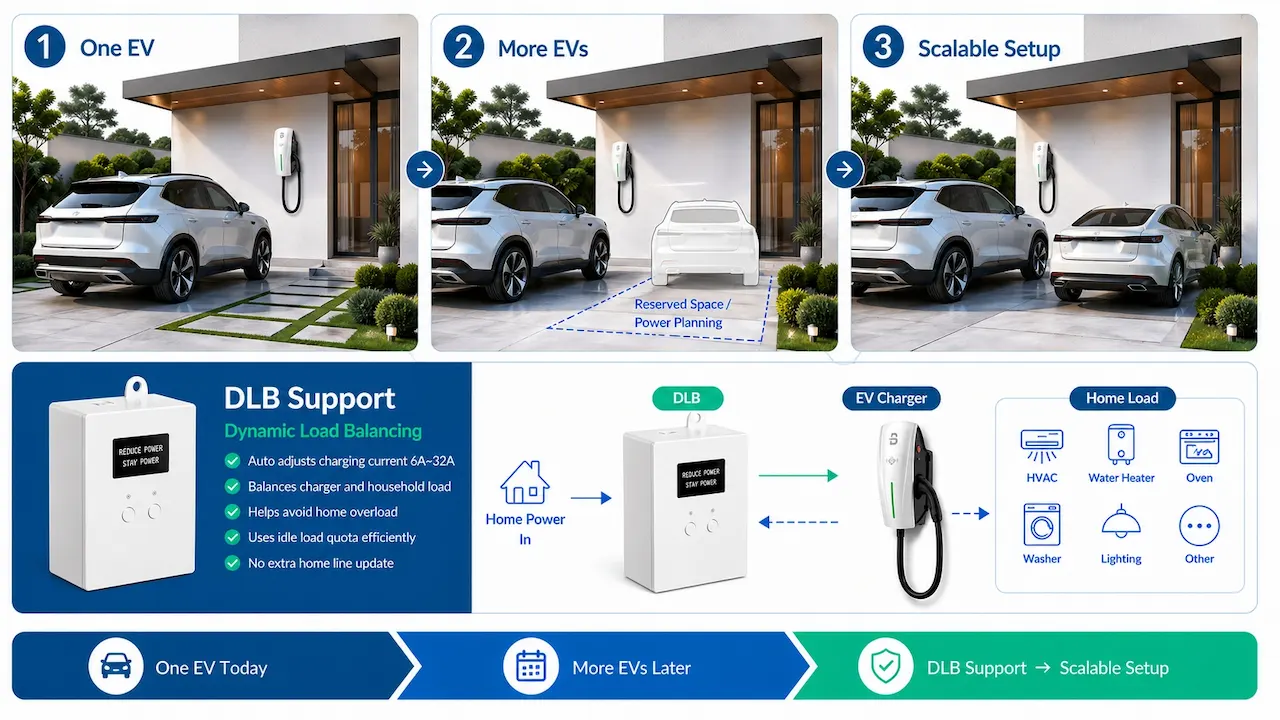
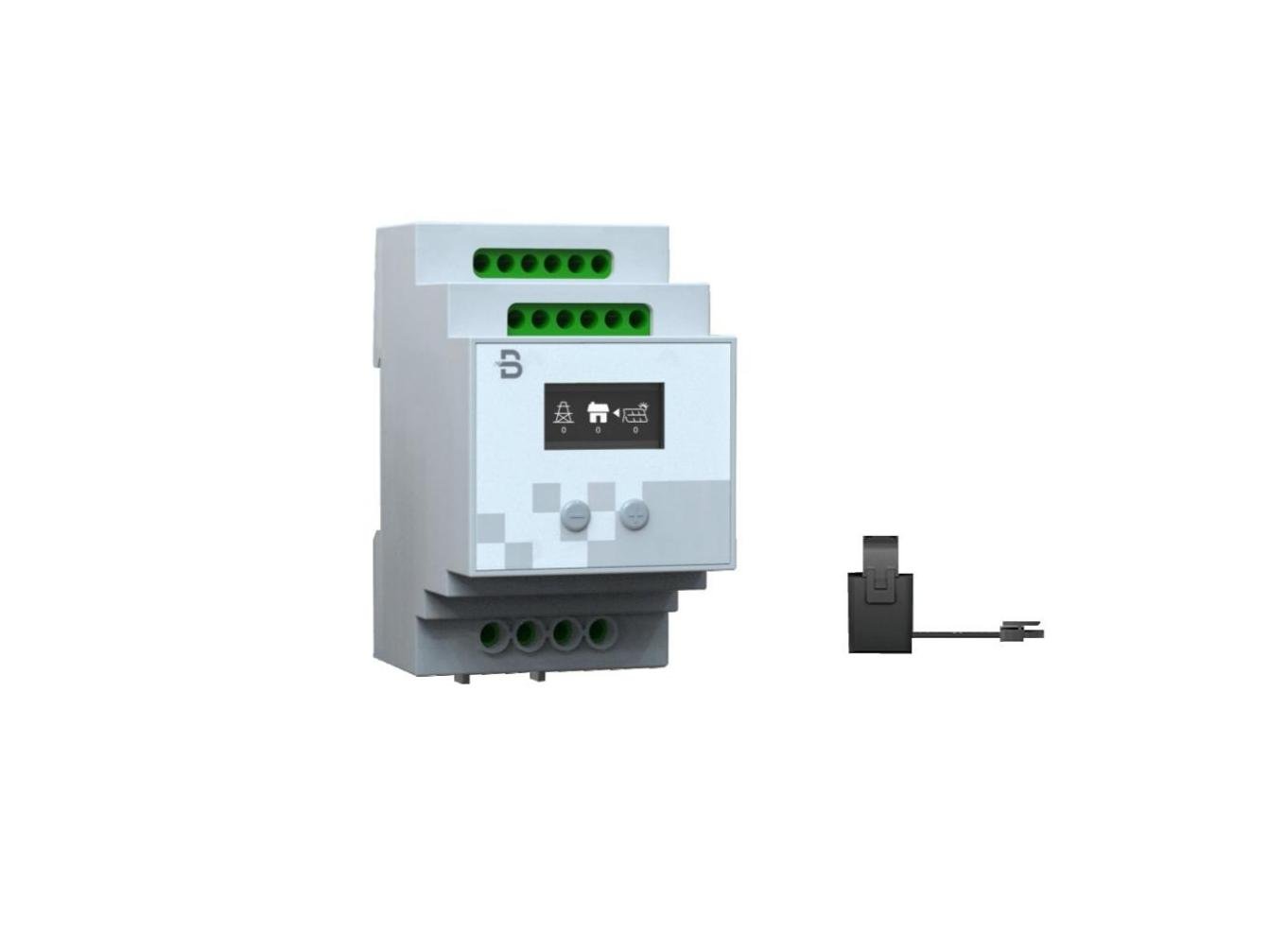
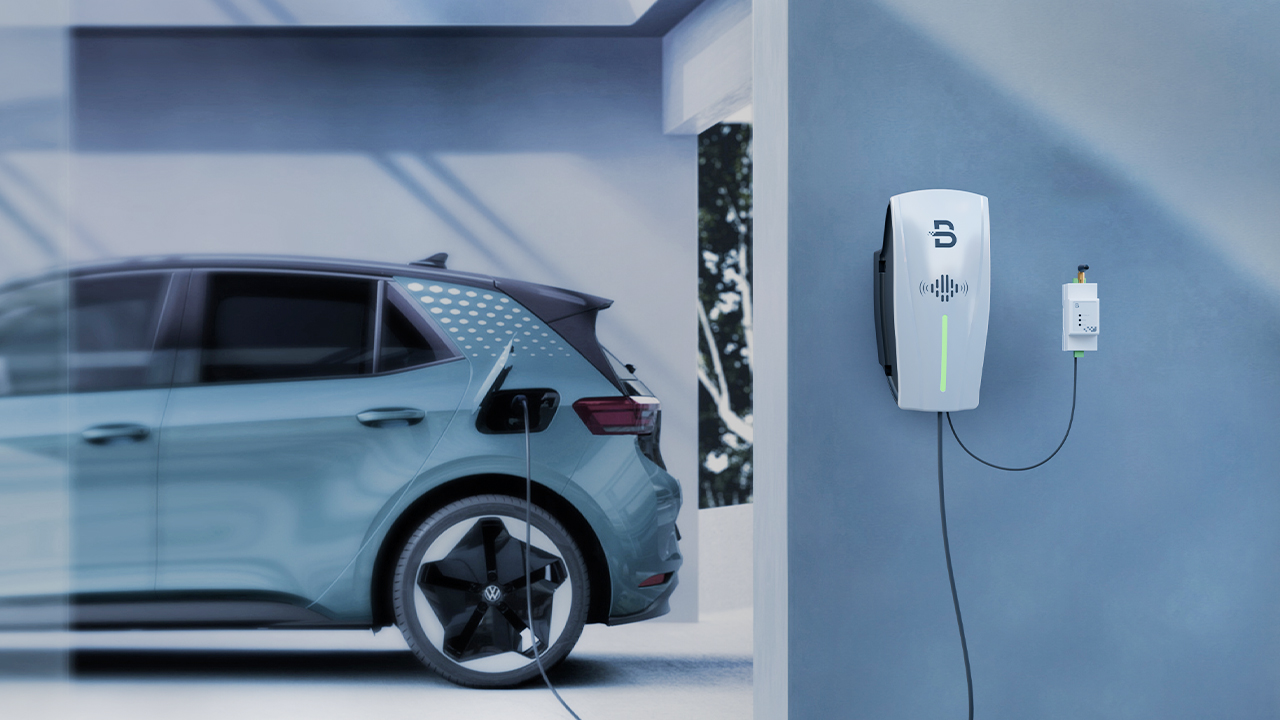
When an EV charger operates together with household appliances, the total home electrical load can increase quickly. EVB Dynamic Load Balancing helps monitor available household power and automatically adjusts the charging current based on remaining load capacity. For homes with solar PV systems, PV DLB can support solar-priority EV charging where system conditions allow.
Monitor available household power during EV charging.
Automatically adjust charging current based on remaining load capacity.
Help reduce overload risk when household appliances and EV chargers operate together.
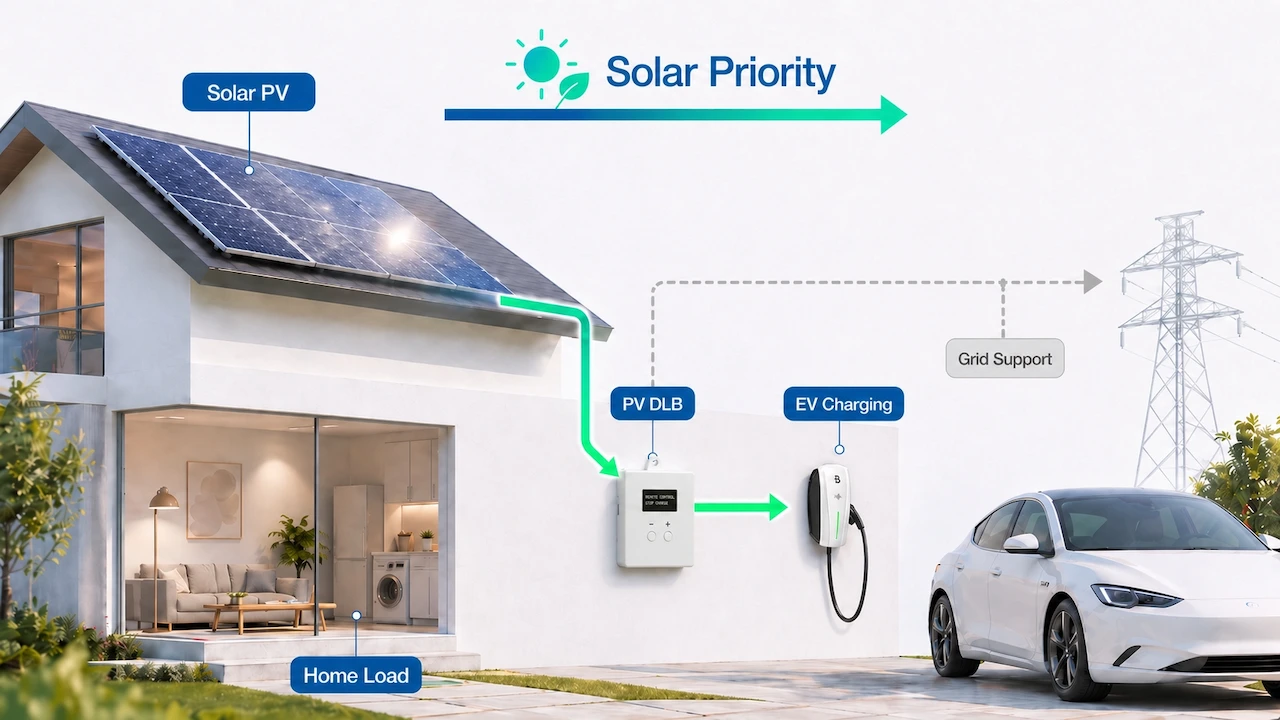
Use PV DLB to support solar-priority charging where available.
Balance household power consumption and reduce overload risk during EV charging.
Prioritize solar PV power for EV charging where system configuration supports it.
For homes with solar PV systems, smart residential EV charging can help make better use of available solar energy. With PV DLB and solar-compatible charging, the charger can support solar-priority charging where system conditions allow, helping homeowners reduce grid dependence and use more renewable energy for daily EV charging.
Solar-Priority Charging
Use PV power for EV charging where supported.
Reduce Grid Dependence
Use more on-site renewable energy.
PV DLB Coordination
Balance EV charging with solar generation and household load.
Future Energy Ready
Prepare the home for more integrated energy use.
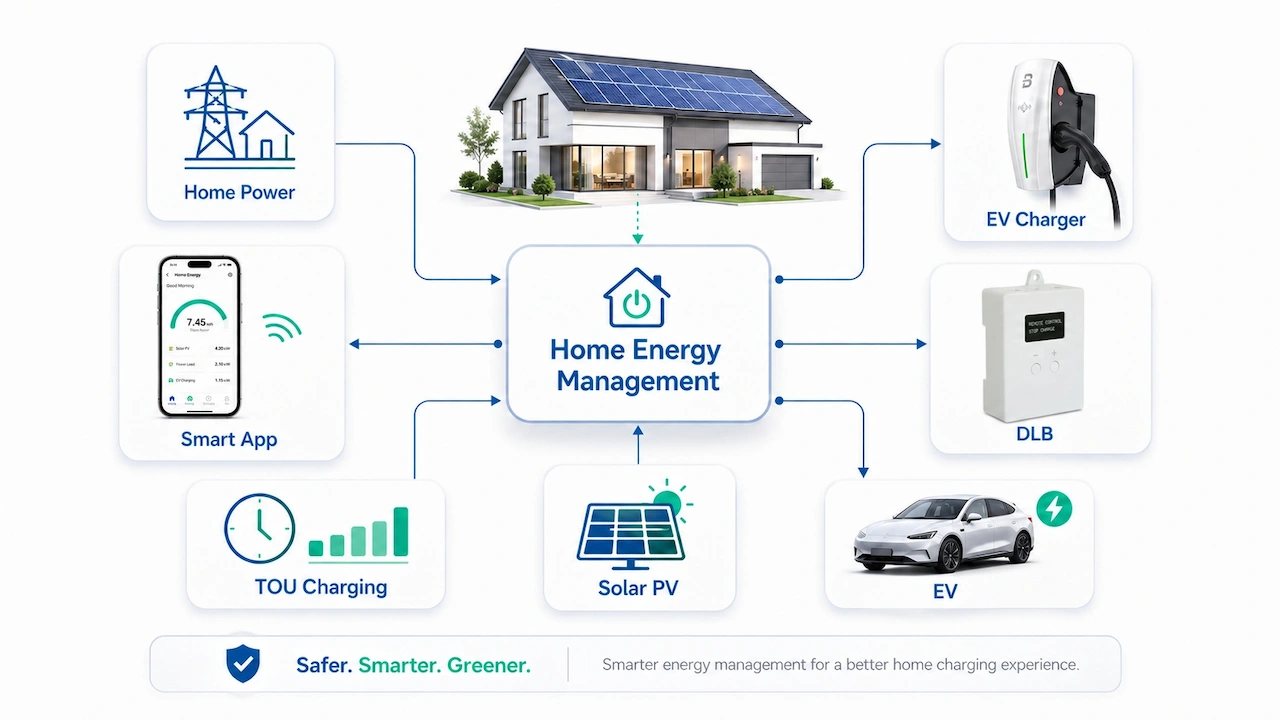
EVB helps homeowners improve smart energy consumption control by coordinating EV chargers with household energy use. With smart management, Dynamic Load Balancing, time-of-use charging, and solar-compatible charging, residential users can build a safer and more efficient home charging environment.
Main electricity source for household charging.
AC or portable charger for daily charging.
Automatically adjusts charging current based on available household load.
Monitor status, schedule charging, and manage supported DLB modes.
Plan charging around lower-rate periods where electricity pricing data is available.
Support cleaner home energy use and PV-priority charging where available.
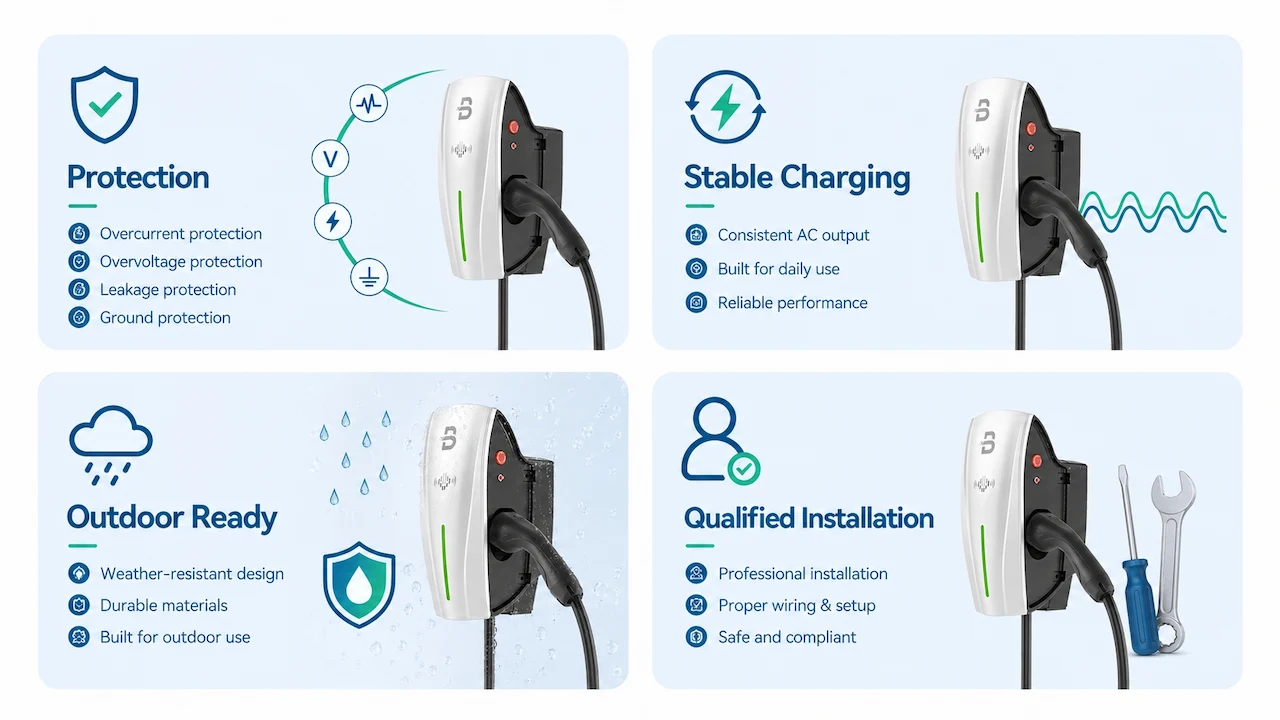
Home EV charging requires equipment designed for long-term daily use. EVB residential EV chargers are designed with safety protection, stable AC charging performance, and installation flexibility for residential environments. For outdoor or exposed parking areas, users should choose chargers with suitable environmental protection and follow local installation requirements.
Support safe charging in residential use.
Designed for regular home charging.
Choose suitable protection for exposed parking areas.
Follow local electrical requirements.
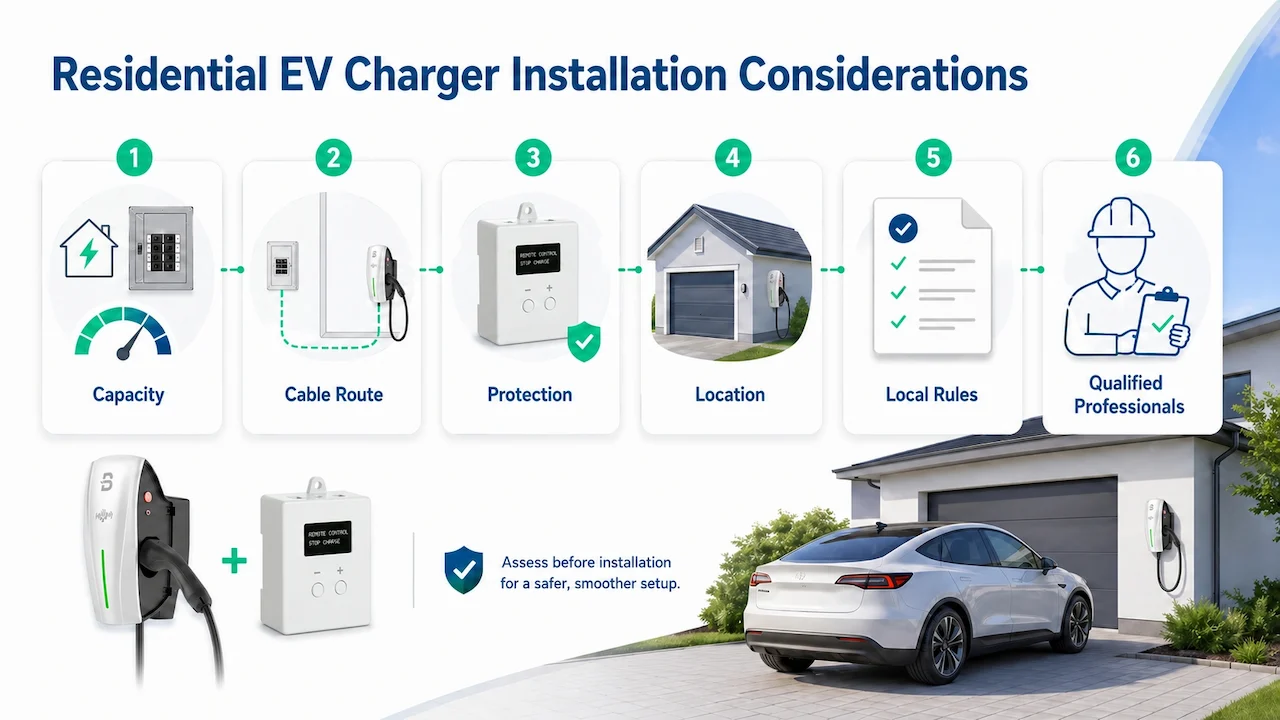
Residential EV charger installation should be planned carefully. Before installing a home EV charger, users should review power capacity, cable routing, protection requirements, indoor or outdoor placement, and local electrical regulations. EVB recommends that electrical assessment and installation be carried out by qualified professionals according to local requirements.
Check whether the home power supply can support the selected charger.
Choose a charger and location suitable for the installation environment.
Use chargers with appropriate safety protections for residential use.
Follow local regulations and work with qualified professionals where required.
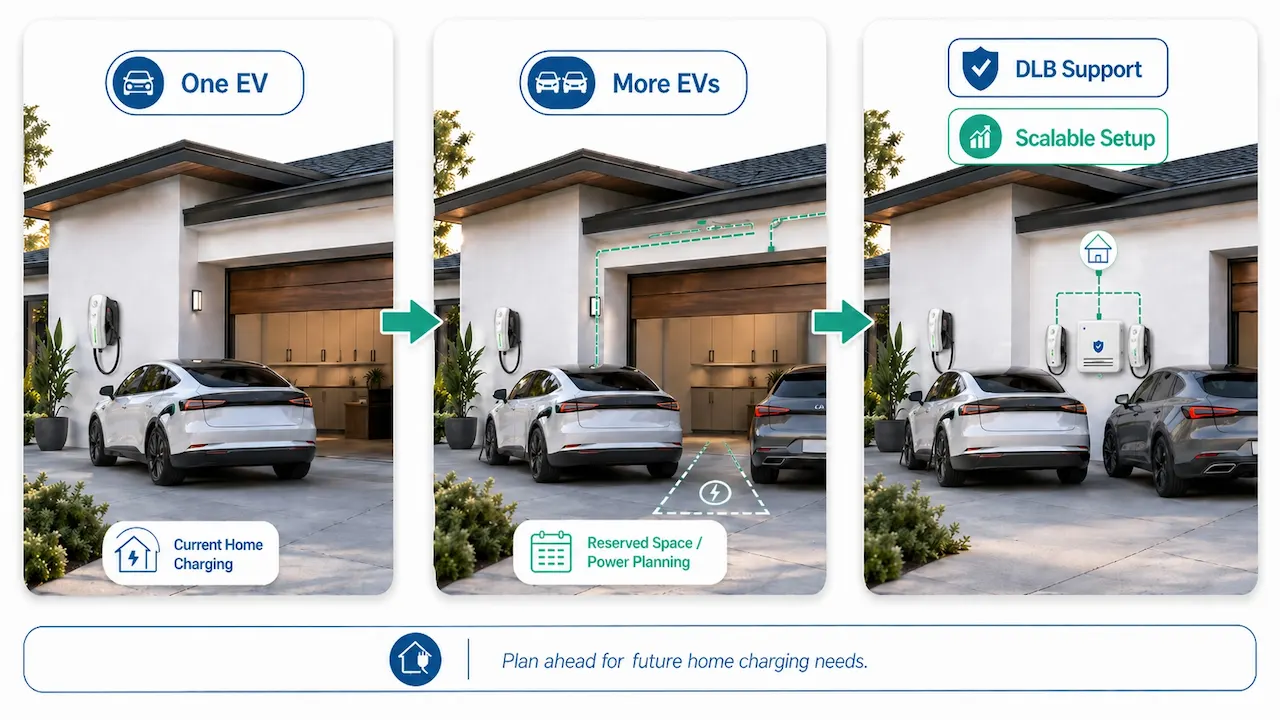
As more households add a second electric vehicle, residential charging needs may change. EVB can help users plan charging for one or more EVs by considering available household power, charger placement, Dynamic Load Balancing needs, and future expansion. This helps make the home charging setup more practical for long-term EV adoption.
Designed for daily residential charging in garages, driveways, and fixed parking spaces.
抱歉,当前分类下没有内容.
Designed for flexible charging and movable use.
抱歉,当前分类下没有内容.
Designed for app control, connectivity, and smarter operation where supported.
抱歉,当前分类下没有内容.
Designed for homes that need Dynamic Load Balancing, PV DLB, solar compatibility, time-of-use charging, or future energy coordination.
EVB offers residential EV charger options for different home charging needs, including wall-mounted AC chargers, portable EV chargers, smart AC charging stations, and DLB-ready or solar-compatible residential charging solutions. Customers can choose products based on charging speed, installation location, connectivity, safety requirements, and future energy management needs.
Designed for daily residential charging in garages, driveways, and fixed parking spaces.
Designed for flexible charging and movable use.
Designed for app control, connectivity, and smarter operation where supported.
Designed for homes that need Dynamic Load Balancing, PV DLB, solar compatibility, time-of-use charging, or future energy coordination.
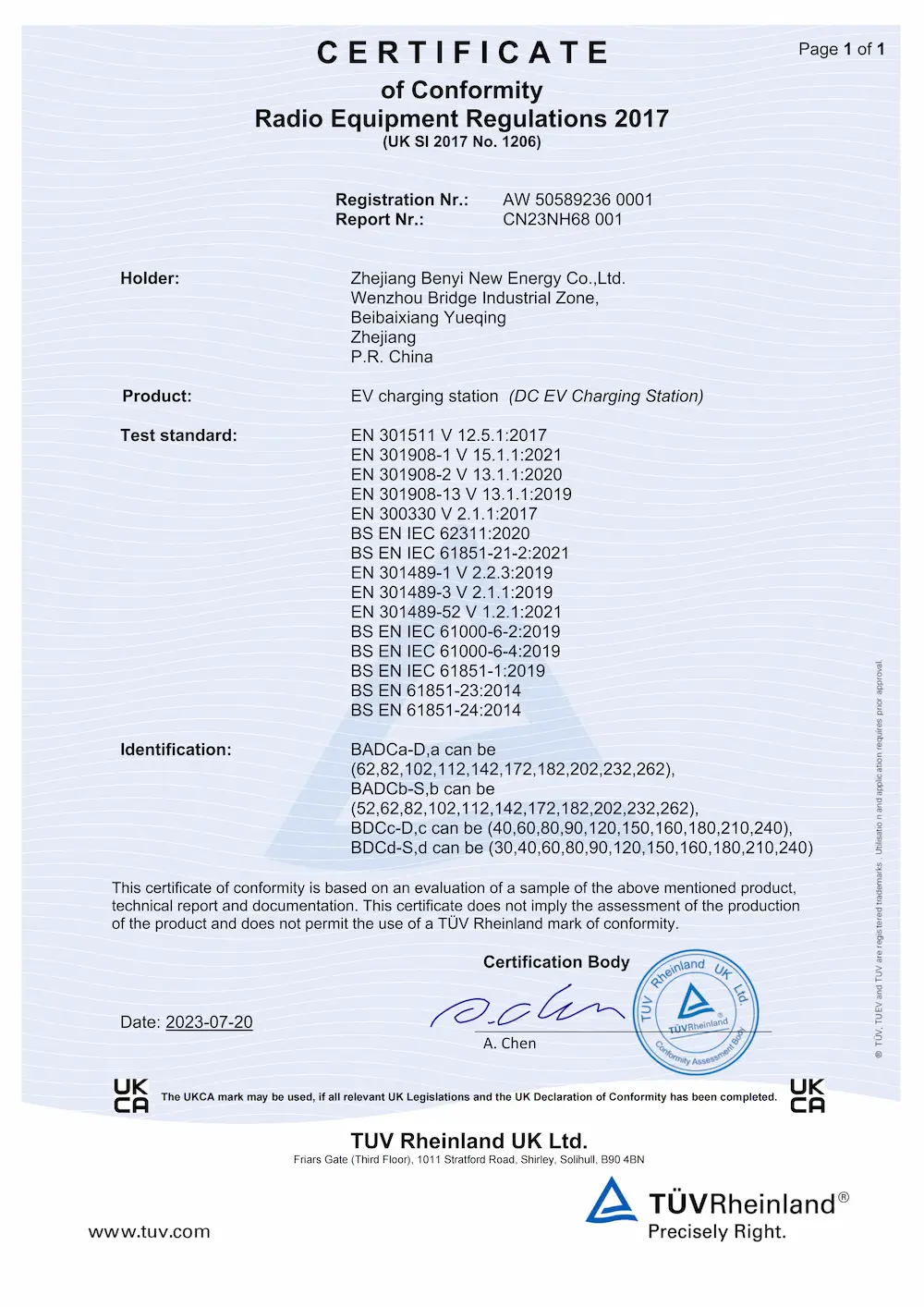
EVB bietet EV-DC-Ladestationen an, die globalen Standards entsprechen und sicherstellen, dass Ihre Ladeinfrastruktur sowohl zuverlässig als auch konform ist. So helfen wir Ihnen, mit unserer kompetenten Unterstützung und unseren qualitativ hochwertigen Lösungen dauerhaftes Kundenvertrauen aufzubauen.


Von Europa bis Australien zeigen die Ladeprojekte von EVB, wie Hotels und Gastronomiebetriebe durch den praktischen Einsatz von Ladestationen den Komfort verbessern, die Elektromobilität unterstützen und den Wert ihrer Standorte steigern können.
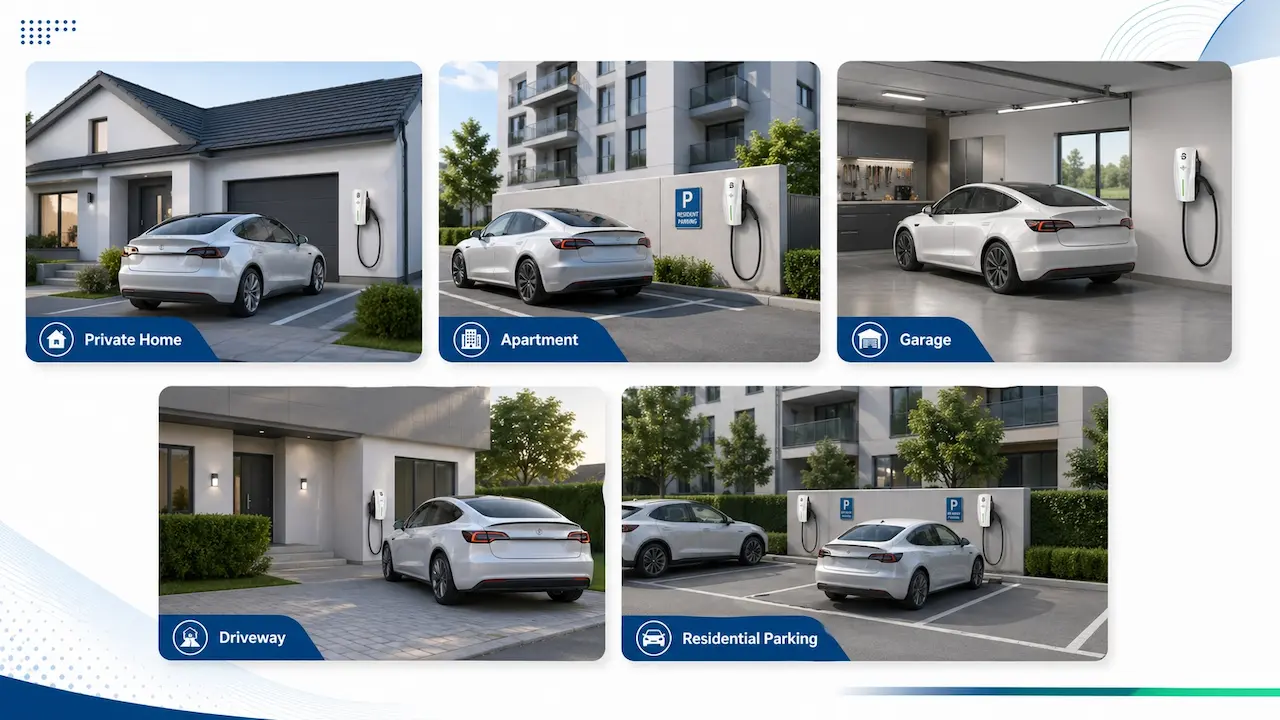
Before choosing a home EV charger or residential charging station, users should review several key factors: parking location, available electrical capacity, desired charging speed, indoor or outdoor installation, smart app requirements, Dynamic Load Balancing needs, solar compatibility, time-of-use charging availability, and future EV charging needs.
Garage, driveway, apartment parking, or shared residential parking?
Can the home electrical system support the selected charger?
Is standard AC charging enough for the user’s daily routine?
Which connector type, cable, or socket format is suitable?
Will the charger be exposed to weather conditions?
Is app control, scheduling, or usage data needed?
Is load balancing needed to manage household power demand?
Is electricity price data available for smart charging planning?
Should the charger work with a solar PV system?
Will the household add more EVs later?
Optimieren Sie Ihren Ladevorgang mit EVB – dem Marktführer für Ladestationen für Elektroautos in Wohnungen und Privathaushalten. Unser Plug-and-Play-System sorgt für Einfachheit, während unsere intelligente App für nahtlose Verwaltung und Nachverfolgung sorgt.
Im Zeitalter der Elektromobilität steigt auch die Nachfrage der Menschen nach effizienten und praktischen Ladestationen für Elektrofahrzeuge zu Hause. Wir bieten eine umfassende Palette an Lösungen für Ladestationen zu Hause, einschließlich Hardwareauswahl, Installation und intelligenten Funktionen.
Unser Ladegerät für Elektrofahrzeuge für den Privatgebrauch mit dynamischer Lastverteilung optimiert den Stromverbrauch und lässt sich nahtlos in Photovoltaiksysteme integrieren, um kostengünstige Ladedienste zu ermöglichen.
Die zertifizierten Ladegeräte für Elektrofahrzeuge für den Privatgebrauch von EVB werden regelmäßig getestet und erfüllen die sich ändernden Normen. Gleichzeitig sind sie mit mehreren Schutzfunktionen ausgestattet, um die Sicherheit zu gewährleisten.
Durch die Vereinfachung der Abrechnungs- und Zahlungsvorgänge bietet die Software Besitzern, Betreibern und Benutzern von Ladestationen ein reibungsloses Transaktionserlebnis.
Wir beauftragen einen zertifizierten Elektriker mit der Bewertung und Erhöhung der Stromkapazität sowie der Gewährleistung einer sicheren Installation gemäß den örtlichen Vorschriften.
Greifen Sie mithilfe unserer Smart-App auf Ihrem Telefon auf Ihre Ladedaten zu und profitieren Sie von deren intelligenten Funktionen, beispielsweise der Fernüberwachung und -steuerung des Ladevorgangs, um Ladezeiten zu planen und auf Nutzungsdaten zuzugreifen.
Unsere Elektroauto-Ladegeräte für zu Hause sind nicht nur praktisch, sie zeichnen sich auch durch ein elegantes Design und einstellbare Leistungsstufen aus.
Mit unserem Ladegerät für Elektrofahrzeuge für den Privatgebrauch können Sie Ihr Fahrzeug über Nacht aufladen und von den ermäßigten Stromtarifen außerhalb der Spitzenzeiten profitieren, um Geld zu sparen.
Eine außergewöhnliche Ladezuverlässigkeit wird durch die Implementierung mehrerer Schutzmechanismen erreicht, darunter Auslauf- und Übertemperaturschutz.
Entdecken Sie das EVB BCPCM-C2N-P Modus 3 EV-Ladegerät mit Typ 2 Modus 3 Ladekabel. Dieses Dual-Kabel-Ladegerät entspricht IEC 61851-21-2 und unterstützt OCPP für eine nahtlose Integration. Ideal für effiziente und zuverlässige EV-Ladelösungen.

Intelligentes AC-Ladegerät für Elektrofahrzeuge mit dualer EV-Ladebuchse Typ 2, zur Wand- oder Mastmontage, funktioniert dreiphasig mit 22 kW. Funktioniert bei -25 bis 55 °C und ist CE-, CB- und RCM-zertifiziert, mit LCD-Bildschirm und IP55.
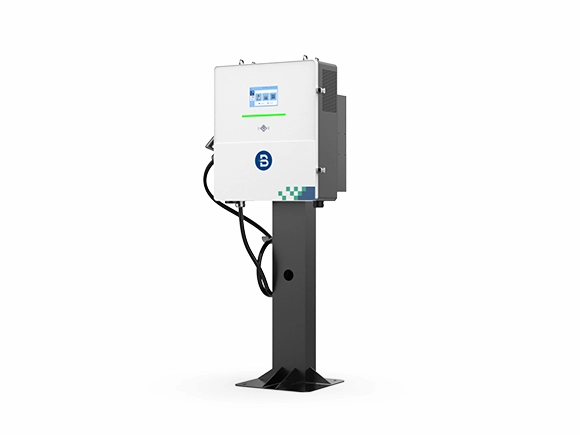
Ausgestattet mit umfassenden Schutzfunktionen und der Schutzart IP55 bietet das wandmontierte DC-Ladegerät von EVB eine Ausgangsleistung von 60 kW, um verschiedene Ladeanforderungen im privaten und gewerblichen Bereich zu erfüllen.
Das EVB-EV-Ladegerät für Unternehmen ist ein AC-EV-Ladegerät vom Typ Modus 3, das gemäß der Norm IEC 61851-21-2 entwickelt wurde. Es kann an der Wand montiert oder auf einem Sockel installiert werden.
Das tragbare EV-Ladegerät von EVB ist eine praktische, tragbare Plug-and-Play-Möglichkeit, Ihr Elektroauto mit Strom zu versorgen.
AC-EV-Ladegerät mit EV-Ladebuchse Typ 2, wand- oder mastmontiert, funktioniert 1-phasig oder 3-phasig, also mit 230 V oder 400 V, 6 A oder 32 A. Funktioniert bei -25 °C bis 55 °C und ist CE-, CB- und RCM-zertifiziert, mit feuerfesten Gehäusen der Schutzklasse IP65 und V0.
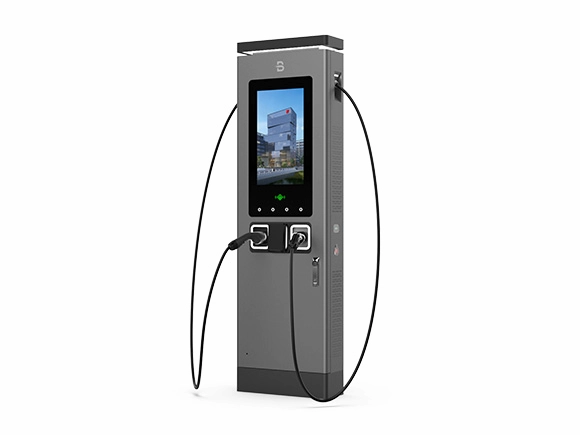
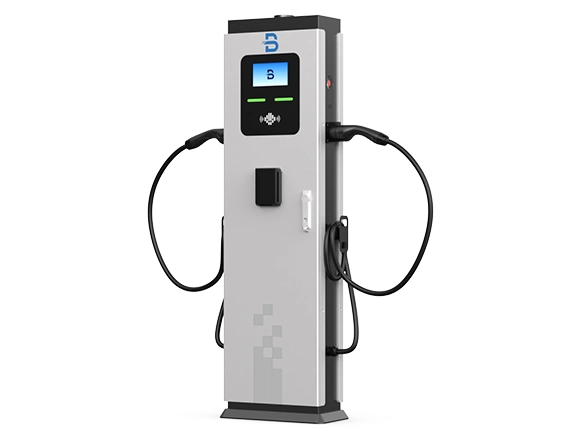
Das bodenmontierte AC-Ladegerät EVB Modell 3 für Elektrofahrzeuge ist mit einem 21-Zoll-Touchscreen für intuitive Mensch-Maschine-Interaktion ausgestattet. Es unterstützt OCPP-Plattformen und bietet dadurch hohe Kompatibilität und Anpassungsfähigkeit sowie eine intelligente Ladelösung.
EVB, das kabelgebundene AC-Ladegerät der 2. Generation mit OCPP und Typ-2-Kabel, für Wand- oder Mastmontage, funktioniert einphasig oder dreiphasig mit 230 V oder 400 V, 6 A oder 32 A. Funktioniert bei -25 bis 55 °C und ist CE- und CB-zertifiziert, mit feuerfesten Gehäusen der Schutzart IP65 und V0.

Verbessern Sie Ihr Ladeerlebnis mit dem bodenmontierten AC-Ladegerät EVB mit POS-Funktion. Erleben Sie mühelose Interaktion mit dem 7,0-Zoll-Touchscreen. Steuern Sie Ihr Ladegerät über eine intelligente App und verschiedene Konnektivitätsoptionen.
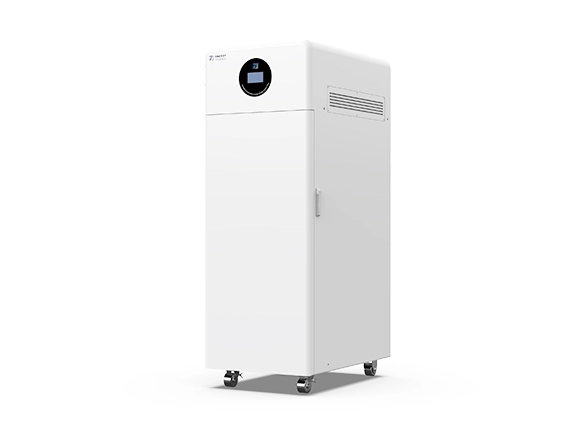
Die EVB BYAIO-Serie verwendet Lithium-Eisenphosphat-Batterien (LFP), die sicher, langlebig, effizient und mit hoher Leistungsdichte sind. Kaufen Sie noch heute ein!
EVB-Hochspannungs-Rack-Speichersystem mit zwei Modi und ausgestattet mit LiFePO4-Batterien. Mit einer IP54-Einstufung für Langlebigkeit sind sie perfekt für den Einsatz in Wohngebäuden geeignet. Kaufen Sie noch heute ein!
Entdecken Sie EVB-Hochspannungsbatteriespeichersysteme mit zwei Stapelmodi und LifePO4-Batterien. IP54-zertifiziert für Langlebigkeit, ideal für den Einsatz in Wohngebieten. Kaufen Sie noch heute ein!
Das LFP-Energiespeicherpaket für Privathaushalte wurde von BENY eigenständig entworfen und entwickelt. Es wird häufig im Bereich der Energiespeicherung mit netzgekoppelten, netzunabhängigen und Hybrid-Wechselrichtern eingesetzt.
Das LFP-Energiespeicherpaket für Privathaushalte wurde von BENY eigenständig entworfen und entwickelt. Es wird im Bereich der Energiespeicherung häufig mit netzgekoppelten, netzunabhängigen und Hybrid-Wechselrichtern eingesetzt.
Das LFP-Energiespeicherpaket für Privathaushalte wurde von BENY eigenständig entworfen und entwickelt. Es wird häufig im Bereich der Energiespeicherung mit netzgekoppelten, netzunabhängigen und Hybrid-Wechselrichtern eingesetzt.
Das Energiemanagementsystem ist speziell für intelligentes Energiemanagement konzipiert. Dieses System eignet sich für die Integration in Hausnetze mit Photovoltaikanlagen und besteht aus BEMS-Messgeräten und BEMC-Steuergeräten.
Verbessern Sie Ihr Ladeerlebnis mit dem EVB-Bodenladegerät für Elektrofahrzeuge mit AC-Anschlüssen, das von CE&UKCA empfohlen wird und über die T2S-Buchsenoption verfügt. Erleben Sie mühelose Interaktion mit der 5,0-Zoll-Touchscreen-Oberfläche. Steuern Sie Ihr Ladegerät über eine intelligente App und verschiedene Konnektivitätsoptionen.
Verbessern Sie Ihr Ladeerlebnis mit dem bodenmontierten AC-Ladegerät für Elektrofahrzeuge EVB. Erleben Sie mühelose Interaktion mit der 5,0-Zoll-Touchscreen-Oberfläche. Steuern Sie Ihr Ladegerät über eine intelligente App und verschiedene Konnektivitätsoptionen.
AC-EV-Ladegerät mit Typ-2-Kabel, Wand- oder Mastmontage, funktioniert 1-phasig oder 3-phasig, also mit 230 V oder 400 V, 6 A oder 32 A. Funktioniert bei -25 bis 55 °C und ist CE-, CB- und RCM-zertifiziert, mit feuerfesten Gehäusen der Schutzklasse IP65 und V0.
AC-EV-Ladegerät mit Typ-2-Buchse, Wand- oder Mastmontage, funktioniert 1-phasig oder 3-phasig, also mit 230 V oder 400 V, 6 A oder 32 A. Funktioniert bei -25 bis 55 °C und ist CE-, CB- und RCM-zertifiziert, mit feuerfesten Gehäusen der Schutzklasse IP55 und V0.
Das tragbare EV-Ladegerät IP54 3,7 kW Level 2 bietet Ihrem Elektrofahrzeug unterwegs Sicherheit. Mit nur einem Haushaltsstromanschluss können Sie Ihr Elektrofahrzeug auch ohne Ladestation in der Nähe aufladen.
Das tragbare EV-Ladegerät IP66 3,7 kW Level 2 bietet Sicherheit für Ihr EV unterwegs. Mit nur einem Haushaltsstrom können Sie Ihr EV auch dann aufladen, wenn sich keine Ladestation in der Nähe befindet.
Für alle unsere Ladegeräte gilt eine 3-jährige Garantie, einschließlich Fernwartung und Vor-Ort-Wartung.
Ihnen wird ein spezialisierter Account Manager zugewiesen, der Sie während des gesamten Produktionsprozesses auf dem Laufenden hält.
Zertifizierte Techniker installieren Ihre Ladestationen für Privathaushalte und geben Ihnen die Gewissheit, dass sie wie vorgesehen funktionieren.
Ein erfahrenes Support-Team steht rund um die Uhr telefonisch für die Anliegen der Kunden zur Verfügung.
Lebenslange Over-the-Air-Softwareupdates für Ihre Ladestationen sorgen dafür, dass diese ständig optimiert bleiben.
Von der Beratung bis zum Kundendienst sind wir bestrebt, Ihnen ein hervorragendes Serviceniveau zu bieten.
We have compiled a list of frequently asked questions (and answers) about AC residential EV charging solution for your reference.
The best EV charger for home use depends on parking location, electrical capacity, charging speed requirements, indoor or outdoor installation, and smart control needs. Wall-mounted AC chargers are commonly used for regular home charging, while portable EV chargers offer more flexibility.
In markets such as North America, Level 2 home EV charging usually refers to dedicated AC charging equipment that charges faster than a standard household outlet. The actual charging speed depends on local voltage, charger power rating, and vehicle acceptance capacity.
Home EV charger installation depends on electrical capacity, local regulations, installation location, and protection requirements. EVB recommends working with qualified professionals for assessment and installation according to local requirements.
Home EV charger installation cost can vary by country, electrical capacity, cable routing, installation complexity, and local code requirements. Users should assess site conditions before choosing a charger.
Where time-of-use electricity pricing and cloud connectivity are supported, EVB smart charging can help users plan charging around lower-rate periods. The charging schedule can be generated based on electricity price information, desired charging amount, and planned vehicle use time. Availability may vary by market, charger model, and system configuration.
Dynamic Load Balancing helps adjust EV charging current according to available household electrical load. When other household appliances are using power, the charger can reduce charging current to help avoid overload. When more power is available, charging current can increase within the supported range.
Normal DLB is used to balance household power consumption during EV charging and reduce overload risk. PV DLB is designed for homes with solar PV systems and can help prioritize solar power for EV charging where the system configuration supports it.
Dynamic Load Balancing can help make better use of existing household power capacity by adjusting charging current according to available load. However, whether an electrical upgrade is needed depends on the home’s electrical system, charger power, local regulations, and installation assessment.
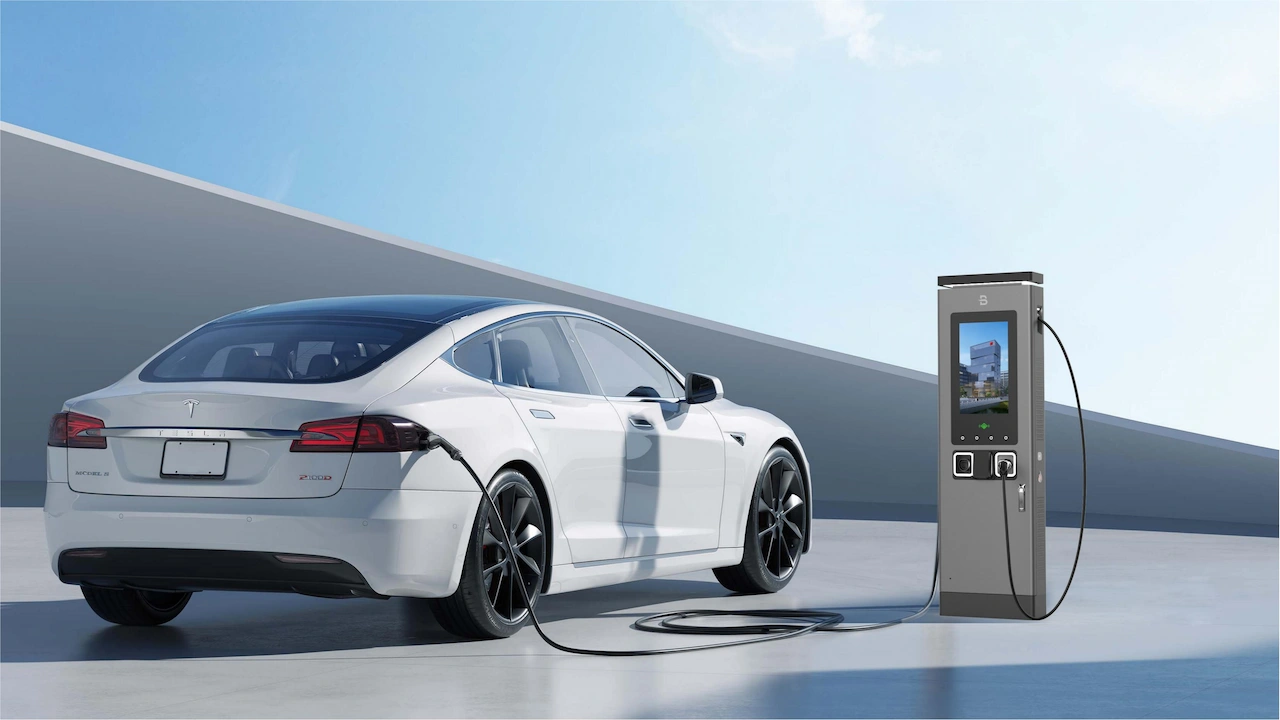
Yes, outdoor residential EV chargers can be used in driveways or exposed parking areas when the charger is properly rated for outdoor installation and installed according to local requirements.
EVB residential EV chargers can support solar-compatible charging strategies, PV DLB, and Dynamic Load Balancing where site conditions and system configuration allow.
Users should check parking location, electrical capacity, connector type, installation format, smart app requirements, DLB needs, solar compatibility, and future EV charging plans.
Portable EV chargers can be useful for flexible or temporary charging needs, but fixed wall-mounted chargers are often preferred for regular daily home charging.
Schließen Sie sich dem Erfolg an
Tell us about your parking location, power conditions, charging needs, DLB requirements, time-of-use charging needs, solar compatibility needs, and preferred installation type. EVB will help you choose a suitable home EV charger or residential EV charging station for your project.
Von der Beratung bis zur Installation sorgt unser Expertenteam für eine umfassende, auf Ihre Bedürfnisse zugeschnittene Ladelösung für Elektrofahrzeuge.
Copyright © 2026, EVB. Alle Rechte vorbehalten. Powered by beny.