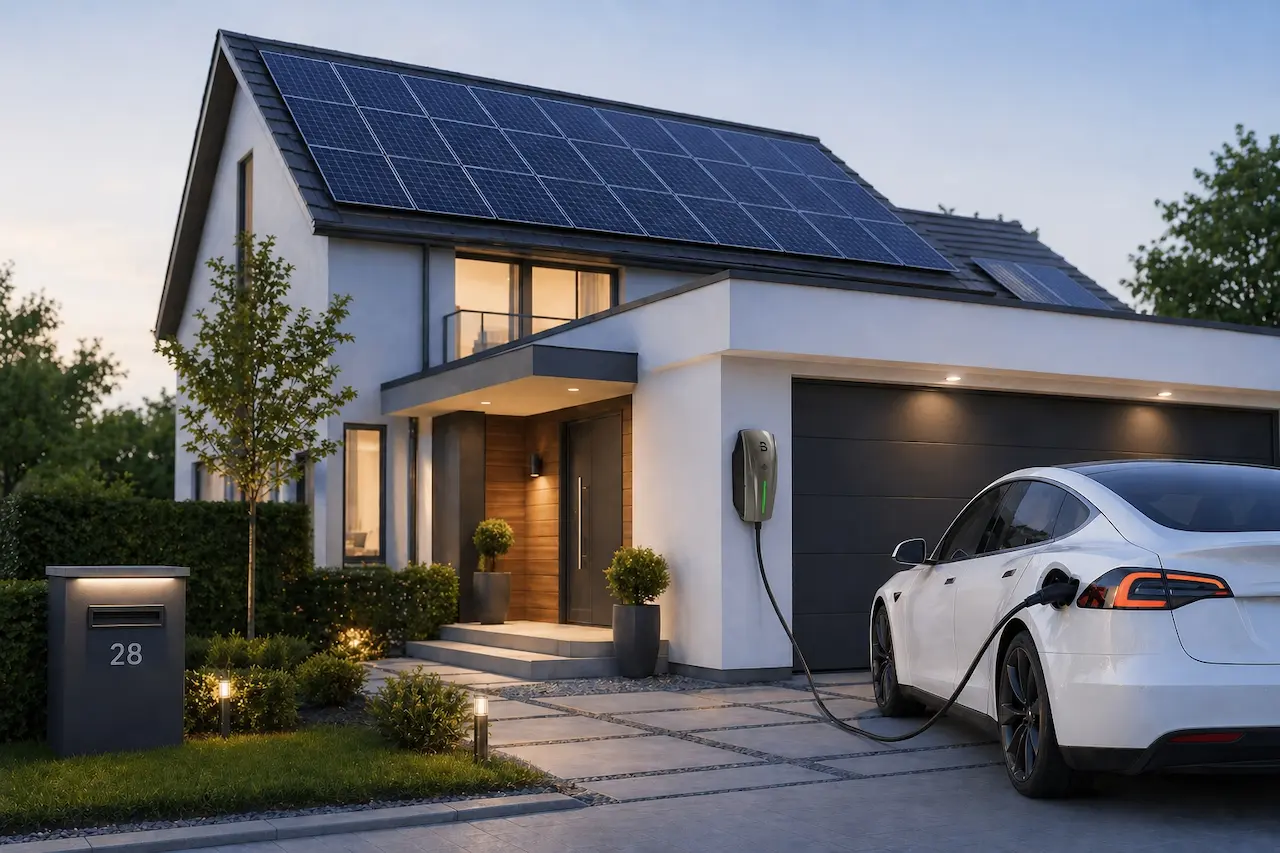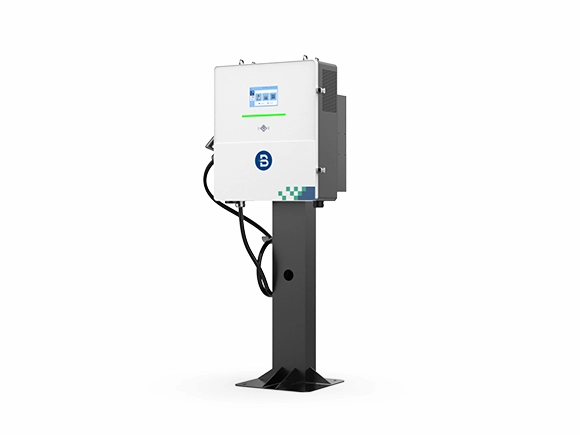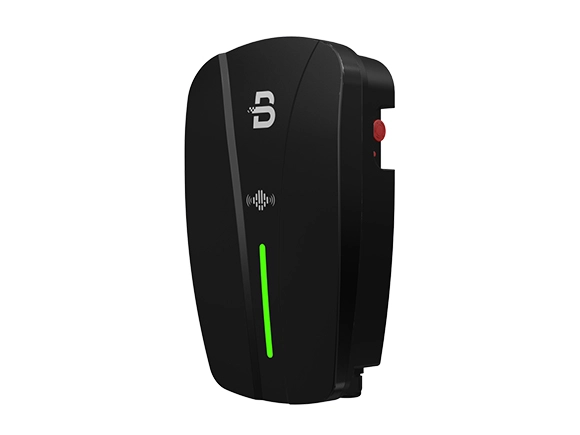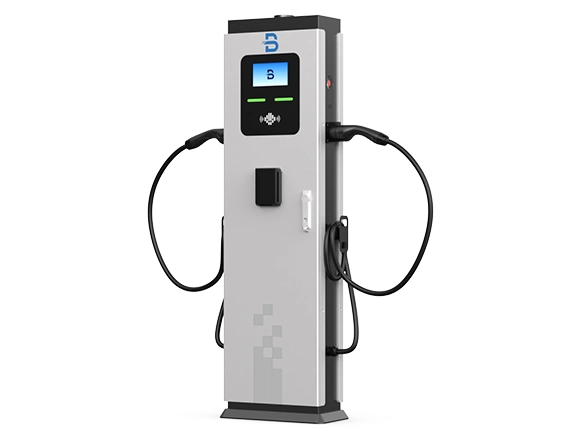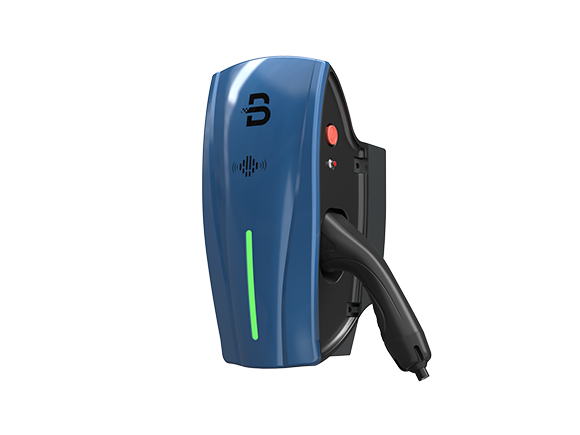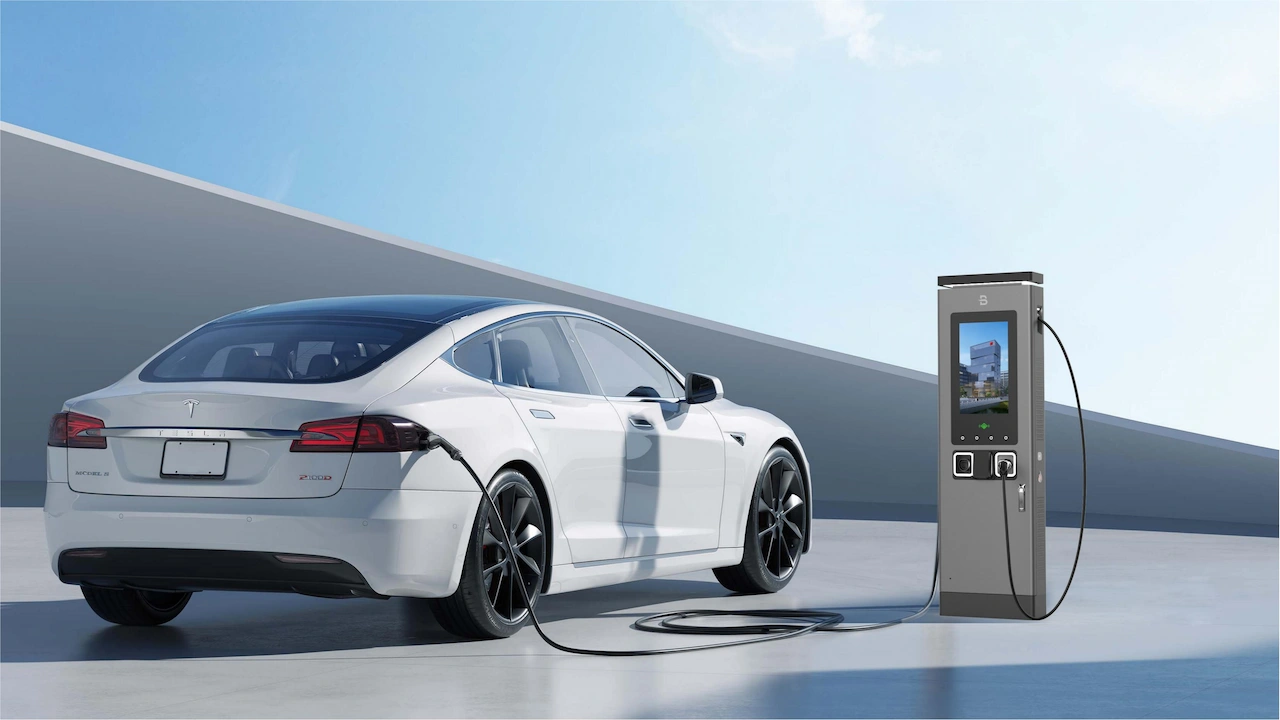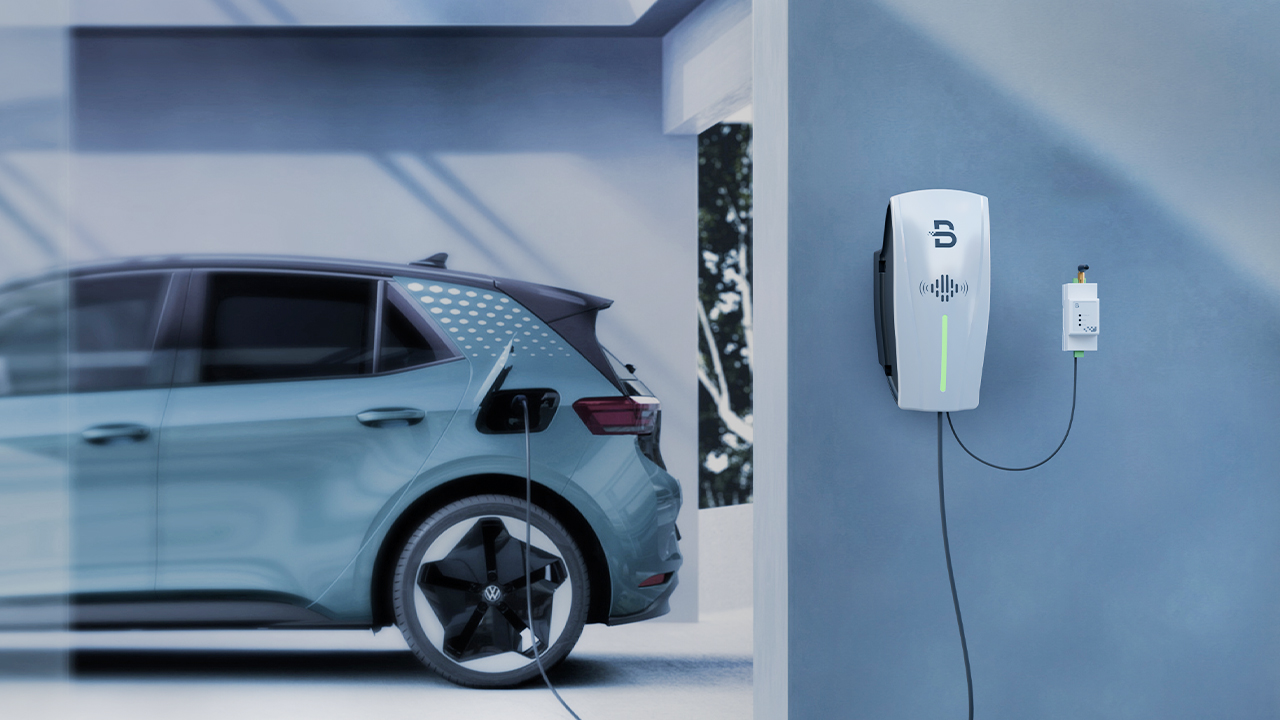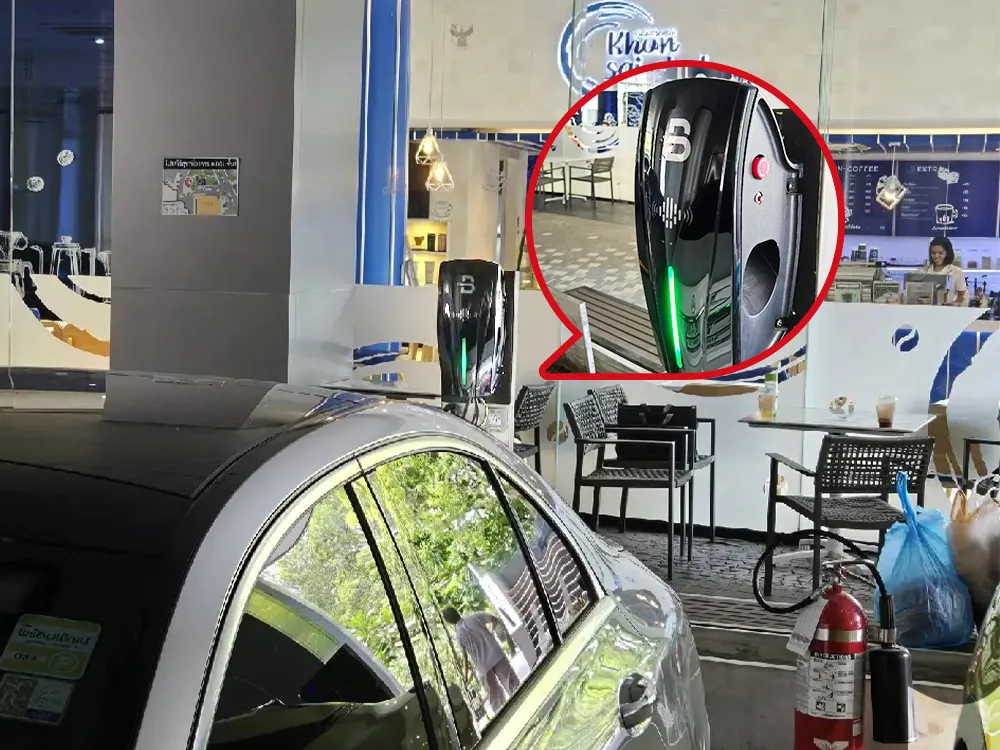













Charge your electric vehicle at home with EVB residential EV charging solutions designed for daily convenience, smart energy management, and reliable home charging. From wall-mounted AC chargers and portable EV chargers to outdoor residential EV chargers and DLB-ready charging options, EVB helps homeowners, apartments, and residential properties build a safer, smarter, and more efficient home EV charging setup.
Home EV charging gives drivers the convenience of charging where they live. Instead of relying only on public charging stations, homeowners and residential properties can use a dedicated home EV charger to support daily commuting, overnight charging, and better control over charging time and household energy use.

Charge your EV at home overnight or whenever the vehicle is parked.

Reduce dependence on public charging
availability.

Schedule charging during lower-rate periods where available.

Make homes, apartments, and residential parking areas more EV-ready.
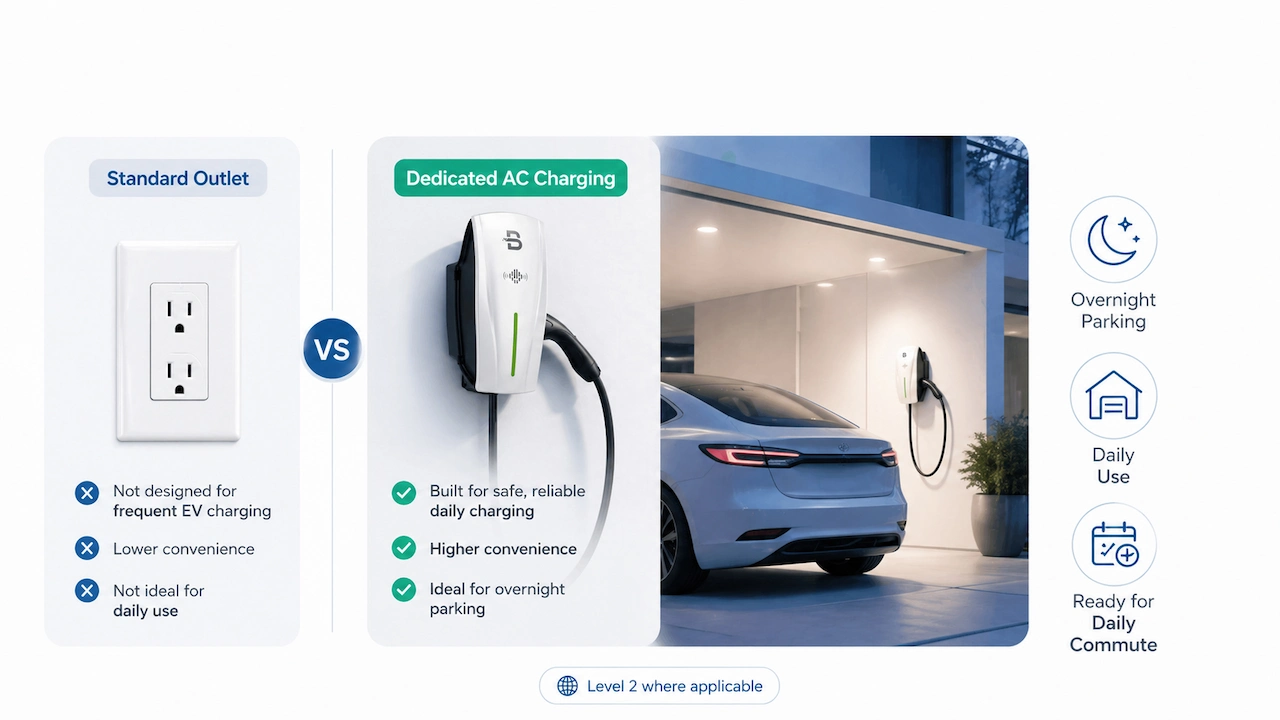
For most residential charging needs, an AC home EV charger provides a practical balance of charging speed, installation flexibility, and daily convenience. Compared with a standard household outlet, a dedicated home EV charger can support more stable and efficient charging for overnight parking, daily commuting, and fixed residential spaces. In markets such as North America, this type of AC charging is often referred to as Level 2 home EV charging.
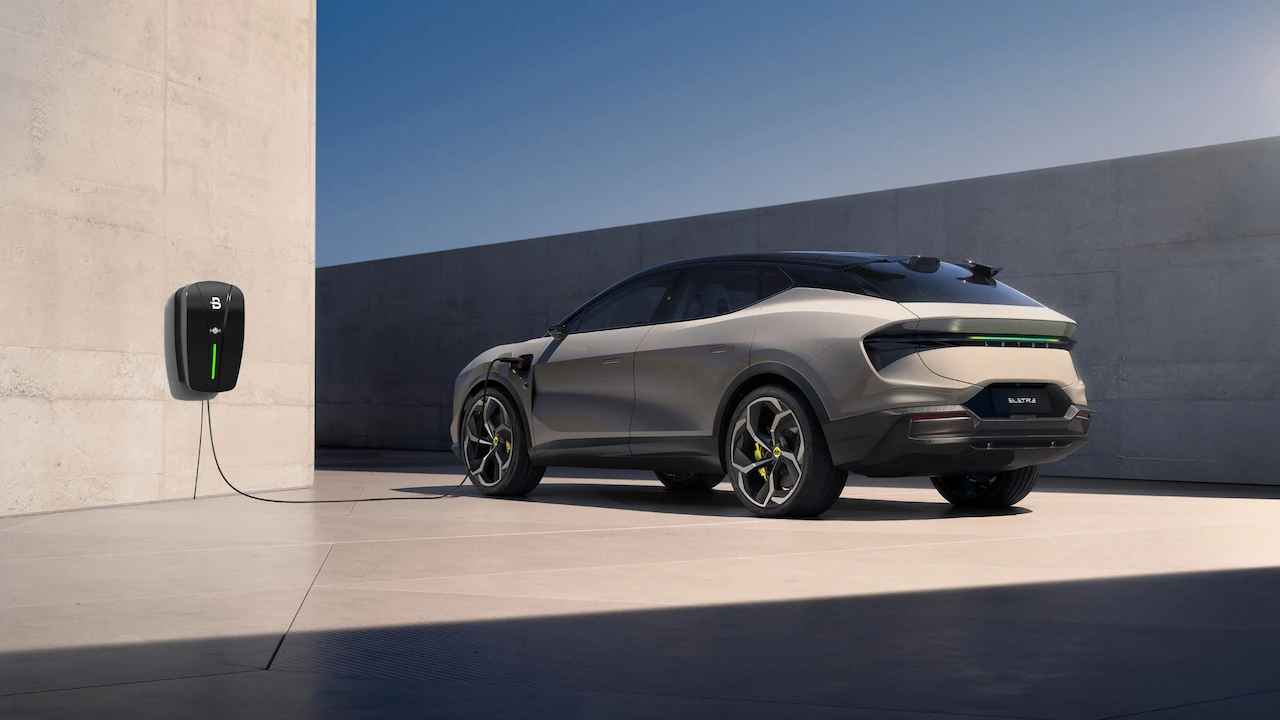
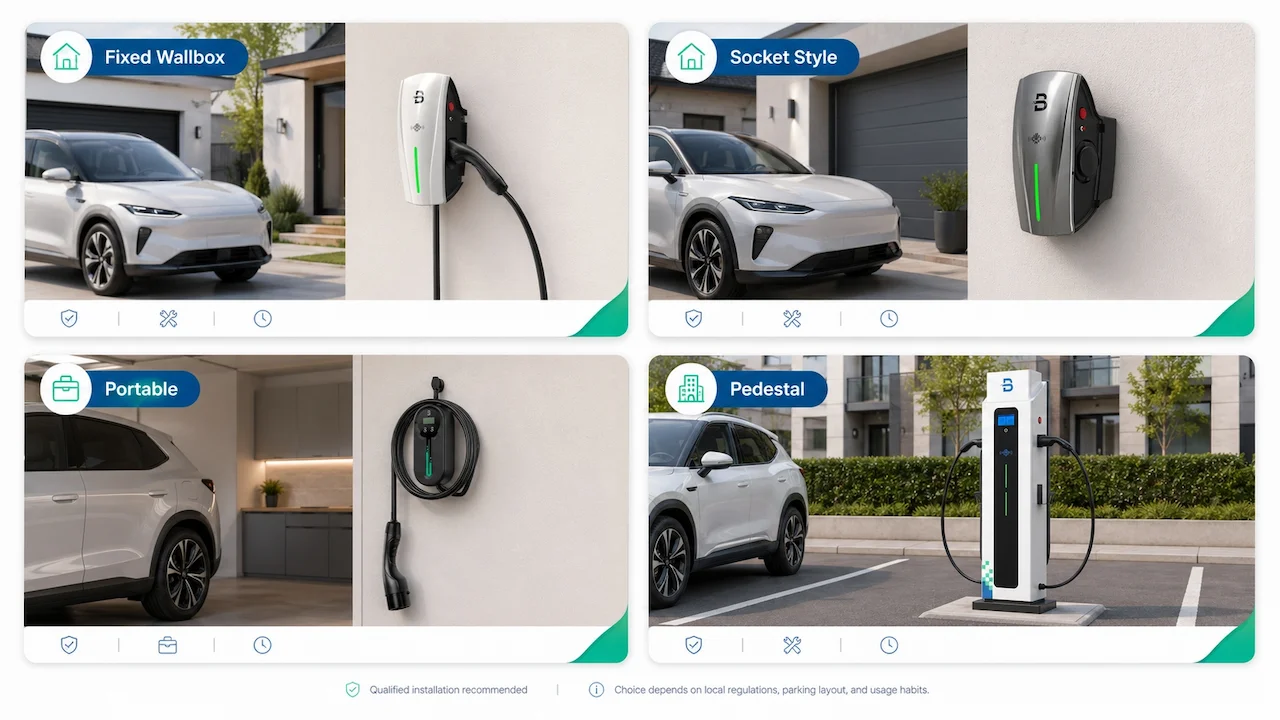
Different homes need different charging setups. A wall-mounted home EV charger is suitable for fixed parking spaces and regular daily charging, while a portable EV charger can offer greater flexibility for users who need a movable charging option. Outdoor residential EV chargers are suitable for driveways and exposed parking areas, while smart AC chargers can support app control, scheduling, and load management where configured.
Best for fixed parking spaces, garages, and daily home charging.
Il semble que nous ne puissions pas trouver ce que vous cherchez.
Best for app control, charging schedules, and supported load management functions.
Il semble que nous ne puissions pas trouver ce que vous cherchez.
Best for flexible use, temporary charging needs, or secondary charging locations.
Il semble que nous ne puissions pas trouver ce que vous cherchez.
Best for driveways, outdoor parking spaces, and weather-exposed installations.
Il semble que nous ne puissions pas trouver ce que vous cherchez.
Residential charging setups may use different installation formats depending on local electrical rules, parking layout, and user habits. A fixed wallbox charger is suitable for regular home charging at a dedicated parking space, while socket-style or portable charging options may provide more flexibility where allowed. The final setup should always follow local electrical regulations and be assessed by qualified professionals.
Best for daily charging at a dedicated parking space.
Suitable where socket-based installation is allowed and properly protected.
Useful for flexible or temporary charging needs.
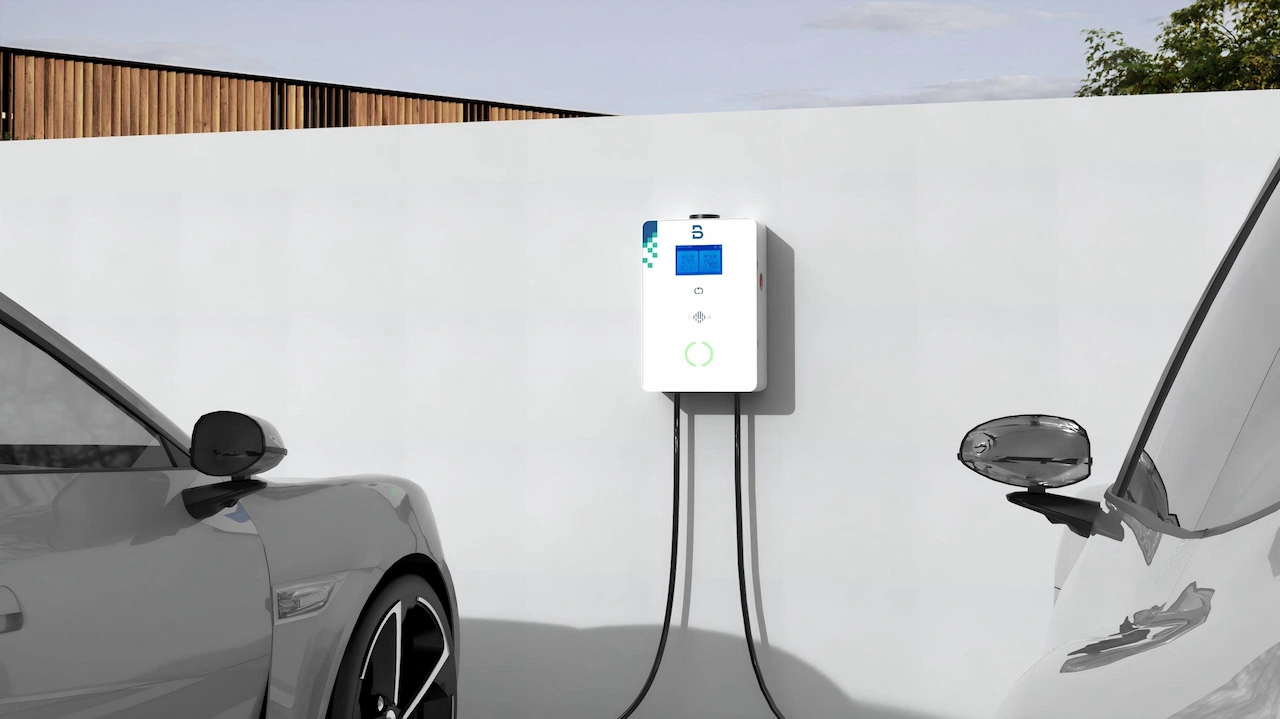
Suitable for driveways, open parking spaces, or shared residential parking areas.
| User Need | Recommended Option | Key Feature |
|---|---|---|
| Daily home charging | Chargeur mural CA | Stable fixed charging |
| Flexible or temporary use | Portable EV charger | Movable charging option |
| Outdoor driveway | Outdoor-rated residential charger | Weather-resistant installation |
| Smart scheduling | Smart AC charger | App and charging schedule |
| Household load limits | DLB-ready charger | Dynamic current adjustment |
| Solar PV home | PV DLB / solar-compatible option | Solar-priority charging |
| Apartment/shared parking | Managed AC charging setup | Access control and records |
| Future multiple EVs | Scalable residential setup | Planning for expansion |
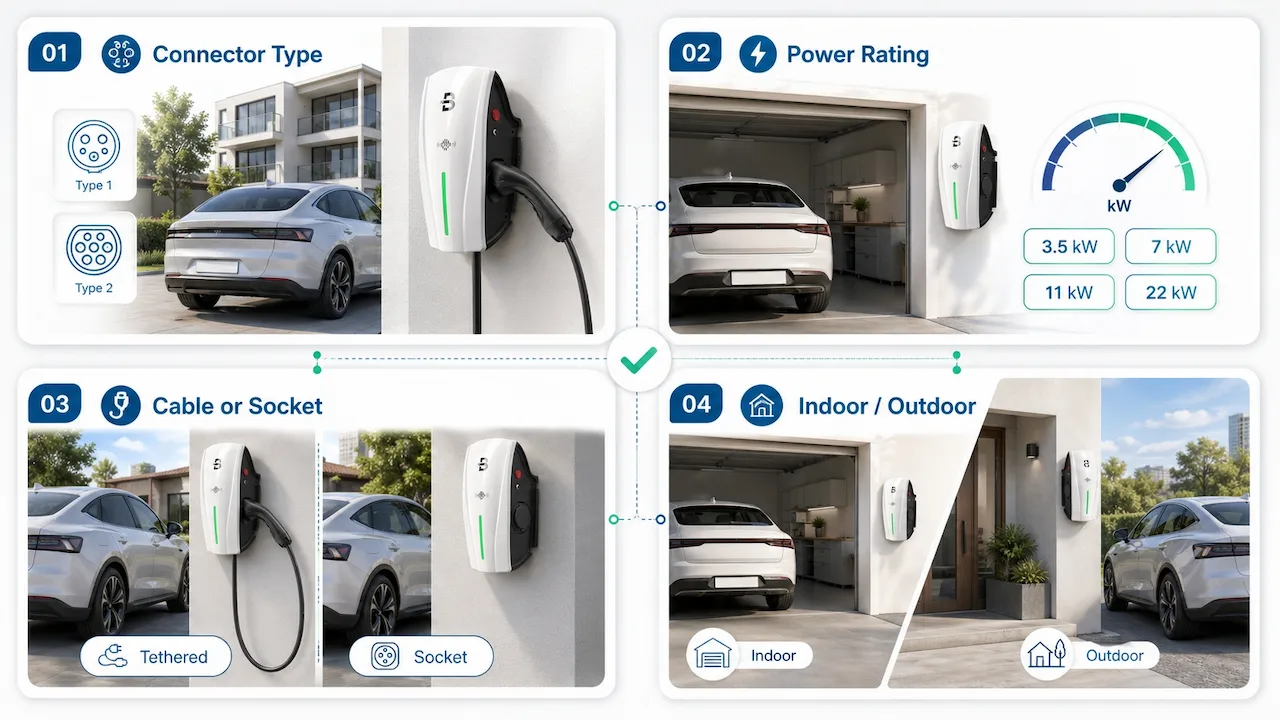
A suitable home EV charger should match the vehicle, local charging standard, parking setup, and preferred installation format. EVB residential EV chargers can be selected based on connector type, power rating, cable or socket configuration, indoor or outdoor use, and smart charging requirements. This helps homeowners and residential properties choose a charger that fits both current vehicles and future charging needs.
Type de connecteur
Match local EV charging standards and vehicle requirements.
Power Rating
Choose suitable AC charging power based on electrical capacity and daily use.
Cable or Socket Design
Select tethered cable or socket-style charging where available.
Indoor or Outdoor Use
Choose a charger suitable for garage, driveway, or exposed parking areas.
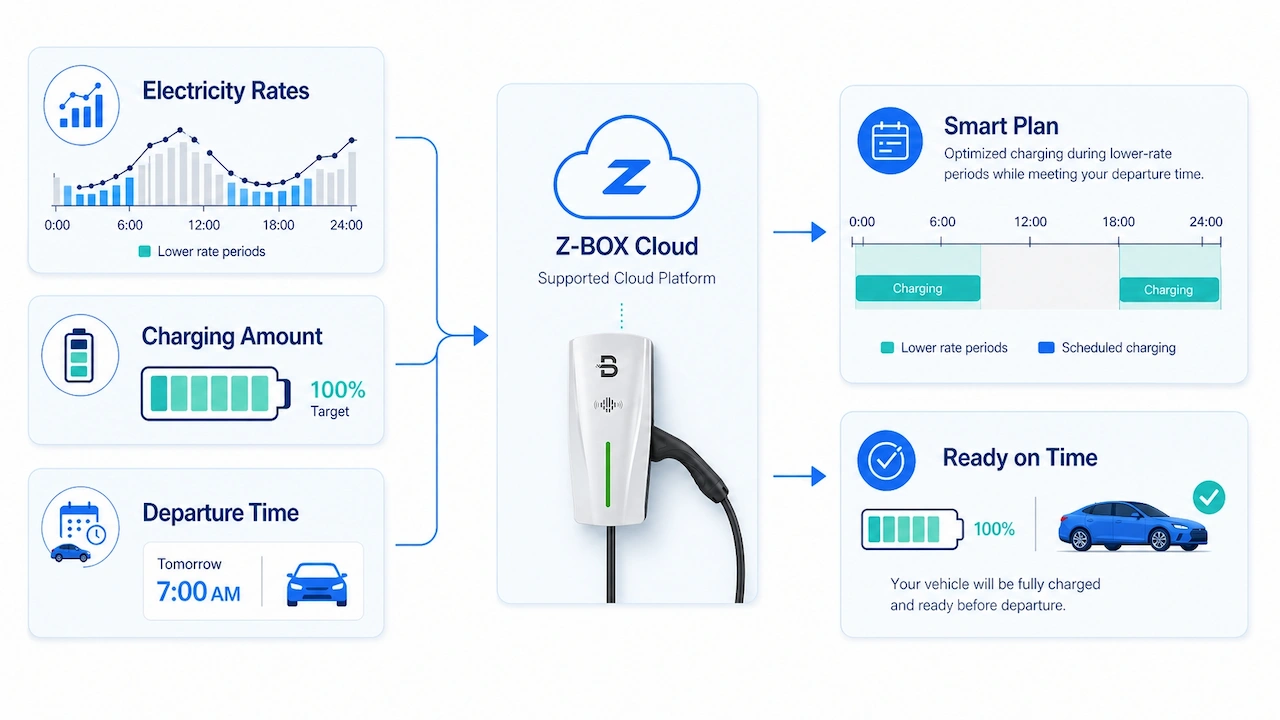
EVB residential EV chargers support smart charging features that help users monitor charging status, schedule charging time, and manage daily charging activity through a smart app and supported cloud platform where configured. Where electricity price data is available, the system can help generate a smarter charging plan based on the user’s desired charging amount and planned vehicle use time.
View charging status through the smart app where supported.
Set charging times based on daily routine or lower-rate electricity periods where available.
Use available electricity price information to support smarter charging planning.
Track charging activity and energy use.
Manage charging more easily from home or remotely.
Where time-of-use electricity pricing is available, EVB smart charging can help users plan charging sessions around lower-rate periods. By combining electricity price information, desired charging amount, and planned vehicle departure time, the system can generate a more cost-effective charging schedule through the charger and supported cloud platform. This helps homeowners charge more intelligently while maintaining daily driving readiness.
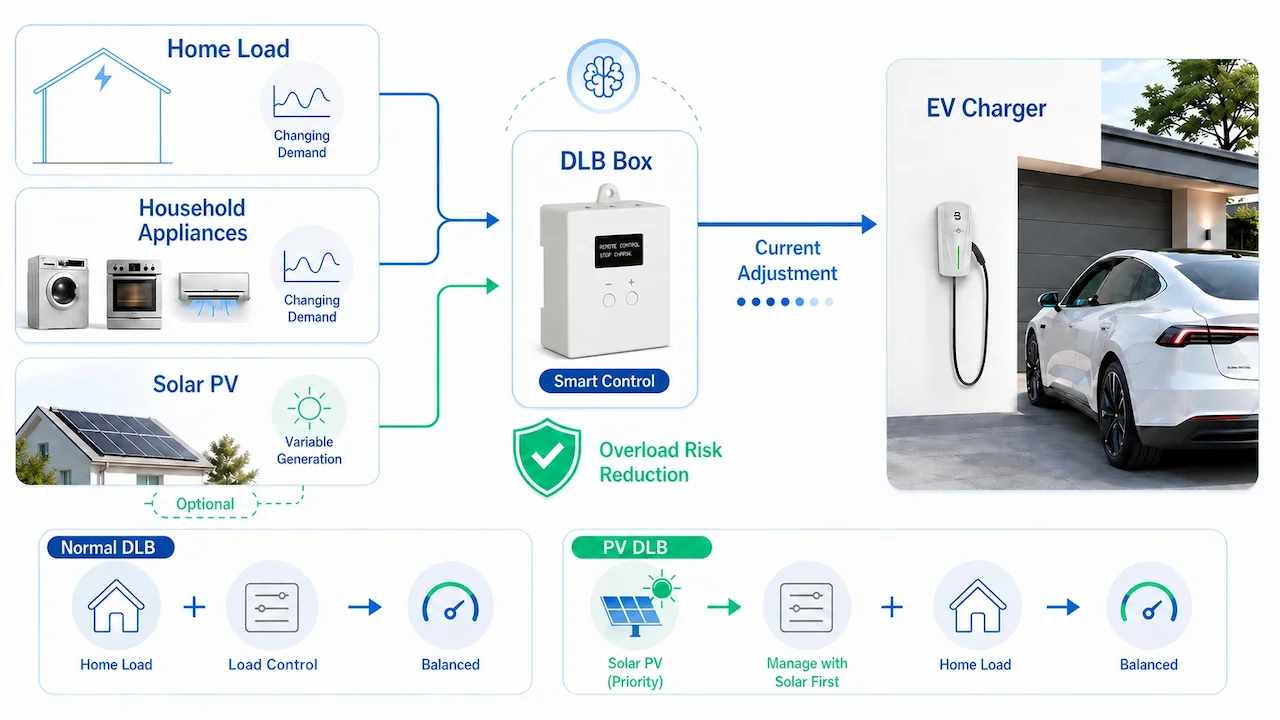
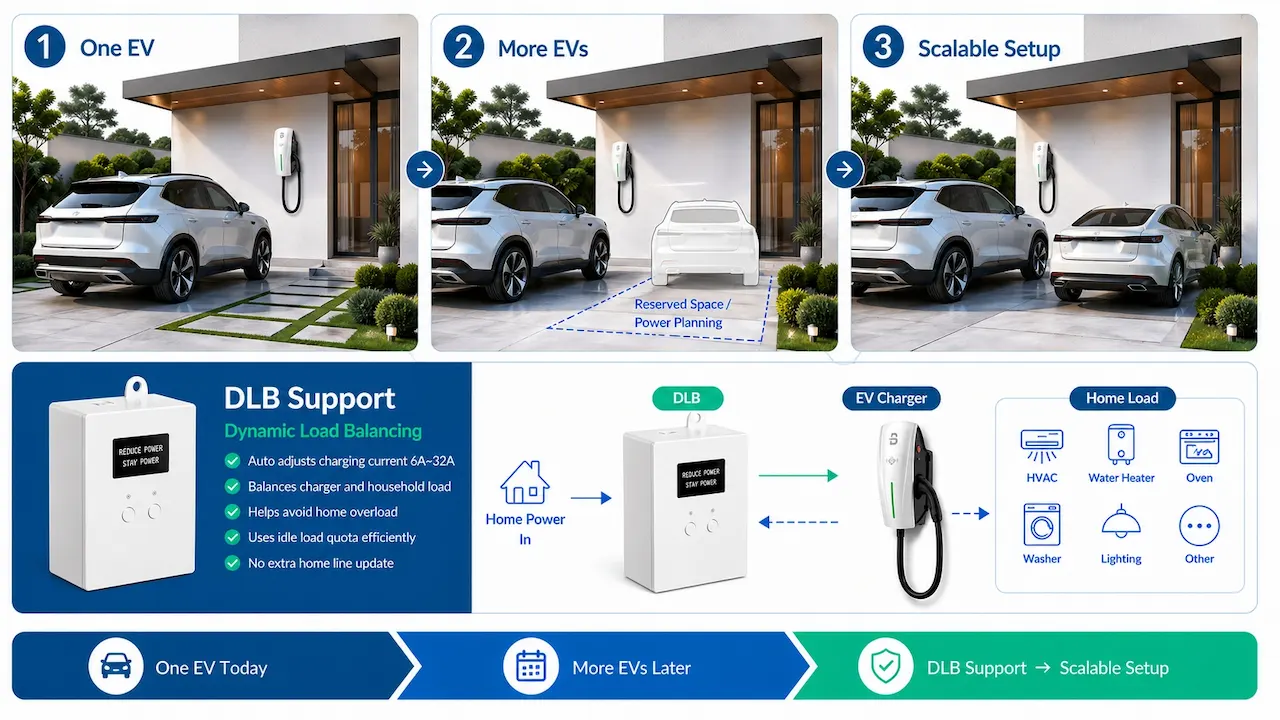
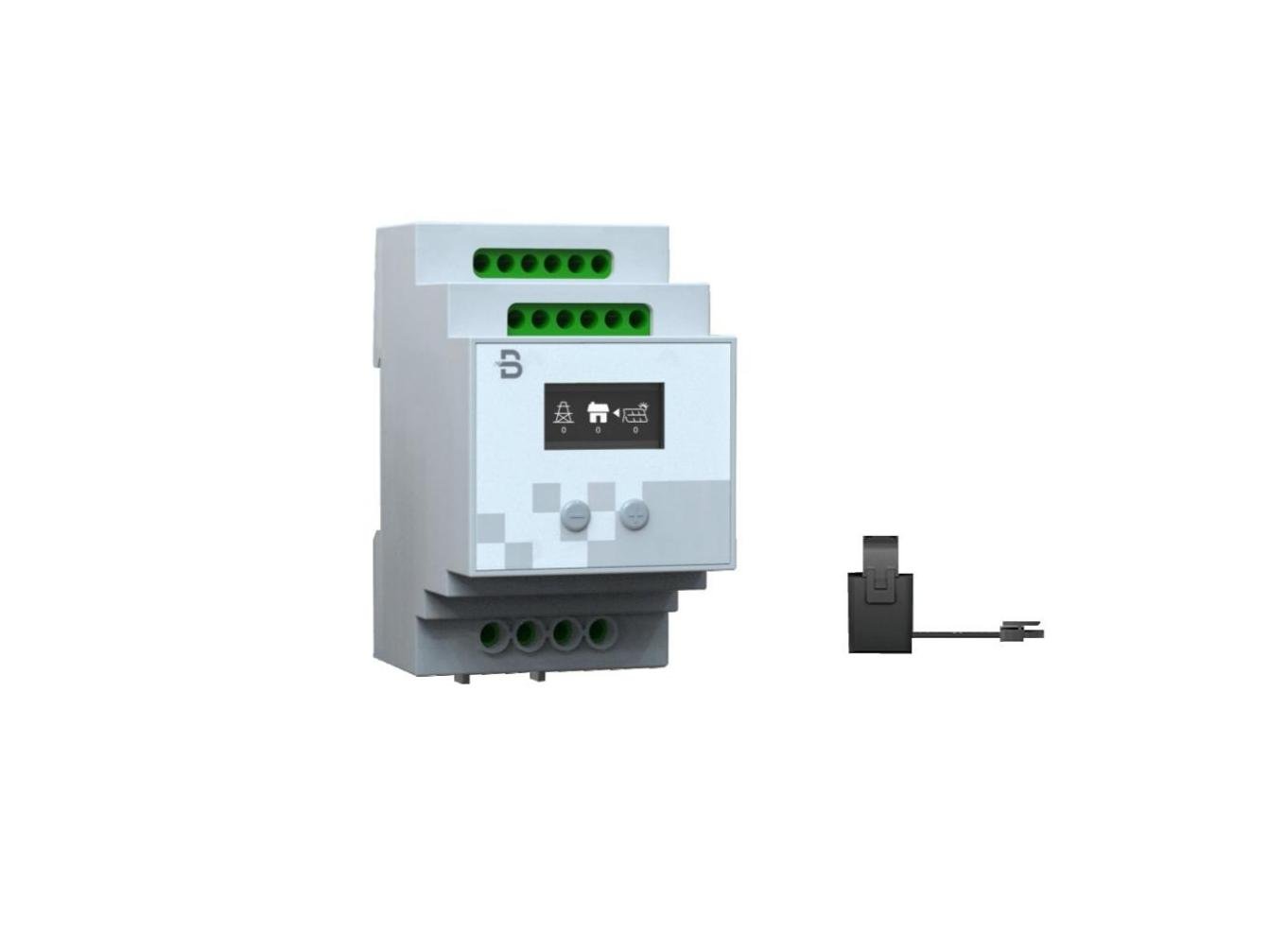
When an EV charger operates together with household appliances, the total home electrical load can increase quickly. EVB Dynamic Load Balancing helps monitor available household power and automatically adjusts the charging current based on remaining load capacity. For homes with solar PV systems, PV DLB can support solar-priority EV charging where system conditions allow.
Monitor available household power during EV charging.
Automatically adjust charging current based on remaining load capacity.
Help reduce overload risk when household appliances and EV chargers operate together.
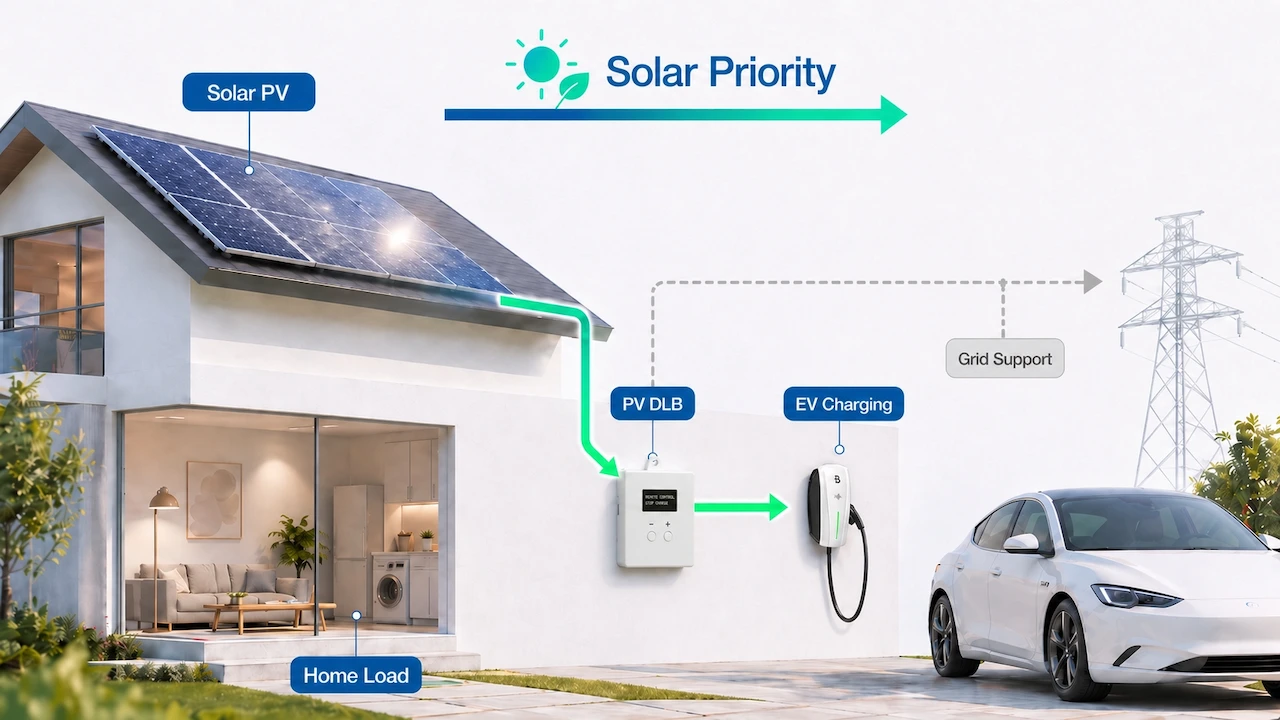
Use PV DLB to support solar-priority charging where available.
Balance household power consumption and reduce overload risk during EV charging.
Prioritize solar PV power for EV charging where system configuration supports it.
For homes with solar PV systems, smart residential EV charging can help make better use of available solar energy. With PV DLB and solar-compatible charging, the charger can support solar-priority charging where system conditions allow, helping homeowners reduce grid dependence and use more renewable energy for daily EV charging.
Solar-Priority Charging
Use PV power for EV charging where supported.
Reduce Grid Dependence
Use more on-site renewable energy.
PV DLB Coordination
Balance EV charging with solar generation and household load.
Future Energy Ready
Prepare the home for more integrated energy use.
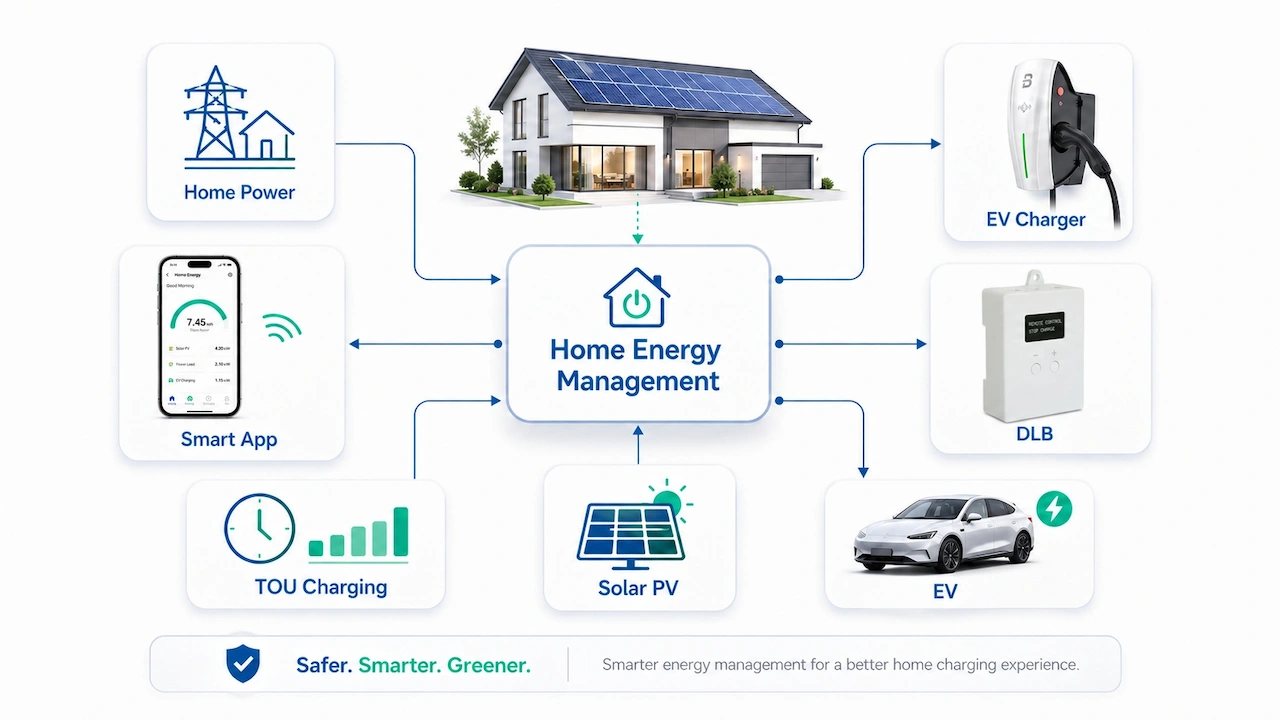
EVB helps homeowners improve smart energy consumption control by coordinating EV chargers with household energy use. With smart management, Dynamic Load Balancing, time-of-use charging, and solar-compatible charging, residential users can build a safer and more efficient home charging environment.
Main electricity source for household charging.
AC or portable charger for daily charging.
Automatically adjusts charging current based on available household load.
Monitor status, schedule charging, and manage supported DLB modes.
Plan charging around lower-rate periods where electricity pricing data is available.
Support cleaner home energy use and PV-priority charging where available.
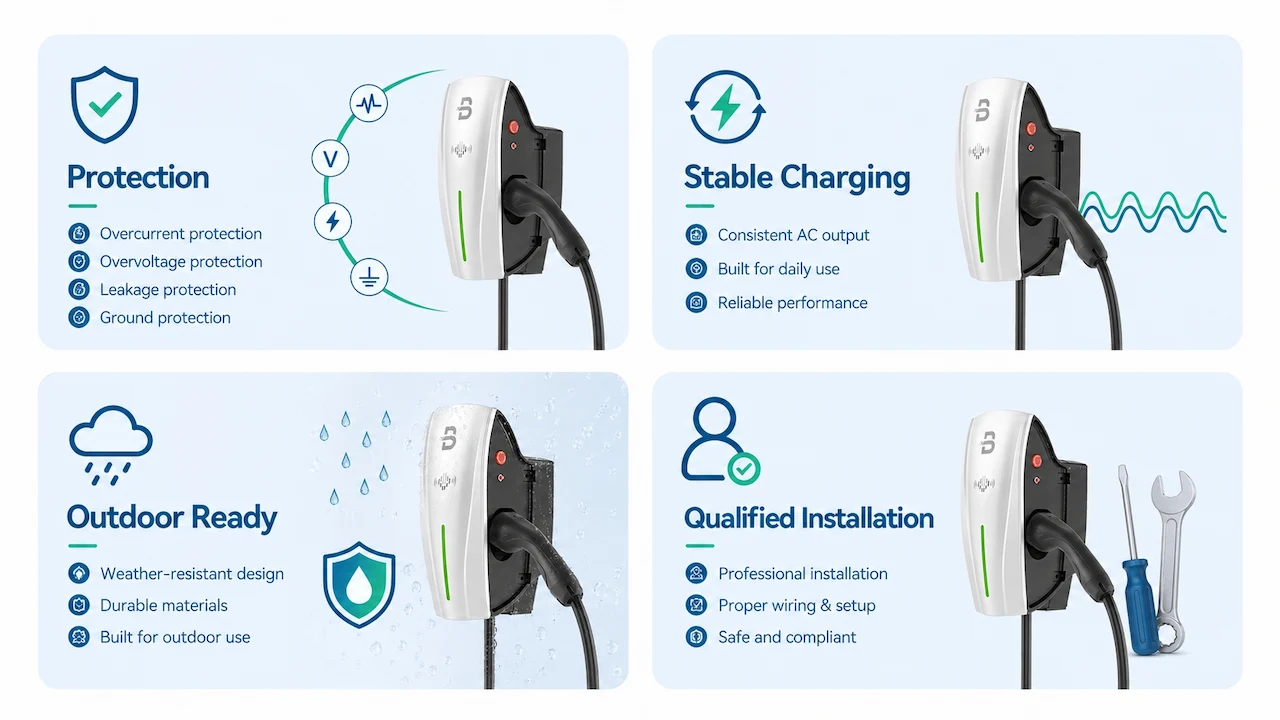
Home EV charging requires equipment designed for long-term daily use. EVB residential EV chargers are designed with safety protection, stable AC charging performance, and installation flexibility for residential environments. For outdoor or exposed parking areas, users should choose chargers with suitable environmental protection and follow local installation requirements.
Support safe charging in residential use.
Designed for regular home charging.
Choose suitable protection for exposed parking areas.
Follow local electrical requirements.
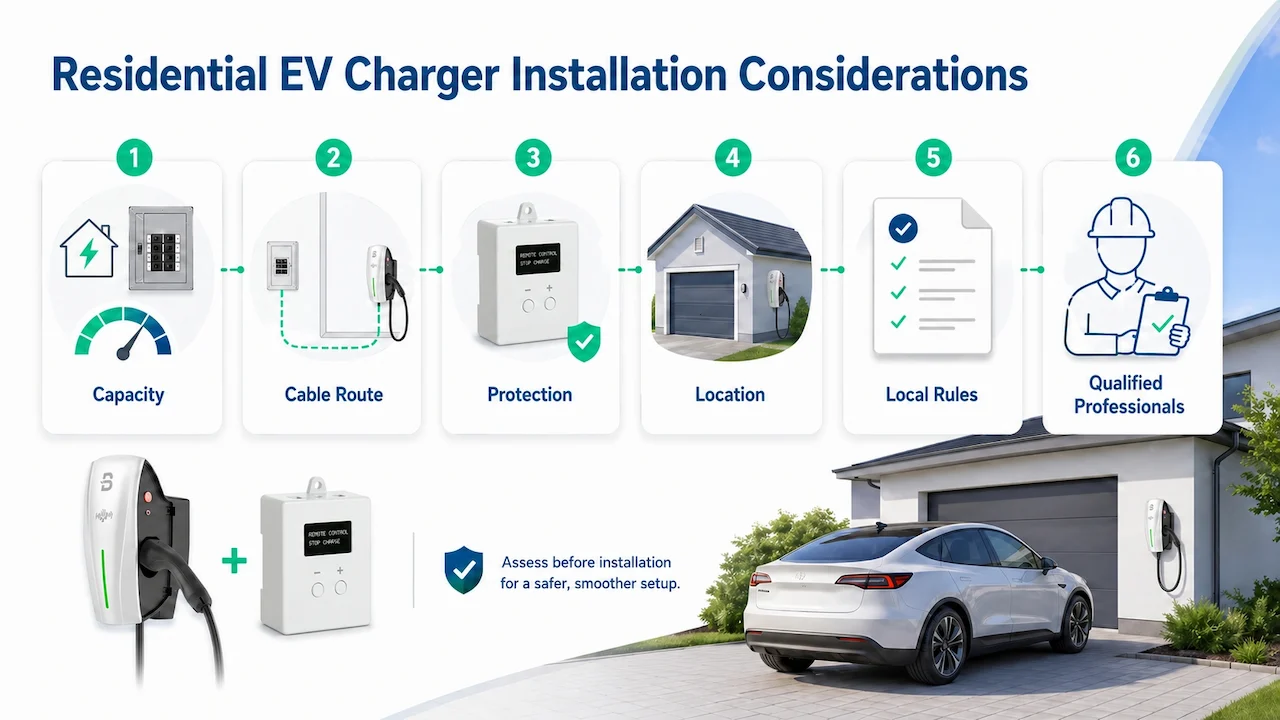
Residential EV charger installation should be planned carefully. Before installing a home EV charger, users should review power capacity, cable routing, protection requirements, indoor or outdoor placement, and local electrical regulations. EVB recommends that electrical assessment and installation be carried out by qualified professionals according to local requirements.
Check whether the home power supply can support the selected charger.
Choose a charger and location suitable for the installation environment.
Use chargers with appropriate safety protections for residential use.
Follow local regulations and work with qualified professionals where required.
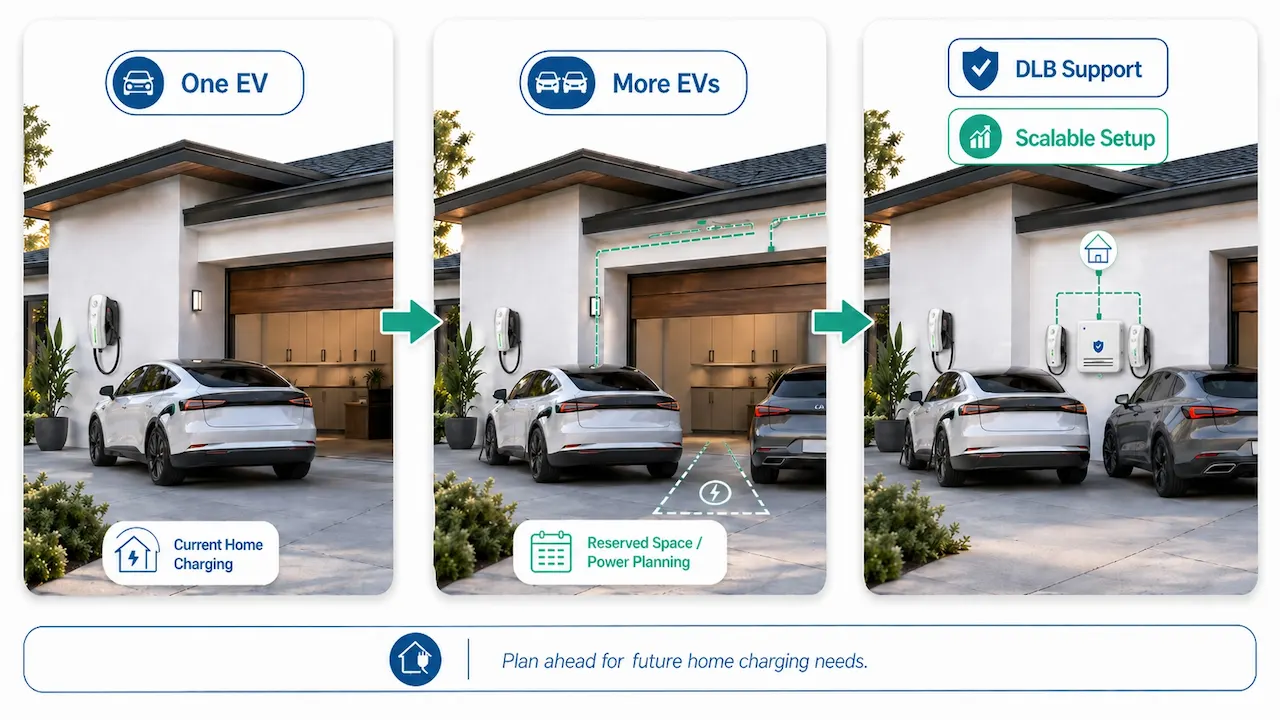
As more households add a second electric vehicle, residential charging needs may change. EVB can help users plan charging for one or more EVs by considering available household power, charger placement, Dynamic Load Balancing needs, and future expansion. This helps make the home charging setup more practical for long-term EV adoption.
Designed for daily residential charging in garages, driveways, and fixed parking spaces.
抱歉,当前分类下没有内容。
Designed for flexible charging and movable use.
抱歉,当前分类下没有内容。
Designed for app control, connectivity, and smarter operation where supported.
抱歉,当前分类下没有内容。
Designed for homes that need Dynamic Load Balancing, PV DLB, solar compatibility, time-of-use charging, or future energy coordination.
EVB offers residential EV charger options for different home charging needs, including wall-mounted AC chargers, portable EV chargers, smart AC charging stations, and DLB-ready or solar-compatible residential charging solutions. Customers can choose products based on charging speed, installation location, connectivity, safety requirements, and future energy management needs.
Designed for daily residential charging in garages, driveways, and fixed parking spaces.
Designed for flexible charging and movable use.
Designed for app control, connectivity, and smarter operation where supported.
Designed for homes that need Dynamic Load Balancing, PV DLB, solar compatibility, time-of-use charging, or future energy coordination.
EVB propose des bornes de recharge EV DC qui répondent aux normes mondiales, garantissant que votre infrastructure de recharge est à la fois fiable et conforme, vous aidant ainsi à établir une confiance durable avec vos clients grâce à notre support expert et à nos solutions de haute qualité.


De l'Europe à l'Australie, les projets de recharge EVB montrent comment les hôtels et les établissements d'accueil peuvent améliorer le confort, soutenir la mobilité électrique et valoriser leur site grâce à un déploiement pratique des bornes de recharge.
Before choosing a home EV charger or residential charging station, users should review several key factors: parking location, available electrical capacity, desired charging speed, indoor or outdoor installation, smart app requirements, Dynamic Load Balancing needs, solar compatibility, time-of-use charging availability, and future EV charging needs.
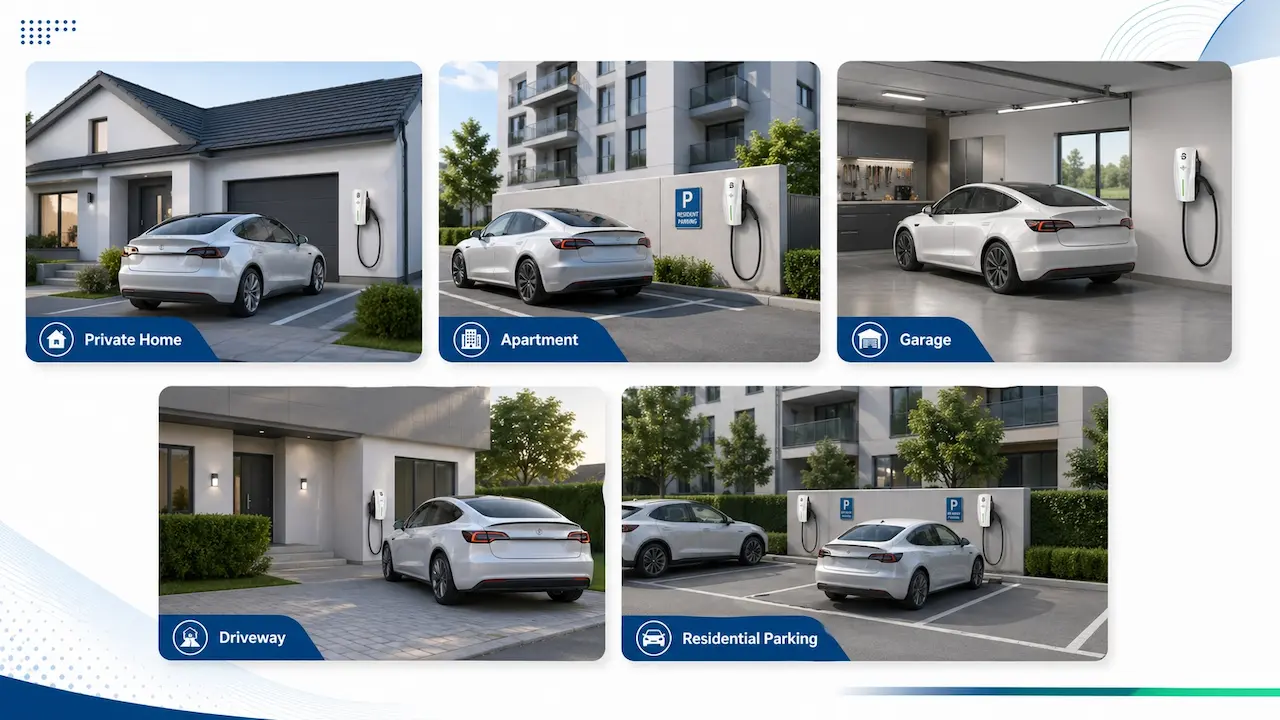
Garage, driveway, apartment parking, or shared residential parking?
Can the home electrical system support the selected charger?
Is standard AC charging enough for the user’s daily routine?
Which connector type, cable, or socket format is suitable?
Will the charger be exposed to weather conditions?
Is app control, scheduling, or usage data needed?
Is load balancing needed to manage household power demand?
Is electricity price data available for smart charging planning?
Should the charger work with a solar PV system?
Will the household add more EVs later?
Optimisez votre recharge avec EVB, leader des bornes de recharge pour voitures électriques en appartement et en résidence. Notre système plug-and-play garantit la simplicité, tandis que notre application intelligente permet une gestion et un suivi transparents.
À l'ère de la mobilité électrique, la demande de bornes de recharge pour véhicules électriques résidentielles efficaces et pratiques augmente également. Nous proposons une gamme complète de solutions pour les bornes de recharge résidentielles, y compris la sélection du matériel, l'installation et les fonctionnalités intelligentes.
Notre chargeur de véhicule électrique résidentiel, doté d'un équilibrage de charge dynamique, optimise la consommation d'énergie et s'intègre parfaitement aux systèmes photovoltaïques solaires pour des services de charge rentables.
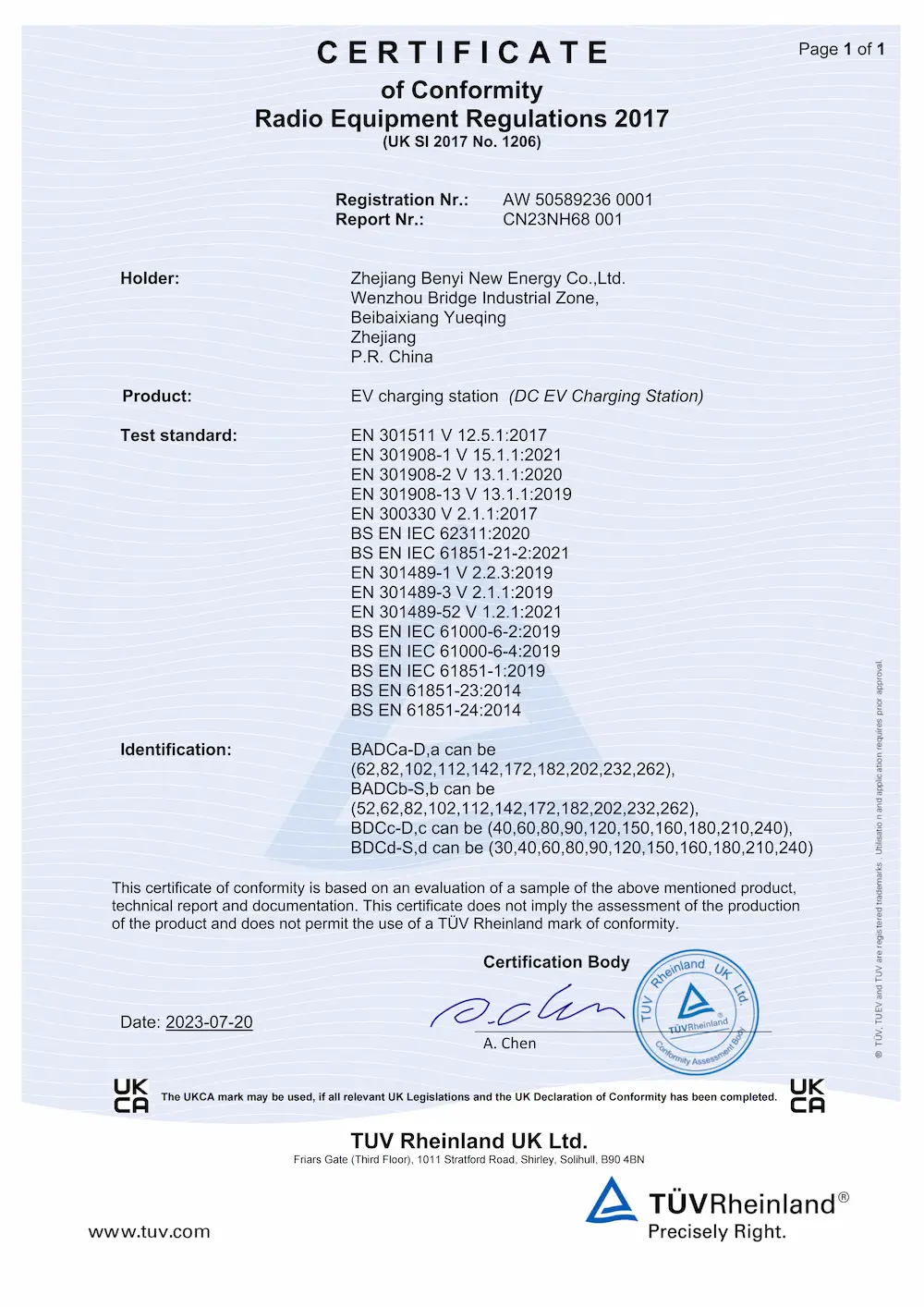
Les chargeurs de véhicules électriques résidentiels certifiés d'EVB sont régulièrement testés et répondent aux normes en constante évolution, tout en étant équipés de multiples fonctions de protection pour garantir la sécurité.
En simplifiant les procédures de facturation et de paiement, le logiciel offre une expérience de transaction fluide aux propriétaires, exploitants et utilisateurs de bornes de recharge.
Nous mandatons un électricien certifié pour évaluer, mettre à niveau la capacité électrique et assurer une installation sûre conformément aux réglementations locales.
Accédez à vos données de charge à l'aide de notre application intelligente sur votre téléphone et profitez de ses fonctionnalités intelligentes telles que la surveillance et le contrôle à distance de la charge pour planifier le temps de charge et accéder aux données d'utilisation.
Nos chargeurs de voiture électriques pour la maison sont non seulement pratiques, mais ils présentent également un design élégant et des niveaux de puissance réglables.
Notre chargeur de véhicule électrique résidentiel vous aide à recharger pendant la nuit et à profiter de tarifs d'électricité réduits en dehors des heures de pointe pour économiser de l'argent.
Une fiabilité de charge exceptionnelle est obtenue grâce à la mise en œuvre de multiples mécanismes de protection, notamment une protection contre les fuites et les surchauffes.
Découvrez le chargeur EV EVB BCPCM-C2N-P mode 3 avec câble de charge type 2 mode 3. Conforme à la norme IEC 61851-21-2, ce chargeur à double câble prend en charge l'OCPP pour une intégration transparente. Idéal pour des solutions de charge de véhicules électriques efficaces et fiables.

Chargeur intelligent AC EV avec double prise de charge EV de type 2, montage mural ou sur poteau, fonctionne en triphasé comme en 22 kW. Fonctionne à -25 ~ 55 ℃ et certifié CE, CB et RCM, avec écran LCD et IP55.
Doté d'une fonction de protection complète et d'un niveau de protection IP55, le chargeur mural CC pour véhicules électriques EVB offre une puissance de sortie de 60 kW pour répondre à divers besoins de charge à domicile et commerciaux.
Le chargeur EV EVB pour entreprise est un chargeur EV CA de type mode 3 conçu selon la norme IEC 61851-21-2, il peut être fixé au mur, il peut également être installé sur un piédestal.
Le chargeur EV portable EVB est un moyen pratique, portable et plug-and-play d'alimenter votre voiture électrique.
Chargeur EV CA avec prise de charge EV de type 2, montage mural ou sur poteau, fonctionne en monophasé ou triphasé comme en 230 V ou 400 V, 6 A ou 32 A. Fonctionne à -25 ℃ ~ 55 ℃ et certifié CE, CB et RCM, avec des boîtiers ignifuges IP65 et V0.
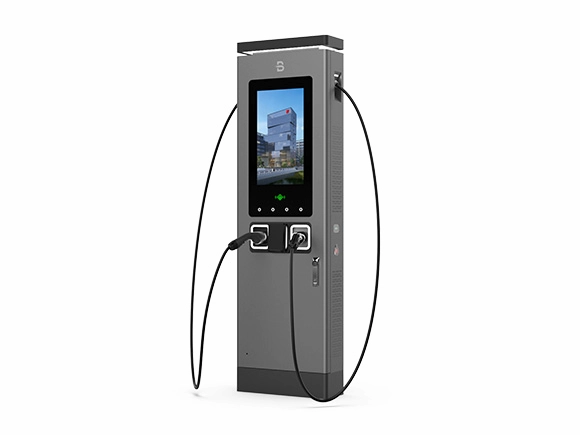
La borne de recharge au sol EVB Model 3 pour véhicules électriques est équipée d'un écran tactile de 21 pouces pour une interaction homme-machine intuitive. Compatible avec les plateformes OCPP, elle offre une grande compatibilité et une excellente adaptabilité, constituant ainsi une solution de recharge intelligente pour les utilisateurs.
Chargeur EVB OCPP de 2e génération pour véhicule électrique avec câble de type 2, montage mural ou sur poteau. Fonctionne en monophasé ou triphasé (230 V ou 400 V, 6 A ou 32 A). Fonctionne entre -25 et 55 °C. Certifié CE et CB, avec boîtiers ignifuges IP65 et V0.

Améliorez votre expérience de recharge avec le chargeur de véhicule électrique CA au sol EVB avec fonction POS. Profitez d'une interaction fluide grâce à son écran tactile de 7 pouces. Prenez le contrôle de votre chargeur via une application intelligente et diverses options de connectivité.
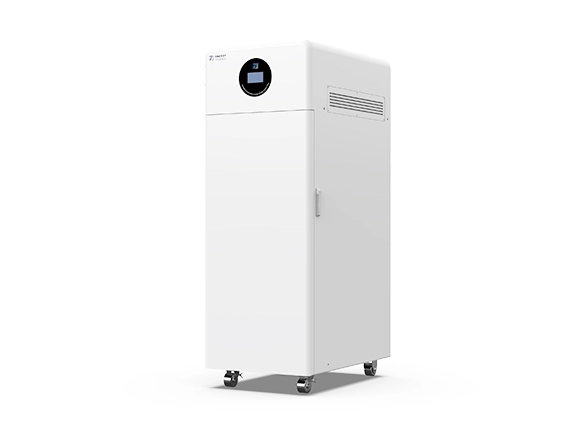
La série EVB BYAIO utilise des batteries lithium-fer-phosphate (LFP), sûres, durables, efficaces et à haute densité de puissance. Achetez dès aujourd'hui !
Système de stockage monté en rack haute tension EVB, offrant deux modes et équipé de batteries LiFePO4. Avec un indice de durabilité IP54, ils sont parfaits pour les applications résidentielles. Commencez à magasiner dès aujourd'hui !
Découvrez les systèmes de stockage de batteries haute tension EVB, dotés de deux modes d'empilage et de batteries LifePO4. Classé IP54 pour la durabilité, idéal pour une utilisation résidentielle. Achetez dès aujourd'hui !
Le pack de stockage d'énergie résidentiel LFP a été conçu et développé indépendamment par BENY. Largement utilisé dans le domaine du stockage d'énergie avec des onduleurs sur réseau, des onduleurs hors réseau et des onduleurs hybrides.
Le pack de stockage d'énergie résidentiel LFP a été conçu et développé indépendamment par BENY. Il est largement utilisé dans le domaine du stockage d'énergie avec des onduleurs sur réseau, des onduleurs hors réseau et des onduleurs hybrides.
Le pack de stockage d'énergie résidentiel LFP a été conçu et développé indépendamment par BENY. Largement utilisé dans le domaine du stockage d'énergie avec des onduleurs sur réseau, des onduleurs hors réseau et des onduleurs hybrides.
Le système de gestion de l'énergie est spécialement conçu pour une gestion intelligente de l'énergie. Ce système est adapté à l'intégration dans les réseaux domestiques équipés de systèmes d'énergie photovoltaïque, composés d'appareils de mesure BEMS et d'appareils de contrôle BEMC.
Améliorez votre expérience de charge avec le chargeur EV AC monté au sol EVB, approuvé par CE&UKCA et doté de l'option de prise T2S. Bénéficiez d'une interaction sans effort avec son interface à écran tactile de 5,0 pouces. Prenez le contrôle de votre chargeur via une application intelligente et divers choix de connectivité.
Améliorez votre expérience de charge avec le chargeur EV monté au sol EVB AC. Bénéficiez d'une interaction sans effort avec son interface à écran tactile de 5,0 pouces. Prenez le contrôle de votre chargeur via une application intelligente et divers choix de connectivité.
Chargeur CA EV avec câble de type 2, montage mural ou sur poteau, fonctionne en monophasé ou triphasé comme en 230 V ou 400 V, 6 A ou 32 A. Fonctionne à -25 ~ 55 ℃ et certifié CE, CB et RCM, avec des boîtiers ignifuges IP65 et V0.
Chargeur EV CA avec prise de type 2, montage mural ou sur poteau, fonctionne en monophasé ou triphasé comme en 230 V ou 400 V, 6 A ou 32 A. Fonctionne à -25 ~ 55 ℃ et certifié CE, CB et RCM, avec des boîtiers ignifuges IP55 et V0.
Le chargeur portable IP54 de 3,7 kW de niveau 2 pour véhicule électrique vous offre une recharge sûre lors de vos déplacements. Avec une simple prise secteur, vous pouvez recharger votre véhicule même sans borne à proximité.
Le chargeur portable pour véhicule électrique IP66 de 3,7 kW de niveau 2 offre une recharge sûre pour votre véhicule électrique lors de vos déplacements. Avec seulement une prise secteur, vous pouvez recharger votre véhicule électrique même sans borne de recharge à proximité.
Tous nos chargeurs bénéficient d'une garantie de 3 ans, incluant la maintenance à distance et sur site.
Un gestionnaire de compte spécialisé vous est attribué et vous tient informé tout au long du processus de production.
Des techniciens certifiés installent vos bornes de recharge résidentielles, vous donnant ainsi l'assurance qu'elles fonctionneront comme prévu.
Une équipe d'assistance expérimentée est toujours disponible pour répondre aux préoccupations des clients par téléphone 24h/24 et 7j/7.
Les mises à jour logicielles Over-the-Air à vie pour vos bornes de recharge les maintiennent constamment optimisées.
De la consultation au service après-vente, nous nous engageons à vous fournir un excellent niveau de service.
We have compiled a list of frequently asked questions (and answers) about AC residential EV charging solution for your reference.
The best EV charger for home use depends on parking location, electrical capacity, charging speed requirements, indoor or outdoor installation, and smart control needs. Wall-mounted AC chargers are commonly used for regular home charging, while portable EV chargers offer more flexibility.
In markets such as North America, Level 2 home EV charging usually refers to dedicated AC charging equipment that charges faster than a standard household outlet. The actual charging speed depends on local voltage, charger power rating, and vehicle acceptance capacity.
Home EV charger installation depends on electrical capacity, local regulations, installation location, and protection requirements. EVB recommends working with qualified professionals for assessment and installation according to local requirements.
Home EV charger installation cost can vary by country, electrical capacity, cable routing, installation complexity, and local code requirements. Users should assess site conditions before choosing a charger.
Where time-of-use electricity pricing and cloud connectivity are supported, EVB smart charging can help users plan charging around lower-rate periods. The charging schedule can be generated based on electricity price information, desired charging amount, and planned vehicle use time. Availability may vary by market, charger model, and system configuration.
Dynamic Load Balancing helps adjust EV charging current according to available household electrical load. When other household appliances are using power, the charger can reduce charging current to help avoid overload. When more power is available, charging current can increase within the supported range.
Normal DLB is used to balance household power consumption during EV charging and reduce overload risk. PV DLB is designed for homes with solar PV systems and can help prioritize solar power for EV charging where the system configuration supports it.
Dynamic Load Balancing can help make better use of existing household power capacity by adjusting charging current according to available load. However, whether an electrical upgrade is needed depends on the home’s electrical system, charger power, local regulations, and installation assessment.
Yes, outdoor residential EV chargers can be used in driveways or exposed parking areas when the charger is properly rated for outdoor installation and installed according to local requirements.
EVB residential EV chargers can support solar-compatible charging strategies, PV DLB, and Dynamic Load Balancing where site conditions and system configuration allow.
Users should check parking location, electrical capacity, connector type, installation format, smart app requirements, DLB needs, solar compatibility, and future EV charging plans.
Portable EV chargers can be useful for flexible or temporary charging needs, but fixed wall-mounted chargers are often preferred for regular daily home charging.
Rejoignez le succès
Tell us about your parking location, power conditions, charging needs, DLB requirements, time-of-use charging needs, solar compatibility needs, and preferred installation type. EVB will help you choose a suitable home EV charger or residential EV charging station for your project.
De la consultation à l'installation, notre équipe d'experts vous assure une solution de recharge de VE complète et adaptée à vos besoins.
Copyright © 2026, EVB. Tous droits réservés. Propulsé par beny.