



























 EN
EN  PT
PT  UZ
UZ  FR
FR  DE
DE  IT
IT  RU
RU  ES
ES  HE
HE  AR
AR  RO
RO  HI
HI  JA
JA  KO
KO  TR
TR  NL
NL  PL
PL  VI
VI  TH
TH  ML
ML  UK
UK  CS
CS  DA
DA  SV
SV  FI
FI  LV
LV  BG
BG  HU
HU  EL
EL The rapid expansion of the electric vehicle market has brought an influx of EV charger manufacturers into the industry.
While this growth has increased charger options, it has also created a market filled with products of varying quality. EV charger prices differ dramatically, with some DC EV chargers being sold for half, or even less, than the standard rate.
This raises an important question: what makes some chargers so cheap, and what compromises lie behind those price tags?
This article explores the reasons behind the difference in electric vehicle charger cost and the trade-offs that come with low DC EV charger prices. Read on to learn more.
Why are Some DC EV Charger Prices So Cheap? Common Price vs. Low Price
When comparing DC EV charger prices, the difference between a reputable product and a cheap one usually lies in the hardware, software, certifications, and warranties. Here is a detailed table showing various differences between cheap and standard-priced DC EV chargers:
| Component | Standard Priced | Low Priced | Influences |
|---|---|---|---|
| Main Control Board | Self-developed or branded solutions supporting OCPP 1.6/2.0 protocols, upgradeable remotely with stable performance. | Uses low-cost MCU boards with only basic functions and incomplete protocol support. | Limited functions with high maintenance costs. |
| Power Module | Come from renowned brands (such as EVB, UU Green, etc.), with conversion efficiency ≥95% and long lifespan. | Low-quality modules with inferior conversion efficiency (90%-92%) and short lifespan. | High energy consumption, unstable performance, and prone to damage. |
| Contactor/Relay | Genuine branded products with long lifespan and comprehensive safety certifications. | Counterfeit or inferior products with short lifespan. | Significant safety hazards, prone to charging failures or fire risks. |
| Charging Cable/Gun | Compliant with European/ American/ Chinese standards, sufficient wire gauge, heat-resistant, and flame-retardant. | Reduced wire gauge with plastic charging guns. | Prone to overheating or even melting under prolonged high-current usage. |
| Disconnector | Equipped with DC disconnectors to enhance safety. | Often lacks proper isolation or uses cheap alternatives. | Unable to effectively cut off power during malfunctions. |
| Housing | Reinforced sheet metal with corrosion protection and IP55-IP65 sealing. | Thin sheet metal that deforms or rusts easily outdoors. | Reduced weather resistance and shorter service life. |
| Heat Dissipation | Professional thermal duct design withstands outdoor conditions for 10 years. | Simple fan or passive heat vents with a limited lifespan (2–3 years). | Increases internal stress and failure risk. |
| Software and Backend | Comprehensive software and backend system supporting dynamic scheduling and remote upgrades. | Simple web interface or no backend system. | Limited scalability for future operations. |
| Certification and Warranty | Certified with CE, UL, TUV, and OCPP standards, with inspection reports and a 2-3 year warranty. | Lacks complete certifications, only a 0.5-1 year warranty. | Nearly impossible to qualify for export or large-scale projects. |
| Unit Price (60kW DC Charger) | $4,000 - $6,000 | $2,000 - $3,000 | Lower prices come at the expense of safety, performance, and long-term value |
Beware! The Hidden Costs of Low EV Charger Prices
Will the low price of EV chargers actually save costs? No, they come with hidden expenses that aren’t apparent but increase operational costs, ultimately making the total cost of ownership significantly higher than that of certified charging stations.
1. High Frequency of Repairs and Short Lifecycle
The core risk of low EV charger prices lies in their unreliable components, such as the contactors/relays, power modules, and cooling systems mentioned in the table. This directly leads to:
- Frequent failures prevent users from charging,
- Ongoing accumulation of replacement part costs and labor expenses.
- While certified chargers are designed to last up to 10 years, low-cost alternatives may face scrapping and require replacement after just 2-3 years.
2. High Electricity Loss and Increased Operating Costs
Cheap EV chargers with poor-quality power modules and inadequate heat management can cause significant power conversion loss. This means that during the process of converting AC power from the grid into the DC power required by the vehicle battery, more electrical energy is wasted as heat.
Surge in electricity costs:
For commercial charging point operators, even 5% lower efficiency can result in substantial profit loss.
Heat dissipation pressure:
The substantial heat generated by low efficiency, if not dissipated in time, creates a vicious cycle.
3. Potential Safety Hazards
If saving on electric car charger costs, inferior contactors/relays may experience contact welding, potentially causing fires. The lack of DC disconnectors prevents the cutoff of high-voltage DC power during failures, posing risks to personal safety. Substandard cables and connectors may overheat and melt, leading to short circuits or electric shock hazards.
In public or commercial environments, these issues pose serious liability risks. On the other hand, certified products go through rigorous electrical and thermal safety tests that ensure user protection.
4. Lack of Upgrade Support and Difficulty Adapting to Future Needs
The EV charging industry evolves rapidly, with new communication protocols, higher charging speeds, and smarter management software emerging.
As mentioned above, low charging station costs often lack firmware update capabilities or compatibility with new standards, making them obsolete within a short time. Without long-term upgrade paths, owners may be forced to replace entire units instead of updating existing systems.
How Should Consumers and Investors Choose?
What to pay attention to when investing in EV charging stations? Buyers need to balance EV charger cost with long-term value. Here are several key considerations for both consumers and operations while choosing the DC charger:
Certification:
Choose chargers certified by CE, TUV, UL, UKCA, and other international standardsto ensure global safety and reliability.
Efficiency:
Prefer units with over 95% conversion efficiency to cut energy loss and operating costs.
Build Quality:
Go for housings rated IP55 or higher to guarantee outdoor durability.
Smart Features:
Remote monitoring, OTA updates, and a dynamic load-balancing functionmake the operation smoother.
Compatibility:
Ensure support for OCPP 1.6/2.0 for future EV and network upgrades.
After-Sales Service:
Select brands offering 2-3warranties and strong technical support.
Most importantly, be vigilant about products priced significantly below market rates and purchase from reputable manufacturers.
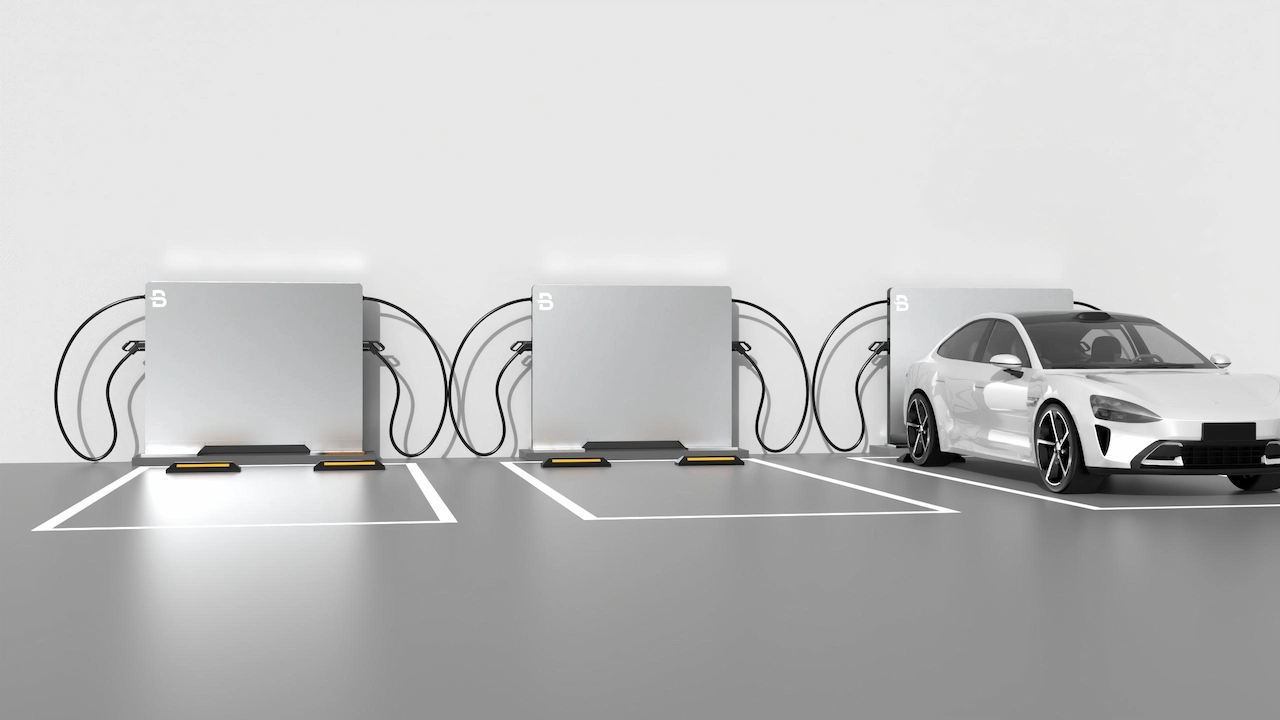
Are you searching for high-quality DC EV chargers? In this aspect, EVB is a leading manufacturer of EV chargers.
We do not engage in low-price competition at the expense of performance and safety, as charging stations are long-term assets for your profits and brand reputation. Therefore, we rigorously control product design and manufacturing:
- In terms of hardware, we utilize power modules and core components from internationally renowned brands, ensuring a charging efficiencyof≥ 95%. They come with comprehensive international certifications such as CE, CB, RCM, and RoHS, along with built-in safety protection function Plus, with IP55/IP65-rated enclosures and professional thermal design, our equipment guarantees long-term stable operation even in harsh outdoor environments.
- On the software side, our devices support the OCPP protocol and remote firmware upgrades, allowing your investment to adapt to future needs and market demands, thereby avoiding the risk of premature obsolescence.
For more detailed information, welcome to contact us now!