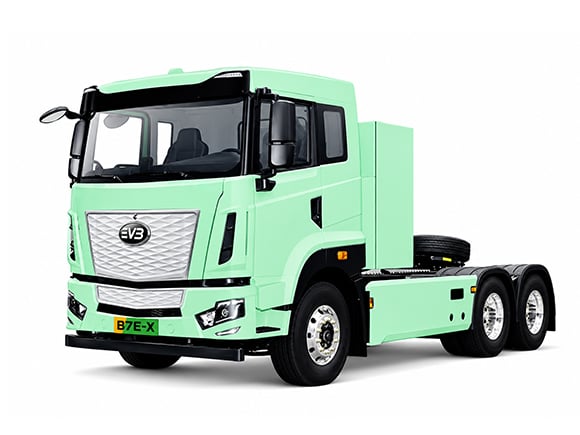
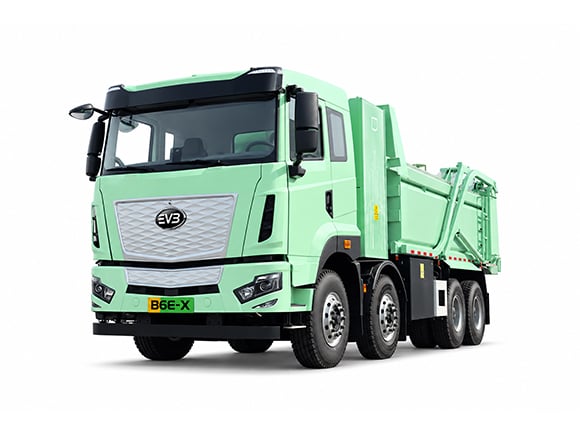
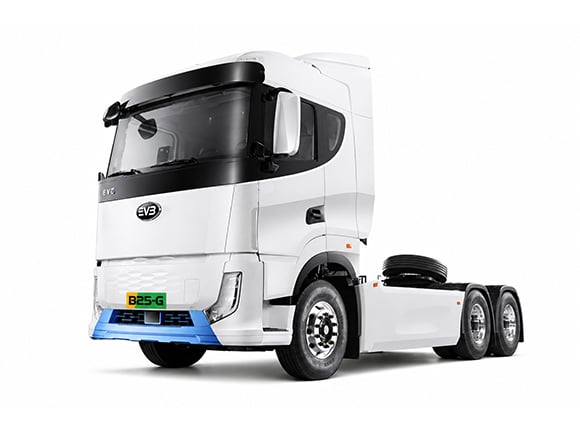
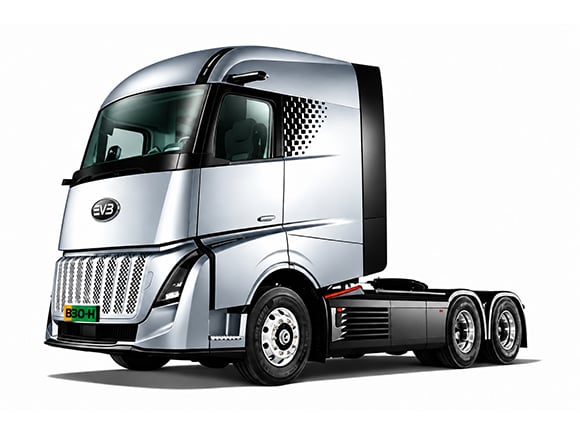
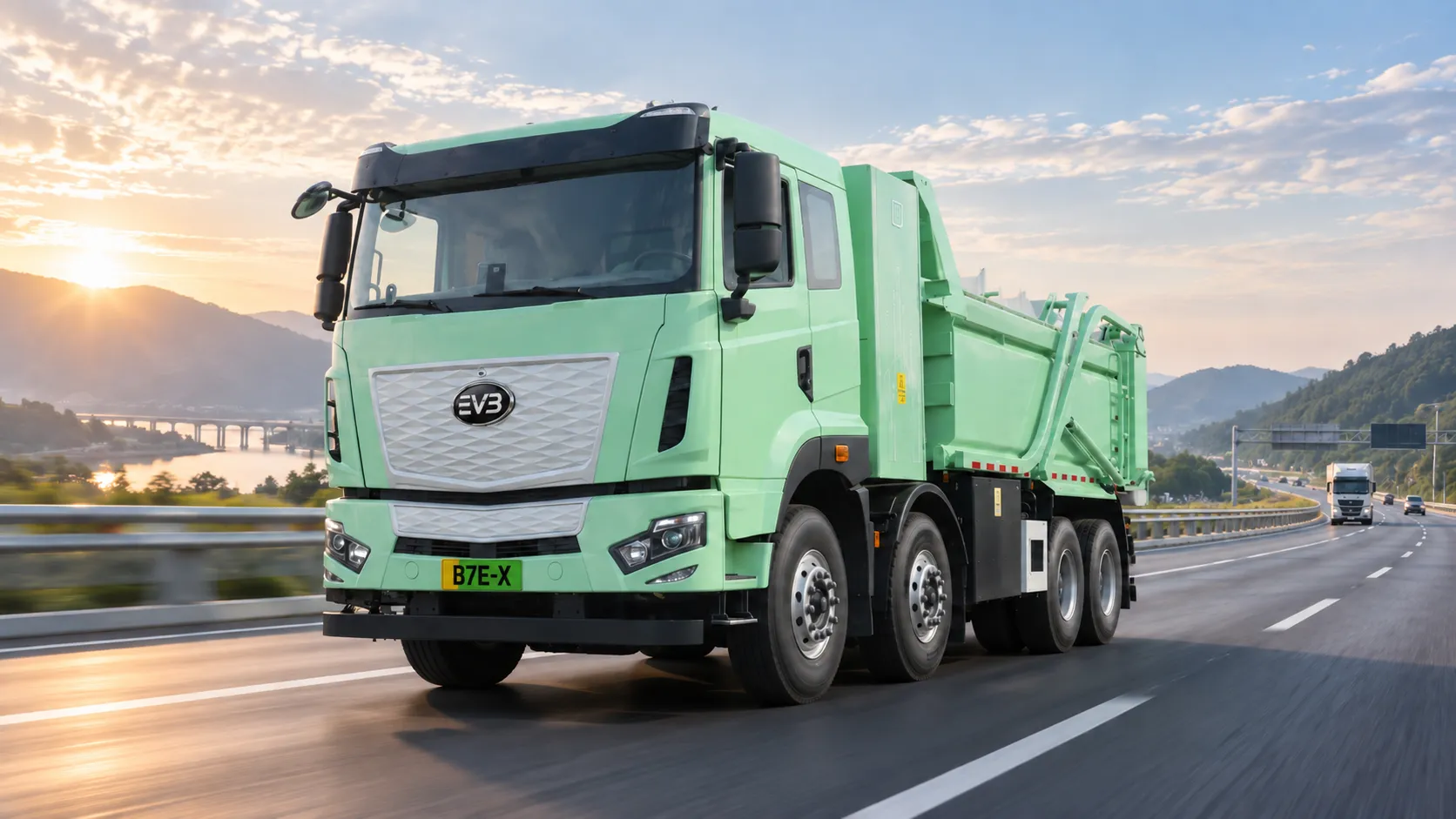
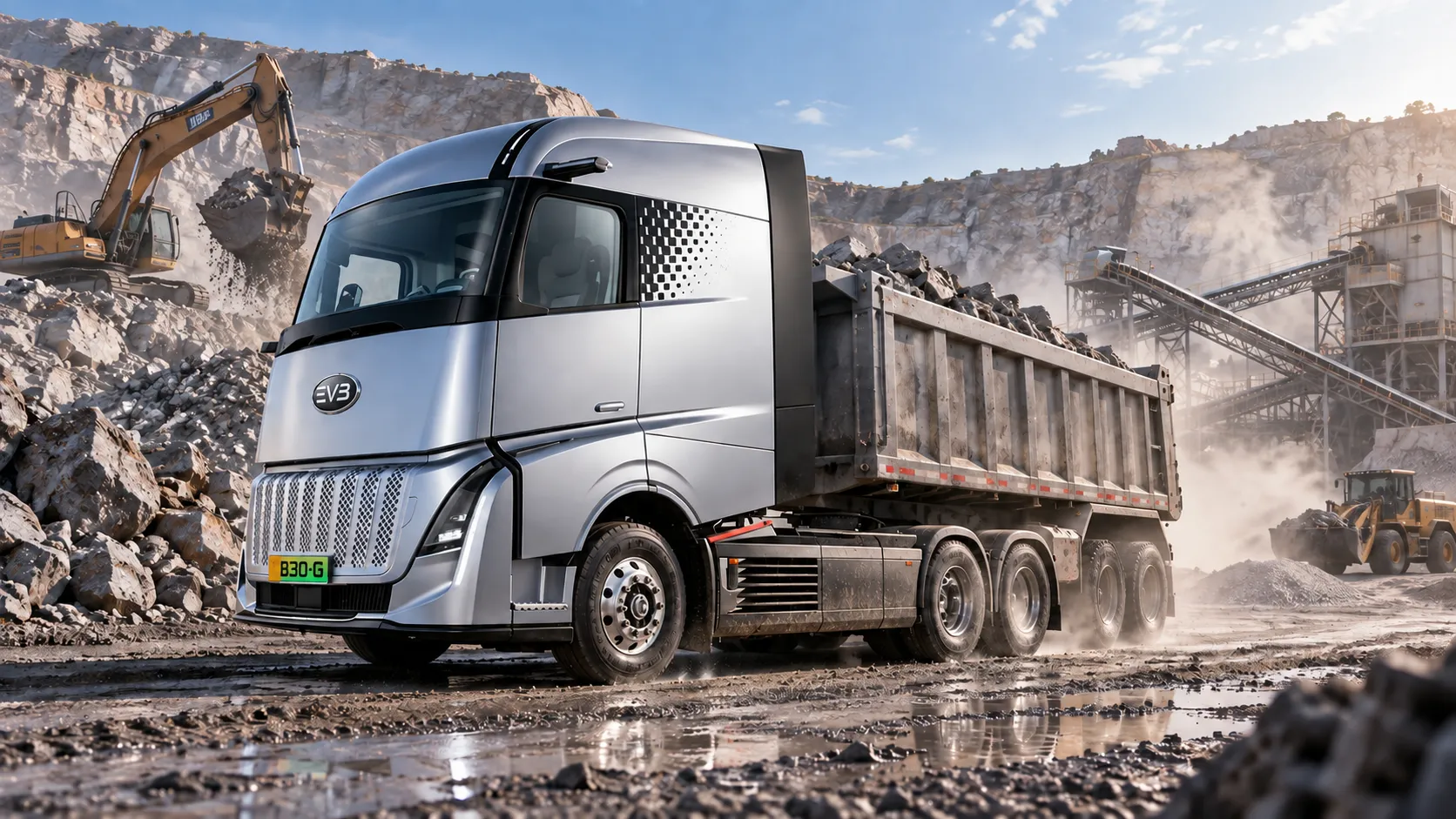
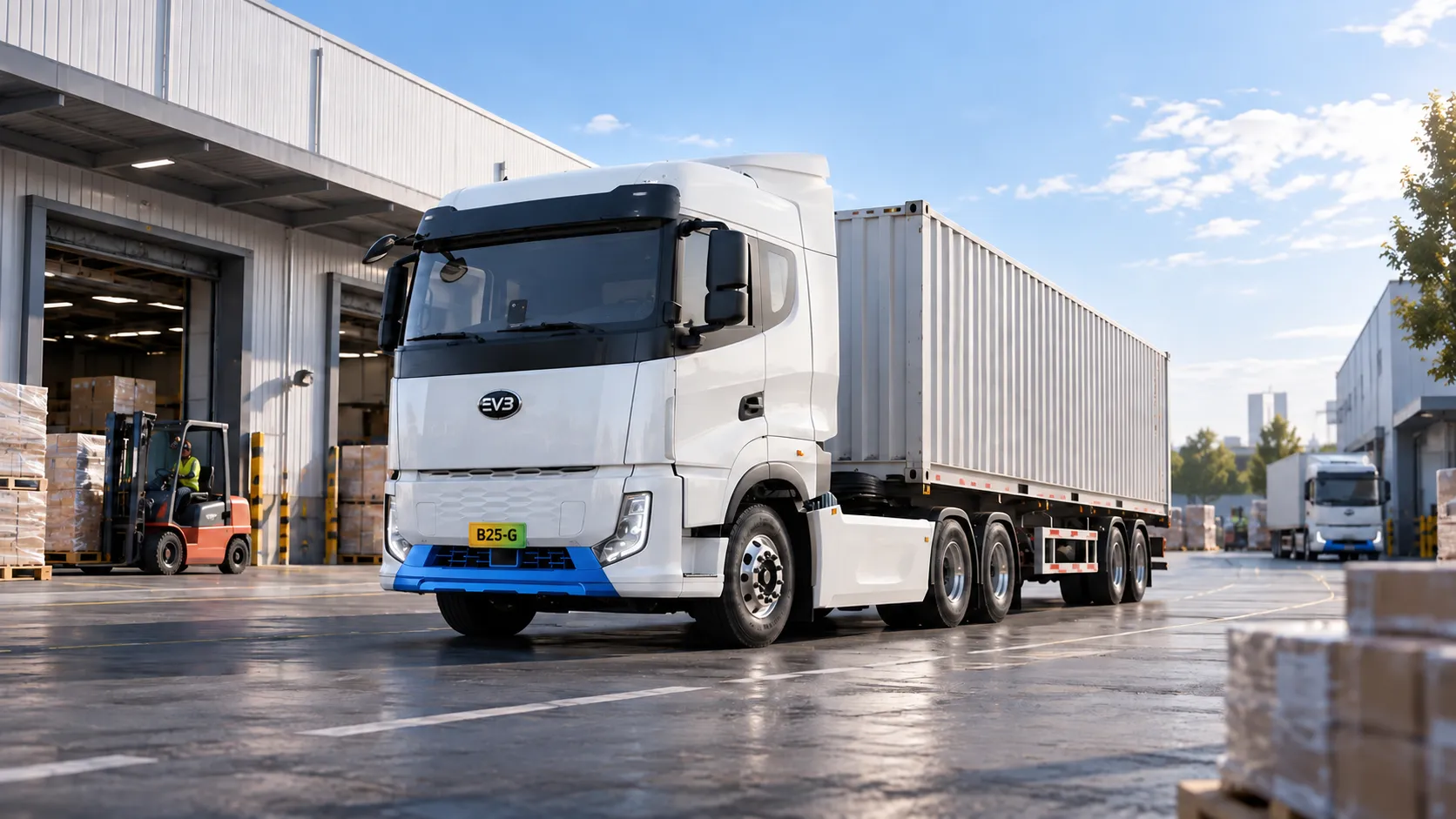
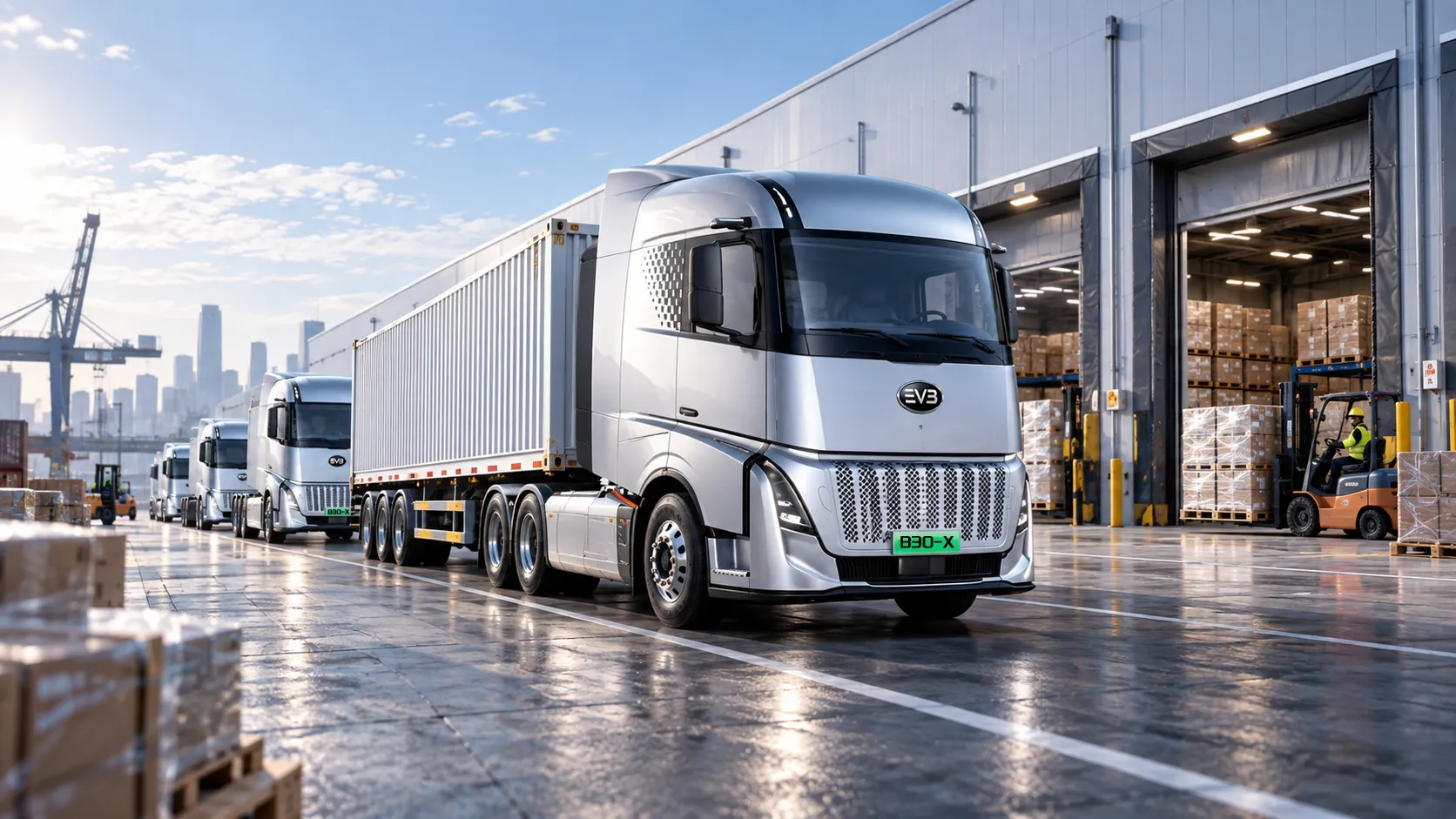
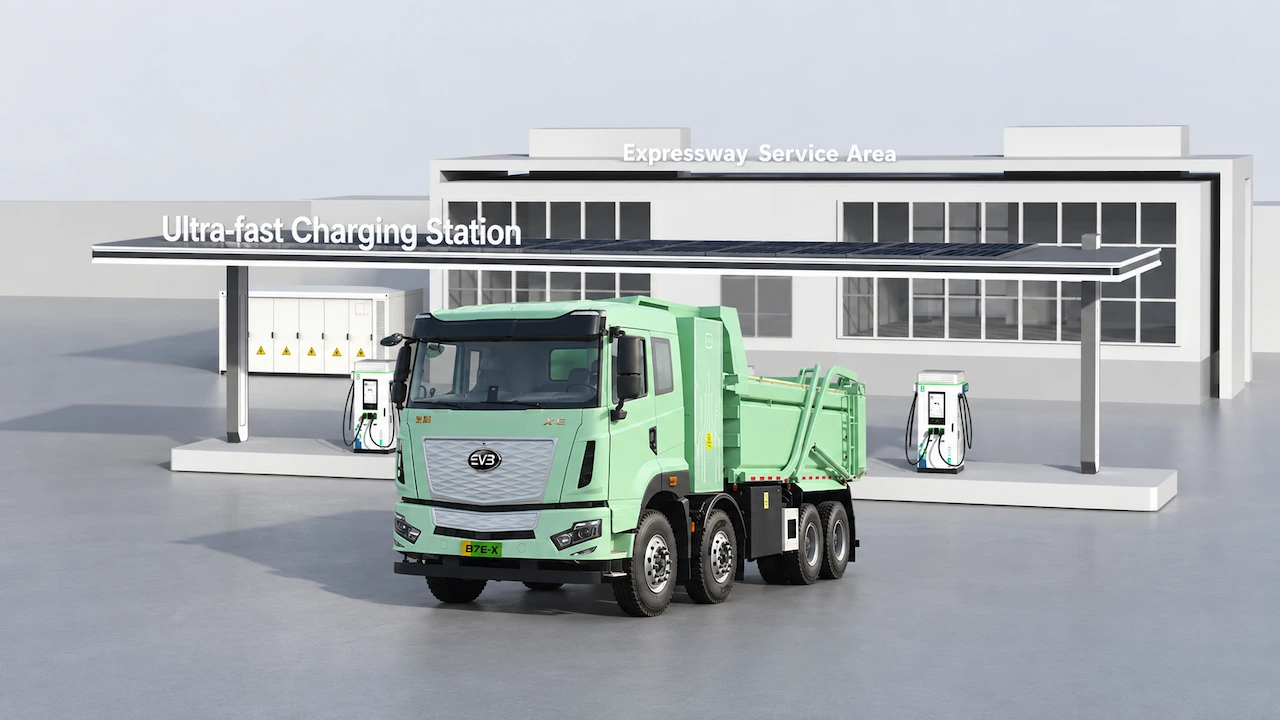
Heavy-Duty Electric Trucks. Built for More.
Designed for demanding commercial applications, EVB heavy-duty electric trucks combine high-performance electric powertrains, advanced battery systems and intelligent vehicle technology to support efficient, reliable and sustainable transportation.
Electric trucks are transforming the way goods move—from urban distribution and regional logistics to ports, construction sites and long-haul transportation. EVB brings together electric vehicle technology, intelligent systems and charging infrastructure to provide solutions designed around real commercial applications.
Driving Range
Battery Capacity
Battery Swapping time
Peak Power
Low Energy Consumption
Integrated electric drive technology delivers responsive power transmission and efficient vehicle operation, supporting the demanding requirements of heavy-duty transportation.
Aerodynamically optimized vehicle design helps reduce air resistance and improve overall energy efficiency, particularly during long-distance and high-speed transportation.
Intelligent control, thermal management and energy recovery technologies work together to optimize energy use and maintain efficient vehicle operation across different driving conditions.
Advanced driver-assistance and vehicle monitoring technologies enhance situational awareness and help support safer operation in complex traffic and working environments.
Designed to handle demanding cargo and challenging operating conditions, with robust vehicle structures and optimized power delivery for heavy-duty transportation.
Optimized electric power delivery supports confident performance on gradients and challenging road conditions, helping maintain traction when carrying heavy loads.
EVB provides integrated EV charging and energy solutions for heavy-duty electric trucks and commercial fleets. From overnight AC charging at fleet depots to high-power DC fast charging for demanding operations, our charging solutions are designed to support different fleet schedules and energy requirements. Combined with energy storage systems, EV charging infrastructure can help optimize power availability, improve charging capacity, and build a scalable charging ecosystem for electric truck fleets.
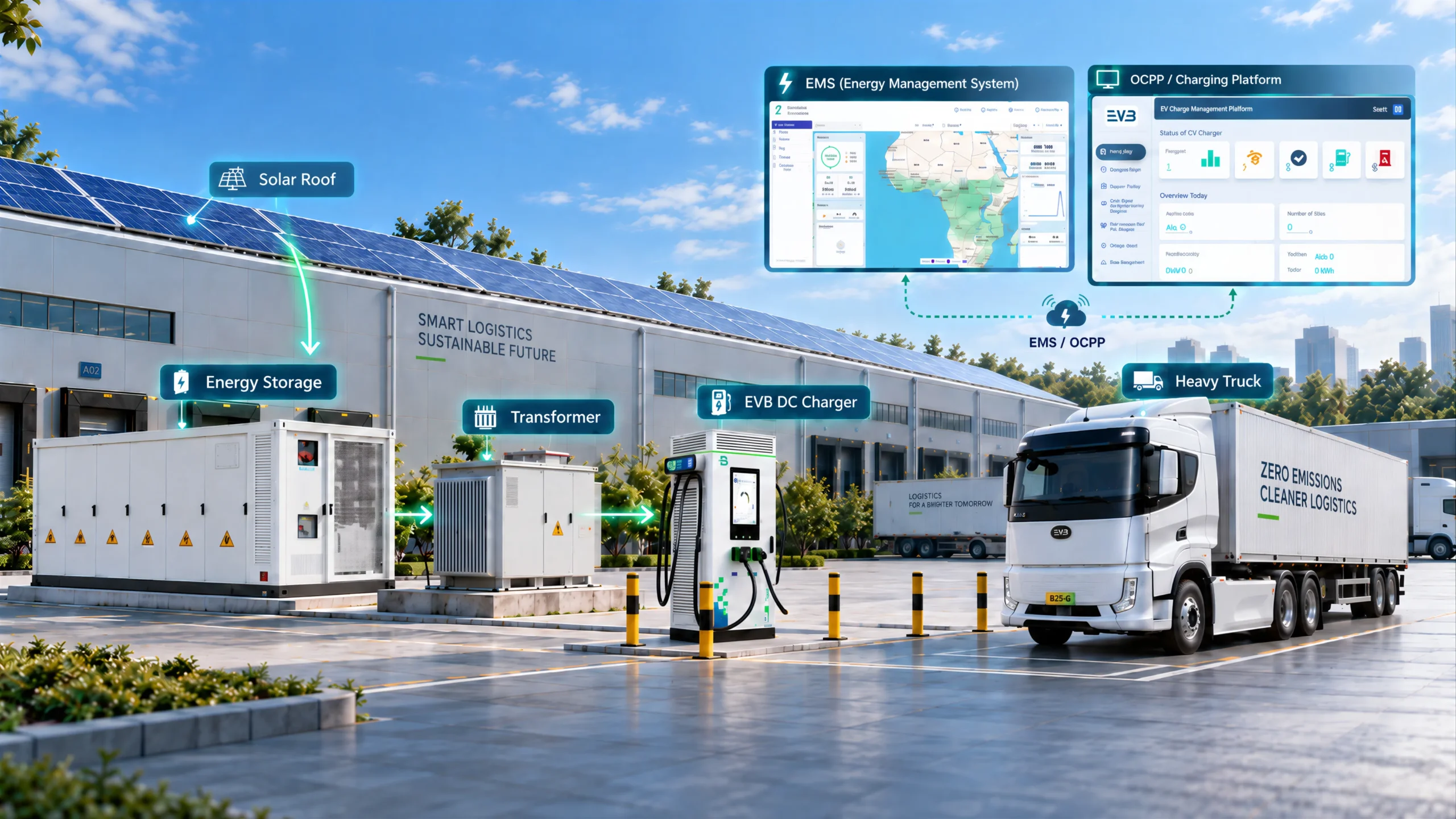
EVB brings together heavy-duty electric vehicles, EV charging infrastructure and energy storage to support the complete electrification journey of commercial fleets. From the vehicle itself to the charging station, on-site energy storage and intelligent energy management, each part of the ecosystem can work together to support reliable and efficient fleet operations. This integrated approach enables fleet operators to build charging infrastructure around their actual transportation and energy requirements. EV chargers provide daily charging, energy storage helps support high-power charging demand and improve power availability, while energy management coordinates energy use across the charging site. Solar energy can also be integrated to further expand the possibilities for cleaner and more flexible fleet energy management.

Always-on assistance when you need it.

Fast response to minimize vehicle downtime.

Professional technicians and standardized service procedures.

Reliable parts supply for long-term vehicle operation.

Remote diagnostics, OTA updates and online technical support.
A heavy-duty electric truck is a commercial vehicle powered by an electric drivetrain and battery system instead of a conventional diesel engine. Designed for demanding transportation tasks, electric heavy-duty trucks can be used for freight, logistics, regional transportation, construction and other commercial applications. With electric drive technology, regenerative braking and intelligent energy management, they can support efficient and reliable fleet operations while reducing dependence on fossil fuels.
The driving range of a heavy-duty electric truck depends on battery capacity, vehicle load, road conditions, driving speed, temperature and operating conditions. Modern electric heavy-duty trucks can provide substantial range for regional and commercial transportation. For fleet operatorThe charging time of an electric truck depends on the battery capacity, charging power, battery state of charge and charging technology. AC charging is generally suitable for overnight or scheduled fleet charging, while DC fast charging can significantly reduce charging downtime. For heavy-duty electric trucks with high energy requirements, high-power DC charging or advanced charging solutions can help support faster turnaround between routes.s, the actual operating range should be evaluated together with the truck’s battery capacity, charging infrastructure, route requirements and daily driving schedule.
The charging time of an electric truck depends on the battery capacity, charging power, battery state of charge and charging technology. AC charging is generally suitable for overnight or scheduled fleet charging, while DC fast charging can significantly reduce charging downtime. For heavy-duty electric trucks with high energy requirements, high-power DC charging or advanced charging solutions can help support faster turnaround between routes.
Heavy-duty electric trucks are suitable for a wide range of commercial transportation applications, including freight logistics, regional distribution, construction transportation, port operations, mining-related transportation and fleet operations. Their suitability depends on factors such as payload requirements, driving range, route conditions, charging availability and daily operating schedules. Electric trucks can be integrated into both scheduled depot operations and high-utilization commercial fleets.
The cargo capacity of an electric heavy-duty truck depends on its gross vehicle weight rating, curb weight, battery configuration, axle configuration and local transportation regulations. Battery systems can add significant vehicle weight, so payload should be evaluated based on the complete vehicle configuration rather than battery capacity alone. For fleet applications, operators should select an electric heavy-duty truck according to the required payload, route and operating conditions.
The appropriate heavy-duty electric truck charging system depends on the vehicle’s battery capacity, charging standard, daily mileage and fleet operating schedule. AC chargers can support overnight depot charging, while DC fast chargers are suitable when vehicles need to recharge within shorter operating windows. For high-utilization fleets, high-power DC charging, multiple charging stations and intelligent load management can be combined to create a scalable electric truck charging infrastructure.

Yes. EVB provides a range of EV charging stations and DC fast charging solutions that can support commercial electric vehicle and fleet charging applications. Depending on the project requirements, charging infrastructure can be configured for depot charging, high-power charging, scheduled fleet charging and other commercial scenarios. EVB can also integrate charging equipment with energy storage and energy management solutions to support a more complete fleet electrification system.
Yes. Electric truck charging can be combined with energy storage to create an integrated charging and energy system. Energy storage can help support high-power charging demand, improve power availability and reduce the impact of multiple high-power chargers on the local electrical grid. Combined with EV chargers and an energy management system, battery energy storage can help coordinate charging demand and energy use across a commercial fleet charging site.
MORE CARGO. MORE VALUE.
Explore our heavy-duty electric trucks and build a complete vehicle, charging and energy solution for your fleet.
From consultation to installation, our expert team ensures a comprehensive EV charging solution tailored to your needs.
Copyright © 2026, EVB. All rights reserved. Powered by beny.