
































 EN
EN  PT
PT  UZ
UZ  FR
FR  DE
DE  IT
IT  RU
RU  ES
ES  HE
HE  AR
AR  RO
RO  HI
HI  JA
JA  KO
KO  TR
TR  NL
NL  PL
PL  VI
VI  TH
TH  ML
ML  UK
UK  CS
CS  DA
DA  SV
SV  FI
FI  LV
LV  BG
BG  HU
HU  EL
EL The right power for a fleet depot depends on how much energy the vehicles need and how long they can stay plugged in. Twelve vans parked overnight may need less charging power than four vehicles returning for a short break. Start with the routes and departure times, then check what the site can supply.
Work from vehicle needs to charger selection, then check the site supply. This guide uses alternating-current (AC) overnight charging, direct-current (DC) fast charging and a German grid-and-storage project to explain the decision. For a depot proposal, explore EVB’s fleet charging solutions.
Count the kWh needed for the next route, not a full battery every time.
Use the time from successful plug-in to when the vehicle must be ready.
Allow for buildings, workshops and other equipment using the same supply.
Start With the Operating Pattern
| Your fleet’s routine | What to assess first |
|---|---|
| Vehicles stay overnight | Managed AC charging, where the vehicles support it. |
| Vehicles need a quick top-up between shifts | Vehicle DC capability, simultaneous charging power and the available stop. |
| Night-time vans and short-turnaround vehicles share a depot | AC and DC bays under one site power limit. |
| Short charging peaks exceed available grid power | Scheduling, battery support or a capacity upgrade, depending on the duty. |
You do not automatically need a new transformer, a larger connection or battery storage. First check whether the existing supply and a managed charging schedule can meet the fleet’s needs.
1. Start With the Vehicle, Not the Grid Connection
kWh measures the amount of energy; kW measures the charging rate. First establish how much energy each vehicle needs for its next route and how long it can stay connected. Then check the vehicle’s charging capability.
Battery capacity and daily replenishment are different. A vehicle does not necessarily need a full battery every night. Use route records, arrival charge levels and the fleet’s reserve to set the target, allowing for weather, payload and heating or cooling. The high-use overnight example below uses 65 kWh per van within a 60–70 kWh replenishment scenario.
Energy ÷ usable charging hours gives the average rate needed before departure. Vehicle capability and charger allocation determine the power that several sessions may demand together. Check both; the average is not a charger output limit.
Allow for charging losses when converting battery energy needs into electricity demand. The examples below include those losses once. They are hypothetical calculations, not customer results, and their efficiency assumptions are not EVB product specifications.
2. AC Example: Twelve Vans Parked Overnight
Imagine twelve high-use delivery vans returning to a depot. Each needs 65 kWh added to its battery, and all twelve can stay connected for eight hours. Each battery therefore needs an average energy-addition rate of 65 ÷ 8 = about 8.1 kW.
For vans that accept 11 kW AC, an 11 kW bay is a candidate for this eight-hour window. The 8.1 kW figure is the average needed in the battery, not the charger rating to order. Allow for charging losses and check the power each bay will receive.
Then Check Whether the Site Can Supply the Whole Fleet
Assume the vans have sufficient battery capacity for that refill and 90% of the electricity used for charging reaches their batteries. Start with grid supply alone, before adding solar or storage.
| Planning step | Result |
|---|---|
| Add up the battery energy | 12 × 65 = 780 kWh |
| Include the assumed charging losses | 780 ÷ 0.90 = about 867 kWh at the meter |
| Spread that energy across eight hours | 866.7 ÷ 8 = about 108 kW average electricity demand for charging |
Now suppose the site’s approved import limit is 180 kW and other loads use a constant 110 kW throughout the window. That leaves 70 kW for charging before design reserve. The estimated 108 kW average is above that budget: this overnight plan does not fit the existing supply under these assumptions.
With only 70 kW available for eight hours, the site supplies 560 kWh for charging. At the assumed efficiency, an equal share adds 42 kWh per van, not 65 kWh. The fleet is short of approximately 307 kWh of electricity for charging.
The takeaway: the bays may suit the vehicles, but the site still needs more energy during the charging window. Options include a longer window, more available supply or grid-connected storage that can recharge between duties.
What If One Van Returns Late?
If one van needs the same 65 kWh but has only two hours, its battery needs an average energy-addition rate of 32.5 kW—before allowing for charging losses. A van limited to 11 kW AC cannot meet that target in two hours. Installing a 22 kW AC post does not remove the vehicle’s limit, as Energy Saving Trust’s charging guidance explains.
That vehicle may need an earlier charge, a different route assignment or compatible DC charging. This is why the earliest departures matter as much as the fleet’s nightly total.
3. DC Example: Four Vehicles Charging at Up to 150 kW Each
The overnight example checks energy across a long parking window. For short-turnaround DC charging, also check the power each vehicle can accept and how many need to charge together. Use the vehicle’s DC capability, not its onboard AC charger rating.
Suppose four vehicles can each accept 150 kW DC under suitable battery conditions, and the depot wants to support all four at that rate together. The selected equipment needs 150 kW at each occupied connector and 600 kW of combined output, with suitable voltage, current and power allocation.
| Planning step | Result |
|---|---|
| Output to support each vehicle in this scenario | Up to 150 kW DC per occupied connector |
| Four vehicles request that power together | 4 × 150 = 600 kW combined DC output |
| Estimate charger supply demand at an illustrative 95% conversion efficiency | 600 ÷ 0.95 = about 632 kW AC input, before auxiliary loads |
This tests simultaneous power, not a fixed kWh allowance per vehicle. The energy delivered over a session depends on the charging time and the vehicle’s changing acceptance rate. Power can fall as the battery fills, as the U.S. Department of Energy’s charging-equipment guide explains. Check the charging curve against the required refill and departure time.
Next, check the site supply. The estimated 632 kW is for the chargers under this assumed operating condition. Other site loads must also be covered. EVB can use the selected equipment’s input requirements and your operating schedule to assess power allocation, storage support or additional supply.
Check Per-Gun Output and the Cabinet’s Shared Total
For example, two 300 kW DC cabinets could meet the 600 kW target if each is configured to supply two vehicles at 150 kW each. Check the simultaneous per-gun output, not just the maximum available to one gun when the other is idle.
A cabinet with 120 kW of total output shares that capacity between its two sessions; it does not provide 120 kW each. EVB can recommend the cabinet capacity and allocation to match your vehicle models and concurrent charging needs.
AC and DC Must Share the Same Site Budget
At a mixed depot, add the AC and DC groups’ electrical input demand alongside building loads. If a short-turnaround DC session takes priority, flexible overnight AC bays can receive less power temporarily. Both groups still need enough energy before departure. This leads to site-wide dynamic load balancing; the DC charging power-requirements guide covers the supply calculation in more detail.
4. Let Charging Follow Changes in Building Demand
Dynamic load balancing (DLB) means adjusting charging power as other site loads change. Think of a depot where workshop equipment starts while vans are charging: less power is left for the chargers. When that equipment stops, more can become available again. EVB’s dynamic load balancing guide explains the concept in more detail.
Return to the twelve-van overnight example, with a 180 kW site import limit. As building demand changes, the grid power left for charging changes too:
| Power used by other site loads | Power left for charging, before reserve |
|---|---|
| 110 kW | 70 kW |
| 140 kW | 40 kW |
| 90 kW | 90 kW |
A compatible site controller can reduce or pause flexible charging when demand rises, then increase it within equipment limits when capacity returns. A van leaving soon may take priority over one parked all night; equal shares are not always the best schedule.
DLB is different from sharing power between two DC guns. Gun sharing manages one cabinet’s output. Site-level DLB uses measured demand to manage the combined charging allowance across the depot.
EVB can specify the meter or sensors, controller and compatible chargers for the proposed layout, with measurement and communication failure responses checked during commissioning. DLB does not replace electrical protection or add grid capacity.
The twelve vans still need 65 kWh each before departure. DLB can make better use of changing spare capacity, but if the full charging window remains short of energy, allocation alone cannot close the gap. Grid-connected storage is one option to assess next.
5. Combine Grid Power and Battery Storage
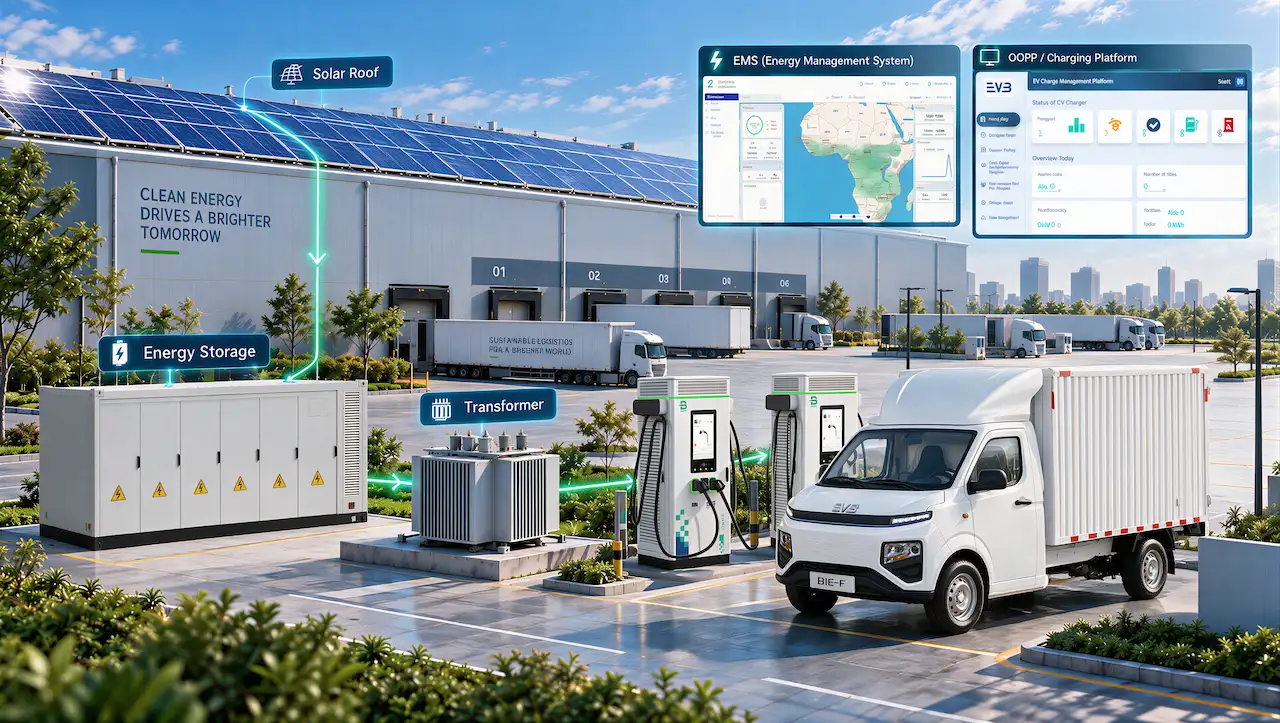
Battery storage works alongside the grid. It can charge when site capacity is available and supplement grid power when charging demand rises. It can also store daytime solar energy for vehicles returning later; see EVB’s energy storage for EV charging solutions.
Storage power determines how much support is available at once; usable energy determines how long it lasts. In the overnight example, the grid supplies 70 kW against about 108 kW of average charging demand. The average gap is about 38 kW over eight hours, totaling approximately 307 kWh of electricity for charging.
That is a planning gap, not a storage product specification. EVB can assess the actual power profile, usable AC output, losses, reserve and recharge opportunity to recommend storage capacity. The grid and storage together must support the charging schedule, with a practical window and energy source to recharge the storage between duties.
Real Example: EVB’s German Logistics Project
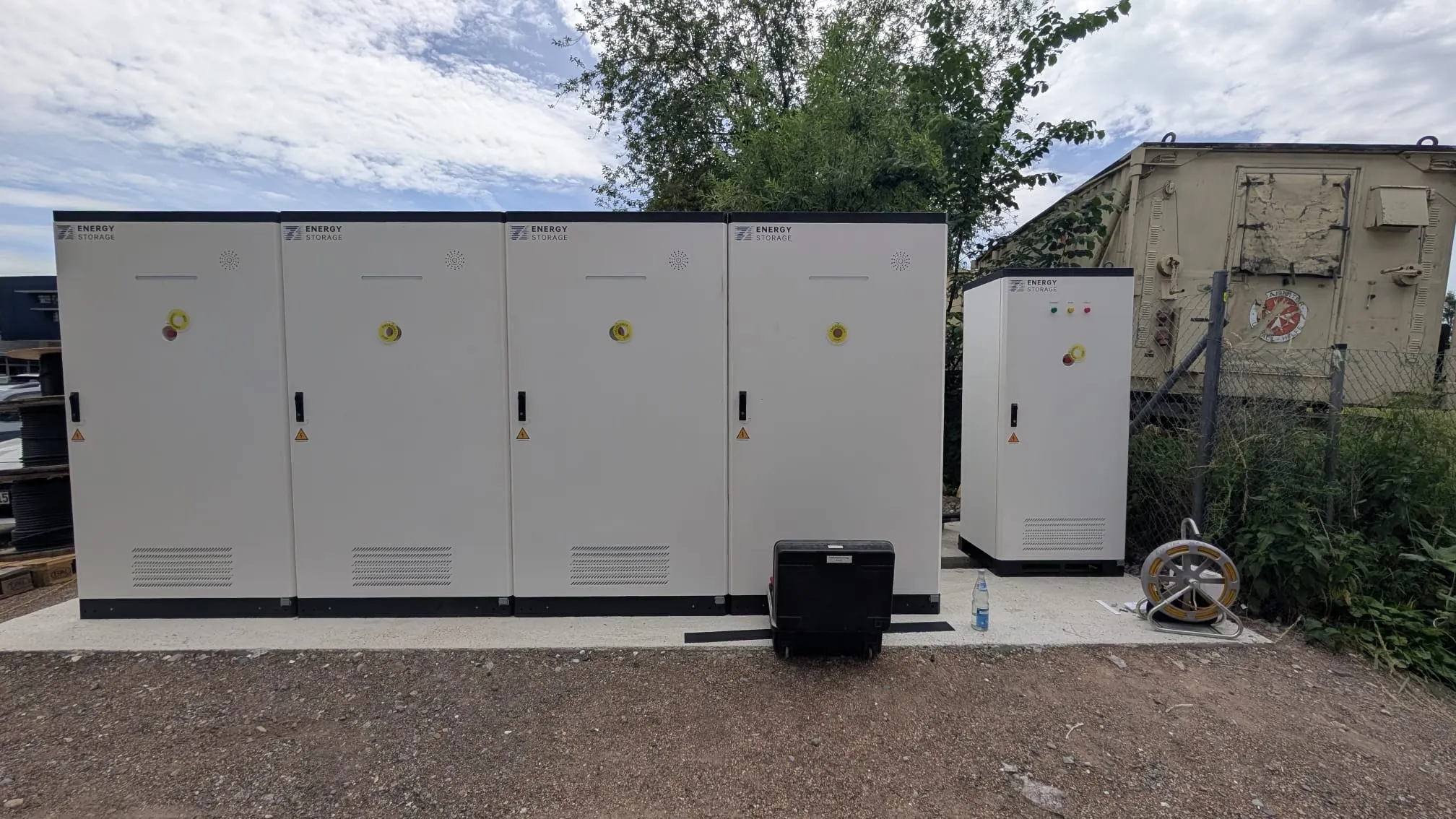
EVB’s German charging and battery storage project shows this grid-connected approach at a freight company, with the following equipment:
| Installed equipment | Project configuration |
|---|---|
| DC charging | Five 360 kW dual-connector EVB chargers |
| Battery storage | Four PVB cabinets: 400 kW combined rated conversion power and approximately 964.6 kWh nominal battery energy |
| Storage connection | One AC parallel cabinet |
The five chargers have a combined installed rating of 1.8 MW. The grid and storage work together to supply charging demand. Storage can supplement grid power during peaks and recharge when capacity is available. For your depot, EVB can recommend the balance of charger capacity, grid contribution and storage support around the fleet’s working day.
6. Choose EVB Equipment Around the Charging Window
With the operating needs and power plan established, match the equipment to the parking layout. EVB’s AC versus DC charging guide explains the technology choices in more detail.
AC for Long Parking Windows

EVB’s dual-socket AC charger serves two adjacent bays, with a 22 kW-per-socket configuration available. Each vehicle’s actual rate still depends on its AC limit and the power allocated to that socket.
DC for Shorter Stops or DC-Based Fleets
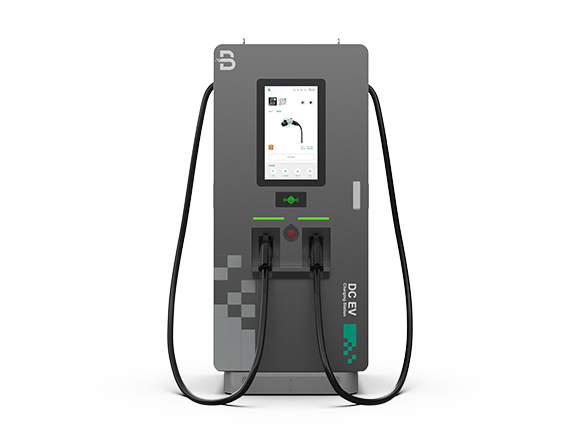
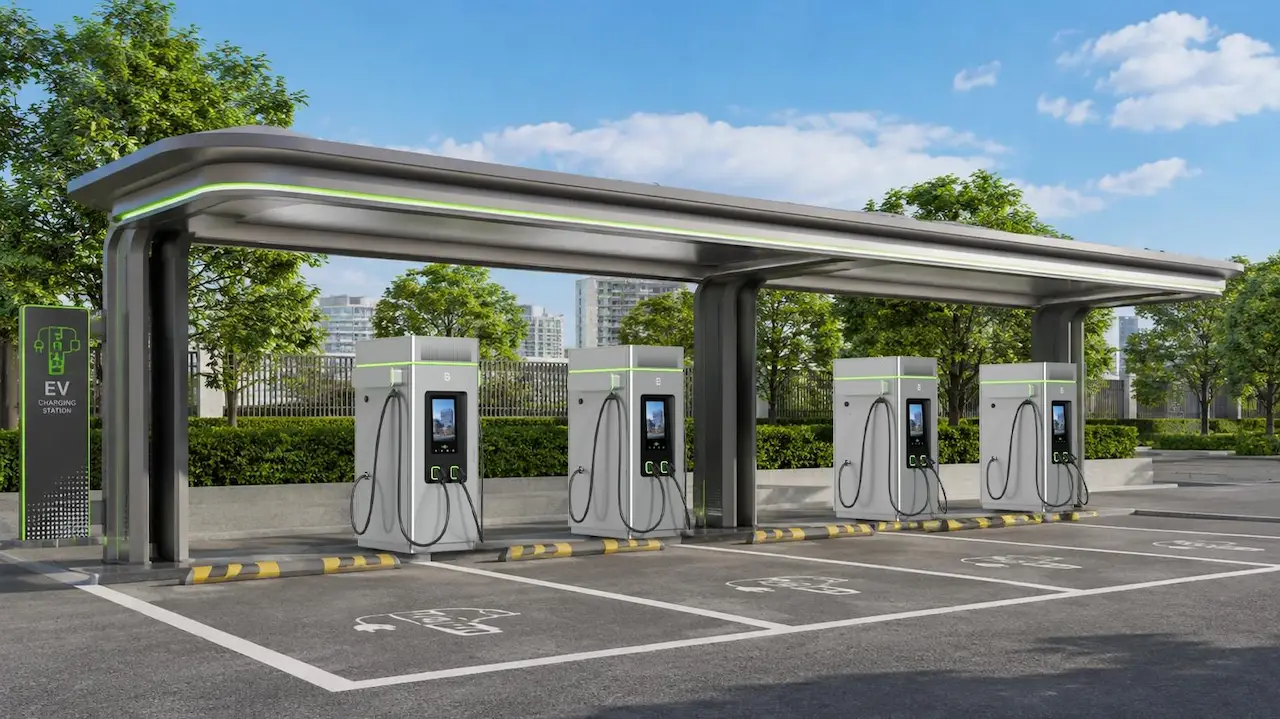
The floor-mounted two-gun DC charger is an option for adjacent DC bays. EVB can match its total output, per-gun allocation and input requirements to your fleet. For several bays, the split DC system separates the power-conversion cabinet from the charging terminals, allowing multiple access points to share a power pool.
Explore the wider EVB DC charging range and load management guide for equipment and control options.
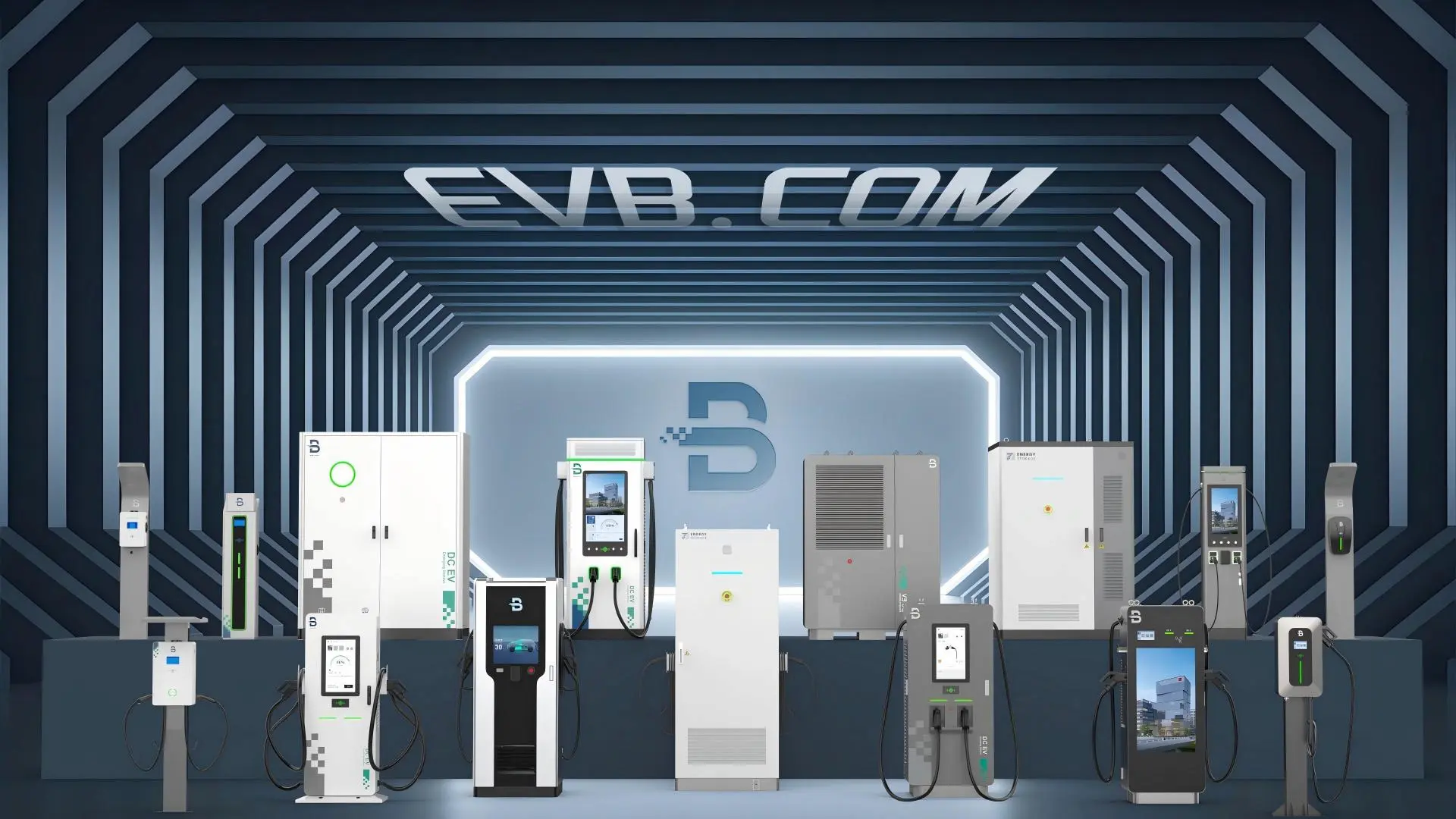
EVB’s Charging Product Range
EVB’s range covers AC charging equipment and DC fast-charging systems for different vehicle types, parking windows and site layouts.
7. Turn the Charging Plan Into a Site Supply Check
The examples lead to two checks: enough power for the planned simultaneous sessions, and enough energy for every departure. Bring the vehicle and site information together for an EVB proposal:
- Vehicles: models, AC limits, DC charging capability and charging curves.
- Routes: energy needed, arrival times and ready-by times.
- Site supply: approved electrical limits, measured building demand and electricity tariffs.
- Charging layout: usable bays, how many vehicles need high-power charging together, connector access and any staff-managed vehicle moves.
- Next stage: future vehicles, any storage proposal and the response to equipment or control failures.
EVB can assess the charging schedule against available grid power, other site loads and any storage contribution. If the existing supply can meet the controlled plan, a connection upgrade may not be needed. Otherwise, compare scheduling changes, storage support and increased supply. Before installation, the project engineer and utility must confirm the electrical design and connection limits.
Plan Around Your Fleet’s Real Working Day
Share your fleet and site information with EVB’s fleet charging solution team. We can assess your operating needs and recommend an AC/DC layout, a site power-allocation plan and suitable storage options where needed. The goal is vehicles ready for their next duties—not simply the highest charger rating.
Frequently Asked Questions
Does a fleet depot need DC chargers at every bay?
No. Assess the charging window and each vehicle’s capabilities. Overnight AC bays may meet routine needs, with DC reserved for suitable short-turnaround duties. Some fleets require a different DC-based layout.
Does a 22 kW AC charger make every van charge at 22 kW?
No. A van with an 11 kW onboard AC limit remains limited to that rate, or less if site controls allocate less power.
Do two guns on a 120 kW DC charger provide 120 kW each?
Not if 120 kW is the cabinet’s total output. The sessions share that capacity according to the delivered configuration.
Can several vehicles charge at their maximum DC rates at the same time?
Yes, when each vehicle can currently accept that rate and the charger’s per-gun capability, shared total output and available site power all support it. EVB can assess the required configuration from your vehicle models and operating schedule. The rate may fall as the batteries charge.
Can dynamic load balancing avoid a grid upgrade?
Sometimes it helps make the existing supply sufficient. But if the controlled schedule cannot deliver enough energy before departure, capacity or operations still need to change.
Is battery storage always necessary?
No. Start with the vehicle schedule and available supply. Storage is useful only when its usable power, energy and recharge opportunity address a real constraint. Daytime solar is not directly available for charging after dark unless energy has been stored.
References and Further Reading
- Energy Saving Trust: Charging your business’s electric vehicles — accessed October 8, 2026.
- U.S. Department of Energy: EV charging equipment — accessed October 8, 2026.
- U.S. Department of Energy: Smart charge management for fleets — accessed October 8, 2026.
- Energy Saving Trust: Planning depot charging — accessed October 8, 2026.
- EVB: German EV charging and battery storage project — accessed October 8, 2026.